
Breaking News
Israel Clarifies Returned Gaza Bodies Not Hostages as Hamas Reports Fresh Strikes in South
The next phase of U.S. President Donald Trump’s ceasefire plan remains unresolved, particularly over the disarmament of Hamas, the creation of a transitional authority, and deployment of an international stabilisation force.

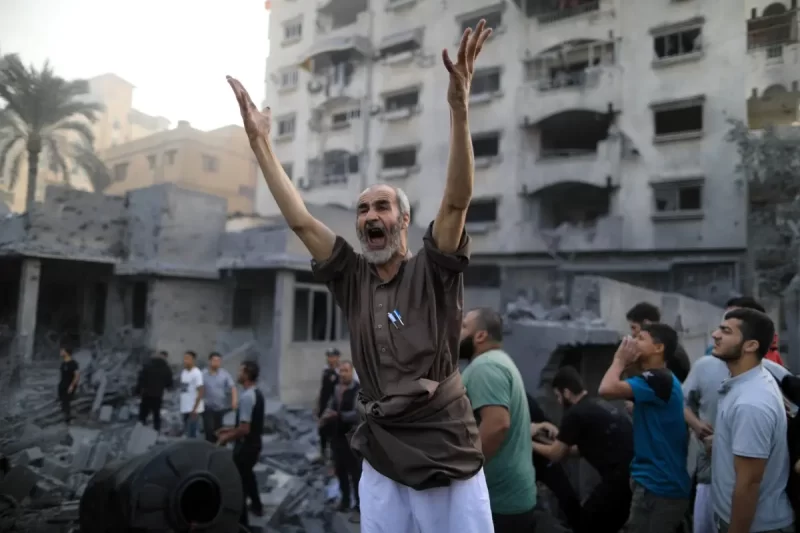
Israel announced on Saturday that the three bodies it received from Gaza on Friday were not those of Israeli hostages, as Hamas reported new Israeli strikes in southern Gaza despite a fragile ceasefire.
The truce, brokered by the United States and in place since October 10, is centered on the return of all Israeli hostages, both living and deceased.
According to the Israeli military, forensic analysis confirmed that the three bodies transferred via the Red Cross were not among the deceased hostages listed under the ongoing ceasefire agreement.
In response, Hamas’s armed wing, the Ezzedine Al-Qassam Brigades, said the bodies handed over had not been positively identified and claimed Israel had rejected an offer to receive biological samples for testing.
“We handed them over to preempt any enemy claims,” the group said in a statement, alleging that Israel had “demanded the bodies for examination.”
Since the start of the truce, Hamas has returned 20 surviving hostages and begun handing over the remains of those who died. Out of 17 bodies returned so far, 15 were Israelis, one Thai, and one Nepalese.
Hamas also transferred an unidentified body not on Israel’s missing list, along with the partial remains of a deceased Israeli hostage whose body had previously been recovered — a move that sparked outrage in Israel, which accused Hamas of breaching the terms of the ceasefire.
Israel has accused Hamas of delaying the return of the dead, but Hamas insists the process is slow because many bodies are buried under Gaza’s rubble.
The Al-Qassam Brigades called on international mediators and the Red Cross to provide “equipment and personnel” to help recover all remains simultaneously.
Renewed Tensions in Southern Gaza
Despite the truce, both sides have traded accusations of ceasefire violations.
A Hamas security source told AFP that Israel carried out air strikes in southern Gaza at dawn, and that “warships opened fire toward the shores of Khan Yunis.”
Earlier in the week, Israel conducted its deadliest bombardment since the truce began after one of its soldiers was killed in southern Gaza. The territory’s civil defence agency reported over 100 deaths from that attack.
Hamas denied involvement in the soldier’s killing, while Israel later claimed it had resumed “renewed enforcement of the ceasefire.”
Returning residents of northern Gaza described ongoing gunfire and hardship.
“The truce has begun, but the war hasn’t ended, and Israel’s policy of starvation continues,” said Hisham al-Bardai, a father of five who returned to find his home in Jabalia camp reduced to rubble.
“Despite the destruction, people are coming back, even though it’s dangerous.”
Future of Ceasefire Plan Still Uncertain
The next phase of U.S. President Donald Trump’s ceasefire plan remains unresolved, particularly over the disarmament of Hamas, the creation of a transitional authority, and deployment of an international stabilisation force.
This proposed force would be drawn from Arab and Muslim nations, supported by Egypt and Jordan, to help train Palestinian police, secure border areas, and prevent weapons smuggling.
At a Bahrain conference on Saturday, the foreign ministers of Jordan and Germany stressed that any stabilisation force must have United Nations approval.
“For the force to be effective, it must have a UN Security Council mandate,” said Jordanian Foreign Minister Ayman Safadi.
Germany’s Johann Wadephul added that such a mandate is “of utmost importance” for countries considering troop deployment and for the Palestinians themselves.
Meanwhile, thousands of displaced Gazans remain homeless, sheltering in tents and makeshift camps.
“I expect the suffering in Gaza to continue for years,” said 27-year-old Sumaya Daloul, who lives in a tent in Gaza City with her family.
“There’s no hope for life to return — even partially.”
Opinion Nigeria News


Africa’s Crisis of Military Coups and Insecurity -By Safiya Zakari Muhammad
The erosion of democracy has also weakened regional and international security cooperation. In some cases, juntas have expelled traditional partners...


Governor Uba Sani’s Resolute Commitment On Rural Development -By Abdulrashid Sani Gimi
In the long run, the 2026 fiscal strategy transcends conventional budgetary practice. With a total outlay of ₦985.9 billion, a...


Lack of Financial Support Holding Back Russia’s Economic Influence in Africa: A Case Study of Missed Opportunities in Nigeria -By Kestér Kenn Klomegâh
As Africa's largest economy, Nigeria cannot afford another decade of promises without projects. The future of its development lies with...


The Impact Of Social Media On Youth Mental Health -By Jemimah Hezekiah
Governments and tech companies also have a role to play. Enforcing anti-cyberbullying policies, offering digital literacy programs, and providing mental...

Every Night We Pray to Survive: Voices from Insecure Communities -By Rinret istifanus
As the nation debates policies and strategies, these voices remind us that insecurity is not just a headline it is...