
Breaking News
JUST IN: ‘Japa’ syndrome ‘ll impact our economy positively — Vice Chancellor
“So, it is good that we look at this from this point of view. Let them go out, get the knowledge, boost the economy and when we are ready, they will come back to us,” he explained.

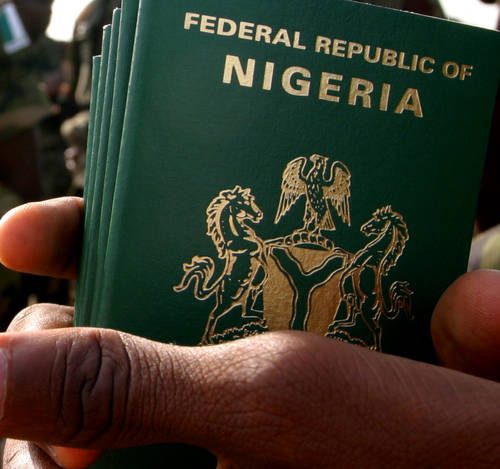
The Vice Chancellor of the State University of Medical and Applied Sciences, SUMAS, Igbo-Eno, Enugu State, Prof. James Ogbonna, yesterday, said that the ‘japa’ syndrome would impact positively on the economy of Nigeria.
He explained that apart from the knowledge and the exposure, the trained medical personnel would also remit money to the economy through investments and supports to their families.
He charged tertiary institutions to train more medical personnel to fill the vacuum which would be created by those travelling abroad for practice, adding that it was the main idea behind the establishment of SUMAS.
He equally said that good incentives and working conditions would enable medical personnel to work in Nigeria instead of travelling abroad.
“I am bothered in the short term, but not bothered in the long term about ‘japa’ syndrome. The basic thing is that if there is a shortage of medical personnel because those that are trained travel abroad for practice, what we should do is train more of them to ameliorate the shortage.
“We should emphasize more on training more medical doctors and allied health scientists like nurses, radiographers, Physiotherapists and the like.
“The only way to control the exodus of trained medical personnel is to provide incentives to them to enable them to stay back. Give them a good salary and condition of service and they will stay. There was a rumour about making legislation to stop them from travelling out, but in my opinion, it would not work.
“However, in the long term, it is good that they travel abroad to get more knowledge. If you watch the development of China, their economy was low for a very long time. During that time, many Chinese were working in Europe and getting knowledge and exposure. Once the economy of China got to a certain stage, most of those trained personnel went back to China, which was why there was a very sharp growth in the Chinese economy. The government provided the facilities and the people deployed their human resources to grow the economy.
“So, the Nigerian trained medical personnel abroad are an asset to the country. The amount of money they remit to the economy is enormous. They send money to their people for support and most of them are investing in Nigeria too. In the Philippines for instance, foreign remittance is the highest thing that boosts the economy of the country.
“So, it is good that we look at this from this point of view. Let them go out, get the knowledge, boost the economy and when we are ready, they will come back to us,” he explained.



Game of Power: Throne Reclaim -By Abba Dukawa
Most Kwankwasiyya members are youths . Where were they when Kwankwaso parted ways with Hamisu Musa, Musa Gwadabe, and Dauda...

Silence Where It Matters: Bauchi’s Misplaced Priorities and Forgotten People -By Yasir Shehu Adam
A governor’s speech should reflect actual priorities. When basic human development sectors are absent from key policy messages, citizens have...


Thankfully, There’s None Like Prophet Ebo Noah in Nigeria; Is There? -By Ugochukwu Ugwuanyi
Mysteries in the Old Testament can only be decoded through the light of the New Testament. Mercifully, the Holy Spirit...


The Ripples From The Tinubu’s Tax Reform And The Future Of Nigerian Economy -By Hajia Hadiza Mohammed
The most worrisome issue in the whole tax reform debacle is the intention of the government and its fixation on...


Africa’s Crisis of Military Coups and Insecurity -By Safiya Zakari Muhammad
The erosion of democracy has also weakened regional and international security cooperation. In some cases, juntas have expelled traditional partners...