
Breaking News
Nigeria Has Fewer Than 10 Million Active Individual Taxpayers — Oyedele
Taiwo Oyedele says Nigeria has under 10 million active individual taxpayers, stressing the need for data-driven tax reforms and highlighting Lagos’ ₦1 trillion property tax potential.

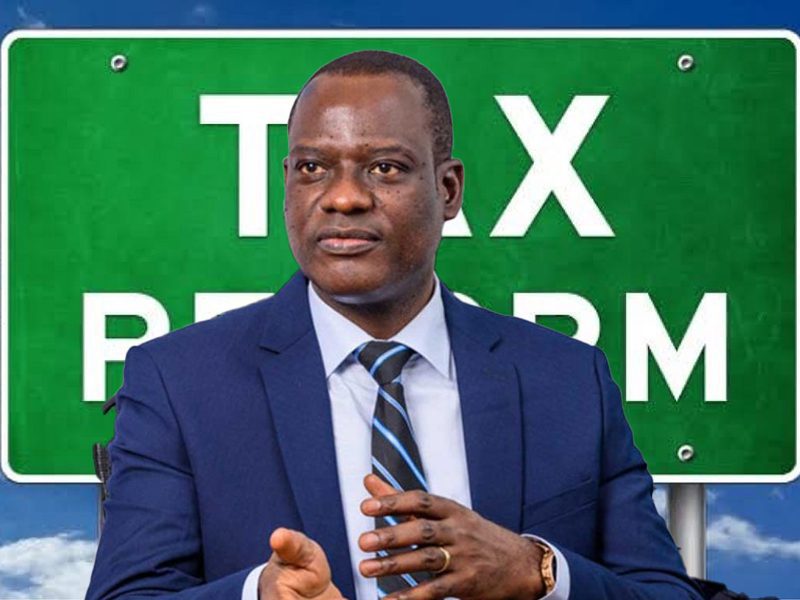
The Chairman of the Presidential Fiscal Policy and Tax Reforms Committee, Taiwo Oyedele, has revealed that Nigeria has fewer than 10 million active individual taxpayers, highlighting the country’s narrow tax base and the urgent need for data-driven reforms, especially at subnational levels.
Oyedele made the disclosure on Tuesday while delivering a keynote address at the Tax Reform Summit 2026 in Lagos. The summit, themed “From Reforms to Results: The Lagos Implementation Roadmap, Creating a Tax Environment that Works for All,” was organised by the Office of the Special Adviser on Taxation and Revenue in collaboration with the Lagos State Treasury Office.
According to him, improving the quality of data for fiscal and economic planning is crucial to expanding the tax net, particularly in Lagos State. He stressed that reliable databases covering property registers, individual taxpayers and fiscal operations are essential for effective revenue mobilisation.
“In Nigeria today, the number of active individual taxpayers is under 10 million for the whole country. I think that is the number we should have for Lagos State alone, and we need to make that possible,” Oyedele said, adding that meaningful tax reform cannot be achieved without credible and comprehensive data.
Oyedele also drew attention to the revenue potential of property taxation, describing it as one of the most stable yet underutilised sources of income for states and local governments. He noted that Lagos State could generate as much as ₦1 trillion annually from property tax if the sector’s potential is fully harnessed.
He explained that if two million properties in Lagos were taxable, with an average value of ₦100 million and a modest tax rate of 0.5 per cent, the state could raise ₦1 trillion each year. Such revenue, he said, could be reinvested in infrastructure and public services, creating a cycle of growth and rising property values.
The committee chairman emphasised that effective property taxation depends on proper property enumeration, accurate valuation, transparent administration and predictable enforcement.
He further urged Lagos State to lead by example by adopting harmonised tax laws and strengthening legal frameworks to enhance collaboration among revenue-collecting agencies.
Oyedele disclosed that a model tax harmonisation law developed by the committee in partnership with the Joint Revenue Board has already been adopted by states including Ekiti, Zamfara, Anambra and Kano, and called on Lagos to follow suit.
Opinion Nigeria News


Lavrov Assesses Media Contributions Toward Developing Russia-Africa Relations During Cairo Ministerial Conference -By Kestér Kenn Klomegâh
During the previous two summits: in Sochi (2019) and in St Petersburg (2023), the theme on media was reviewed and...


It Is Christmas! -By Gabriel Agbo
You see, they did not celebrate Christ's birth at all. To them it was insignificant. They were far more concerned...


Why 2026 Must Be About Obeying God’s Word, Not Recycling Resolutions -By Isaac Asabor
Now, it is expedient to urge fellow Nigerians to stop pretending. The hard truth is this: many people enjoy making...

Russia Promoting Dialogue with Africa on Implementing 2023-2026 Strategic Action Plan -By Kestér Kenn Klomegâh
On December 19-20, the Second Ministerial Conference of the Russia-Africa Partnership Forum was held in Cairo, Egypt. It was held...

At 72, A Father’s Embrace: Akume, Alia, And The Future Of Benue -By Leonard Karshima Shilgba
As our leader turns 72 in December 2025—a significant and symbolic age—I humbly call on the Benue State Government and stakeholders to initiate...