
Economic Issues
Nigerian Economy and the Rising Cost of Living -By Faith Nelson Dalko
Despite these challenges, there are steps that can help improve the situation. Government policies that support local production, agriculture, and small businesses can reduce dependence on imports and create more jobs. Investing in education and skills development can help young people become more employable or start their own businesses. Improving infrastructure such as roads, power supply, and transportation can also reduce production costs and lower prices.

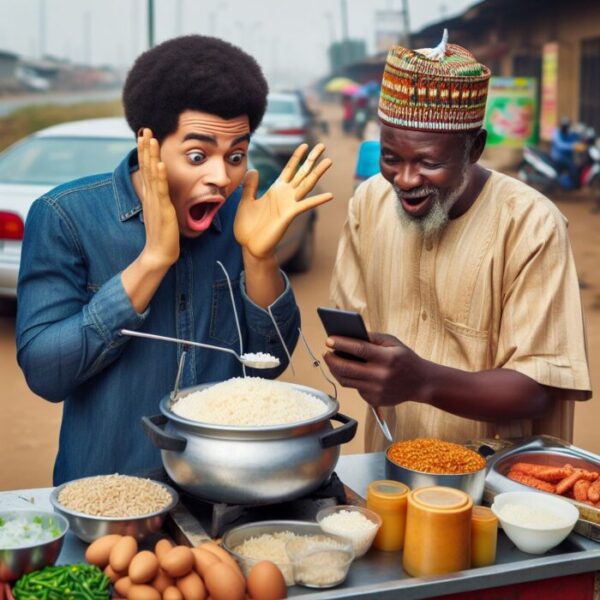
The Nigerian economy is one of the largest in Africa, rich in natural and human resources. However, despite its economic potential, many Nigerians are facing serious challenges due to the rising cost of living. Everyday expenses such as food, transportation, housing, healthcare, and education have become increasingly expensive, making life difficult for a large portion of the population.
One major factor affecting the Nigerian economy is inflation. Inflation which is the the continuous increase in the prices of goods and services over time. In Nigeria, inflation has caused the prices of basic food items like rice, bread, cooking oil, and vegetables to rise sharply.
As prices increase, the purchasing power of citizens decreases. This situation affects low- and middle-income earners the most, as their wages often do not increase at the same rate as prices.
Another important issue is unemployment and underemployment. Many young Nigerians struggle to find stable jobs, even after completing their education. Those who are employed often earn wages that are not enough to meet basic needs. When families do not have sufficient income, they are forced to reduce their standard of living, skip meals, or depend on loans and support from relatives. This contributes to increased poverty and economic hardship across the country.
The value of the Nigerian currency also plays a significant role in the high cost of living. When the currency weakens, imported goods become more expensive. Since Nigeria relies heavily on imports for items such as fuel, machinery, pharmaceuticals, and some food products, any decline in the currency’s value leads to higher prices. These increased costs are eventually passed on to consumers, further raising the cost of living.
Fuel prices are another major concern. Fuel is essential for transportation, electricity generation, and business operations. When fuel prices rise, transportation costs increase, and businesses spend more to operate. As a result, the prices of goods and services go up. Many Nigerians feel the impact of fuel price increases almost immediately, as it affects both daily commuting and the cost of essential items.
Despite these challenges, there are steps that can help improve the situation. Government policies that support local production, agriculture, and small businesses can reduce dependence on imports and create more jobs. Investing in education and skills development can help young people become more employable or start their own businesses. Improving infrastructure such as roads, power supply, and transportation can also reduce production costs and lower prices.
In conclusion, the Nigerian economy faces several challenges that have contributed to the rising cost of living. Inflation, unemployment, currency issues, fuel prices, and insecurity all play a role in making life more expensive for citizens. Addressing these problems requires strong economic policies, good governance, and cooperation between the government, private sector, and citizens. With the right actions, Nigeria can move toward a more stable economy and a better standard of living for its people.
Faith Nelson a concerned Nigerian citizen and a student of Mass Communication Federal university kashere Gombe state. I hold a keen interest in the warfare and growth of the country.
Thank you for considering my submission and I look forward to getting your feedback.
Faith Nelson Dalko
08065899582
faithdalko69@gmail.com



Why 2026 Must Be About Obeying God’s Word, Not Recycling Resolutions -By Isaac Asabor
Now, it is expedient to urge fellow Nigerians to stop pretending. The hard truth is this: many people enjoy making...

Russia Promoting Dialogue with Africa on Implementing 2023-2026 Strategic Action Plan -By Kestér Kenn Klomegâh
On December 19-20, the Second Ministerial Conference of the Russia-Africa Partnership Forum was held in Cairo, Egypt. It was held...


At 72, A Father’s Embrace: Akume, Alia, And The Future Of Benue -By Leonard Karshima Shilgba
As our leader turns 72 in December 2025—a significant and symbolic age—I humbly call on the Benue State Government and stakeholders to initiate...

United States and Russia Resolving Trade Issues and Pursuing New Opportunities -By Kestér Kenn Klomegâh
The American Chamber of Commerce (AmCham) will be working in the system of the Chamber of Commerce and Industry (CCI)...


Nigeria’s Middle Class Is Slipping Into Poverty — And We Are All at Risk -By Abdulhamid Rabiu
What is urgently needed is a shift from abstract economic targets to people-centered policies. Inflation control must be prioritized. Wages...