
Forgotten Dairies
Nigeria’s Budget Reset: Forging a New Covenant of Fiscal Discipline -By Oche Patience Ezela
At its core is Zero-Based Budgeting (ZBB), which requires ministries and agencies to justify every expenditure annually. By questioning the necessity, efficiency, and outcomes of each item, ZBB seeks to eliminate waste, redundancy, and legacy programs that no longer serve national priorities.

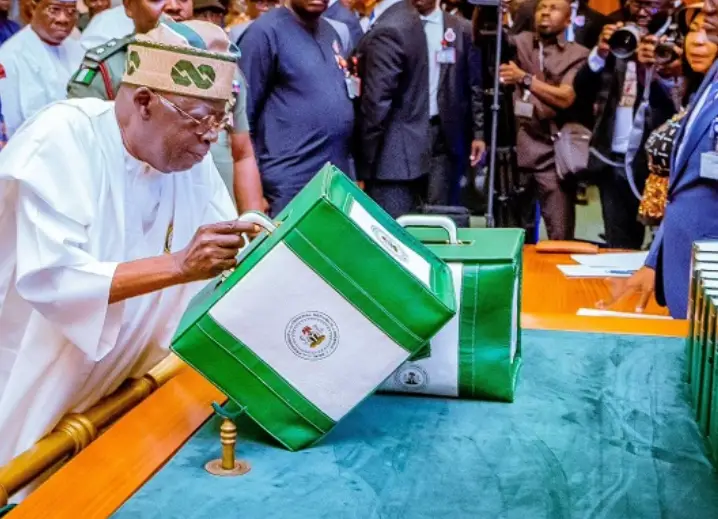
For decades, Nigeria’s national budget has resembled an ambitious wish list—bold in promise but persistently detached from economic reality. Each fiscal year followed a familiar pattern: optimistic revenue projections, largely dependent on volatile oil earnings, failed to materialize; deficits widened; and borrowing became the default response. Over time, debt servicing swallowed an alarming share of government revenue, while essential sectors such as infrastructure, education, and healthcare remained chronically underfunded.
This cycle did more than slow development—it undermined trust. Budgets were weakened by inefficiency, opacity, and a notorious culture of “padding,” where questionable projects quietly appeared during legislative review. Implementation suffered as funds were released late, oversight was weak, and many projects existed only on paper. Nigeria was effectively pouring scarce resources into a leaky bucket.
Against this backdrop, the current administration’s push for a comprehensive Budget Reset is both timely and necessary. It signals a shift from fiscal wishful thinking to discipline, realism, and accountability. If sustained, it could redefine how Nigeria plans and spends public resources.
A System That Failed to Deliver
The need for a reset is rooted in four major failures.
First was unrealistic revenue optimism. Budgets were consistently built on assumptions that ignored oil theft, production shortfalls, and market volatility. When revenues fell short, capital projects were abandoned, while recurrent expenditure—salaries, allowances, and overheads—continued unchecked.
Second was the debt spiral. Chronic overspending normalized excessive borrowing. Public debt rose from ₦12.6 trillion in 2015 to over ₦97 trillion by 2023, while debt servicing at one point threatened to consume nearly all federal revenue. A country that spends most of its income repaying old loans cannot invest meaningfully in its future.
Third was the implementation gap. Even approved budgets were poorly executed. Weak transparency and accountability fostered public cynicism and reinforced the view of the budget as a political document rather than a development tool.
Finally, Nigeria suffered from a persistent investment shortfall. Budgets became heavily skewed toward recurrent spending, prioritizing the cost of governance over capital investment. Roads, power projects, schools, and hospitals were sacrificed to keep the machinery of government running.
What the Budget Reset Seeks to Achieve
The proposed Budget Reset aims to break this cycle through a more disciplined framework.
At its core is Zero-Based Budgeting (ZBB), which requires ministries and agencies to justify every expenditure annually. By questioning the necessity, efficiency, and outcomes of each item, ZBB seeks to eliminate waste, redundancy, and legacy programs that no longer serve national priorities.
Another key pillar is the reduction of the cost of governance. Implementing the long-neglected Oronsaye Report, curbing National Development Plan ensures continuity and focus. Budgets should execute strategy, not reinvent priorities each year.
Why It Matters to Nigerians
Fiscal discipline is not an abstract concept. A credible budget translates into completed roads for farmers, functional laboratories for students, predictable contracts for businesses, and greater macroeconomic stability for all. Reduced government borrowing can ease pressure on interest rates, stabilize the currency, and attract long-term investment—conditions necessary for job creation and poverty reduction.
The Challenges Ahead
However, the greatest threat to the Budget Reset is political resistance. Cost-cutting reforms disrupt entrenched patronage networks, and sustaining discipline will require courage beyond the present administration. There are also capacity constraints: zero-based budgeting demands data, skills, and institutional competence that many agencies currently lack.
Moreover, spending discipline must be matched by revenue reform. Expanding the tax net, sealing leakages, and reforming the oil and gas sector are essential. A disciplined budget without sufficient revenue is unsustainable.
A Necessary National Choice
Nigeria’s Budget Reset is more than a technical reform; it is a statement of national intent. It reflects a shift from entitlement to accountability, from short-term consumption to long-term investment. The budget is not merely a financial document—it is a moral covenant between the state and its citizens. Honoring that covenant will not be easy. But the alternative—continued debt, decay, and distrust—is far worse. If faithfully implemented and defended across political cycles, the Budget Reset can lay the foundation for genuine economic sovereignty and restore confidence in Nigeria’s capacity to govern responsibly.


Lavrov Assesses Media Contributions Toward Developing Russia-Africa Relations During Cairo Ministerial Conference -By Kestér Kenn Klomegâh
During the previous two summits: in Sochi (2019) and in St Petersburg (2023), the theme on media was reviewed and...


It Is Christmas! -By Gabriel Agbo
You see, they did not celebrate Christ's birth at all. To them it was insignificant. They were far more concerned...


Why 2026 Must Be About Obeying God’s Word, Not Recycling Resolutions -By Isaac Asabor
Now, it is expedient to urge fellow Nigerians to stop pretending. The hard truth is this: many people enjoy making...

Russia Promoting Dialogue with Africa on Implementing 2023-2026 Strategic Action Plan -By Kestér Kenn Klomegâh
On December 19-20, the Second Ministerial Conference of the Russia-Africa Partnership Forum was held in Cairo, Egypt. It was held...

At 72, A Father’s Embrace: Akume, Alia, And The Future Of Benue -By Leonard Karshima Shilgba
As our leader turns 72 in December 2025—a significant and symbolic age—I humbly call on the Benue State Government and stakeholders to initiate...