
Article of Faith
The Church as a Business: A Shift in Priorities -By Seun Elere
It’s time we reexamined the role of the Church in our society, not just as a place for spiritual growth, but as a business with its own interests and priorities – perhaps an avenue the new tax law of the country should spotlight. For many churches today, the line between faith and fortune has blurred beyond recognition.

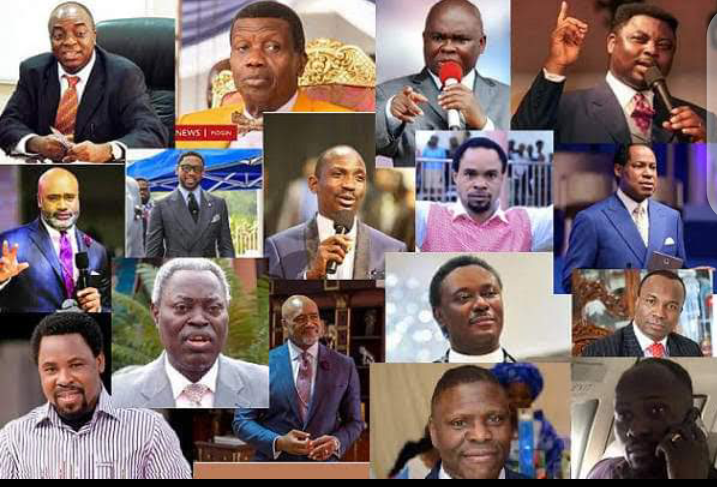
Recently, as I traveled from Lagos to Abeokuta, I passed through an area known for housing the headquarters of some of the largest churches in the country. This wasn’t my first time passing through this area, but for some reason, the scene struck me differently this time.
What stood out was the sheer scale of what these churches have become. They’ve transformed from places of worship into sprawling business enterprises. The land these churches occupy is often located in industrial areas, next to massive factories, clearly a commercial zone. Yet, the churches themselves have bought up vast tracts of land, developing not just places of worship, but entire “cities” with hotels, amusement parks, schools, and other businesses.
It dawned on me: churches today are increasingly being run as for-profit enterprises. It’s no longer just about salvation or spirituality—it’s about building wealth. From private jets to mansions, schools to amusement parks, these institutions are expanding their portfolios just like any other business.
The troubling part? Many churchgoers equate the wealth of their churches with their spiritual strength. If a church is rich, it must be because God is at work there. This mindset is not only flawed but dangerous. The richer the church, the more followers it seems to attract. It’s a perverse cycle where wealth is seen as a sign of divine favor, and the faithful buy into the idea that their tithes and offerings are directly contributing to the growth of God’s kingdom on Earth.
Yet, the irony is hard to ignore. Pastors, with a straight face, stand in front of their congregations, preaching about heavenly rewards, while they’re busy building “heavens” on Earth. It’s even more frustrating when we consider that the material wealth accumulated by these churches doesn’t belong to God, but to the founders and their families. The recent retirement of two long-serving pastors in one of these mega-churches was a stark reminder of this—revealing just how much control the church founder has over the church’s fortunes.
What’s happening here is not just a shift in business practices; it’s a shift in values. The focus has moved away from spirituality, salvation, and community building to the pursuit of profit. In fact, many churches have even relaxed traditional Biblical teachings—such as dress codes—just to attract more members and increase their bottom line.
When we step back and look at the bigger picture, we see something concerning. The growing number of wealthy pastors outpacing even the wealth of some of the country’s most powerful figures speaks volumes. Is this really the Church’s mission? Or has it become another industry, profiting off the faith of its followers? Of course, it’s sheer evil to exploit one’s faith for financial benefits
It’s time we reexamined the role of the Church in our society, not just as a place for spiritual growth, but as a business with its own interests and priorities – perhaps an avenue the new tax law of the country should spotlight. For many churches today, the line between faith and fortune has blurred beyond recognition.
Seun Elere, PhD.


Lavrov Assesses Media Contributions Toward Developing Russia-Africa Relations During Cairo Ministerial Conference -By Kestér Kenn Klomegâh
During the previous two summits: in Sochi (2019) and in St Petersburg (2023), the theme on media was reviewed and...


It Is Christmas! -By Gabriel Agbo
You see, they did not celebrate Christ's birth at all. To them it was insignificant. They were far more concerned...


Why 2026 Must Be About Obeying God’s Word, Not Recycling Resolutions -By Isaac Asabor
Now, it is expedient to urge fellow Nigerians to stop pretending. The hard truth is this: many people enjoy making...

Russia Promoting Dialogue with Africa on Implementing 2023-2026 Strategic Action Plan -By Kestér Kenn Klomegâh
On December 19-20, the Second Ministerial Conference of the Russia-Africa Partnership Forum was held in Cairo, Egypt. It was held...


At 72, A Father’s Embrace: Akume, Alia, And The Future Of Benue -By Leonard Karshima Shilgba
As our leader turns 72 in December 2025—a significant and symbolic age—I humbly call on the Benue State Government and stakeholders to initiate...