
Breaking News
Turbulence Not a Safety Threat, OAS Helicopters Chairman Reassures Passengers
OAS Helicopters Chairman, Capt. Everest Nnaji, reassures air passengers that turbulence is a normal part of flying and poses no safety threat. He explains how modern aircraft, trained pilots, and aviation technology keep flights safe, urging travelers to stay calm and keep seatbelts fastened.

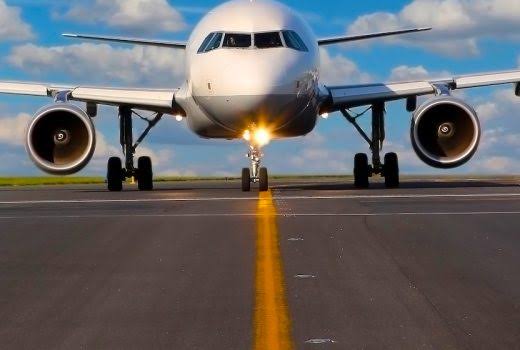
The Group Chairman of OAS Helicopters, Captain Everest Nnaji, has reassured air travellers that turbulence poses no threat to aircraft safety, describing it as a routine part of flying that modern aircraft are built to withstand and pilots are fully trained to handle.
Speaking on Sunday to mark the 2025 International Civil Aviation Day, Nnaji—an FAA- and NCAA-certified pilot—stated that aviation remains the world’s safest, most reliable, and most efficient means of transportation, urging passengers not to panic during turbulent conditions.
He explained that turbulence typically occurs when an aircraft passes through rough air pockets, often triggered by clouds or atmospheric disturbances. According to him, clouds form when moisture, fog, or other particles reduce air density, creating unstable airflow that disrupts smooth flight. He added that thunderstorms generate stronger turbulence, but pilots and air traffic controllers use radar, satellite data, and weather updates to navigate around them safely.
Nnaji also highlighted the challenge of Clear Air Turbulence (CAT), which can occur without visual cues at any altitude. To reduce risks, pilots use PIREPs — Pilot Reports — to notify nearby aircraft of CAT encounters.
“Modern aircraft are structurally designed to withstand all forms of turbulence,” he said. “Each aircraft model undergoes rigorous tests during the design stage, far stronger than anything it would encounter in real flight conditions. Certification by the FAA or EASA ensures the aircraft can safely operate worldwide.”
While passengers may feel shaking, dipping, or brief rocking during turbulence, Nnaji stressed that such movements do not compromise the aircraft’s stability. The only real danger, he noted, is the possibility of minor injuries if passengers move around the cabin during a turbulent spell.
“Realistically, the main danger passengers can encounter in turbulence is falling or hitting their heads. But this can be completely avoided by keeping your seatbelt fastened,” he said. “So next time your flight encounters turbulence, remember: it may be bumpy, but it is not dangerous.”
Opinion Nigeria News



Wanted! Where Is Our National Interest? -By Abdu Abdullahi
Indeed, the idea of the national interest is very striking by its pronounced and provocative vacuum in Nigeria.This spells doom...


The ECOWAS Democracy Paradox: A Flawed Arbiter in an Era of Autocratic Drift -By Jeff Okoroafor
As ECOWAS condemns Guinea-Bissau's coup, I analyze how its failure to address "constitutional coups" by elected leaders has eroded credibility...


South Africa Takes A Break From G20 -By Kestér Kenn Klomegâh
The United States this month took over the year-long presidency of the group of leading economies after largely boycotting South...


Did America Happen to Ademiluyi? -By Zayd Ibn Isah
If we must fix Nigeria, it will not be by glorifying foreign lands or demonising our own, but by confronting...


The Children We Hide: Why Society Must Stop Shaming Special Needs Children -By Bello Humulkhair
A small boy sits at the corner of his classroom not because he cannot play, not because he does not...