
Breaking News
UNICEF Commends Sokoto State for Embracing Evidence-Based Budgeting
The initiative, led by the Ministry of Budget and Economic Planning in collaboration with UNICEF, aims to align Ministries, Departments, and Agencies (MDAs) with Governor Ahmed Aliyu’s nine-point Smart Agenda. The goal is to ensure state budgets are realistic, data-driven, and strategically focused.


New three-year strategy to guide health, education, WASH, and social protection spending
The Sokoto State Government has taken a significant step towards institutionalizing evidence-based budgeting with the launch of a three-year Medium-Term Sector Strategy (MTSS) for key social sectors, including Health, Education, Water, Sanitation and Hygiene (WASH), and Social Protection.
The initiative, led by the Ministry of Budget and Economic Planning in collaboration with UNICEF, aims to align Ministries, Departments, and Agencies (MDAs) with Governor Ahmed Aliyu’s nine-point Smart Agenda. The goal is to ensure state budgets are realistic, data-driven, and strategically focused.
Speaking at the opening of the training workshop on Saturday, Commissioner for Budget and Economic Planning, Dr. Abubakar Mohammad Zayyana, urged MDAs to move away from vague, unstructured proposals.
“Ambiguous budgets or those designed without proper planning are no longer acceptable. Weak and ambitious planning always leads to failure,” Dr. Zayyana stated. He emphasized that teamwork and program-based budgeting are critical to advancing the state’s development priorities.
Commissioner for Health, Dr. Faruk Abubakar Wurno, directed his ministry’s planning directors and agencies to align all budget projections with clearly defined objectives.
“Any proposal not in line with the ministry’s core priorities will not be accepted in the 2026 budget,” he warned.
UNICEF also lauded the new approach. Represented by Social Policy Specialist Malam Isah Ibrahim, the Chief of UNICEF’s Sokoto Field Office, Mr. Michel Juma, praised the state’s shift from traditional budgeting to more strategic, program-based planning.
He highlighted the need for increased investment in social sectors to tackle poverty in all its forms:
“UNICEF is supporting similar reforms in nine states across Nigeria. Sokoto’s progress is encouraging and essential for addressing multidimensional and monetary poverty,” Ibrahim noted.
For the first time, Social Protection has been integrated into the MTSS. According to the Permanent Secretary of the Ministry of Budget and Economic Planning, Hajiya Maryam Ahmad Barade, this inclusion reflects a growing recognition of emerging development challenges and the need for more comprehensive planning.
She added that the partnership with UNICEF is already yielding tangible benefits across key development areas.
The MTSS 2026–2028 is expected to provide a long-term roadmap for planning, budgeting, and service delivery in Sokoto’s most critical sectors, marking a shift towards more transparent and results-oriented governance.

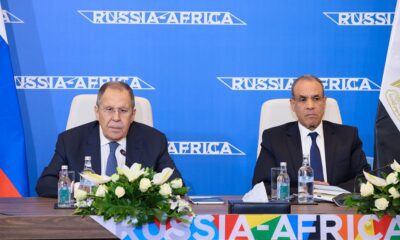

Lavrov Assesses Media Contributions Toward Developing Russia-Africa Relations During Cairo Ministerial Conference -By Kestér Kenn Klomegâh
During the previous two summits: in Sochi (2019) and in St Petersburg (2023), the theme on media was reviewed and...


It Is Christmas! -By Gabriel Agbo
You see, they did not celebrate Christ's birth at all. To them it was insignificant. They were far more concerned...


Why 2026 Must Be About Obeying God’s Word, Not Recycling Resolutions -By Isaac Asabor
Now, it is expedient to urge fellow Nigerians to stop pretending. The hard truth is this: many people enjoy making...
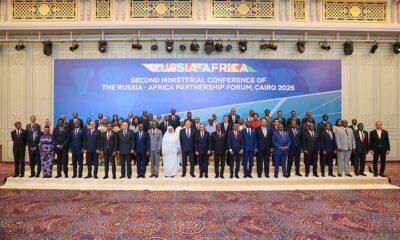

Russia Promoting Dialogue with Africa on Implementing 2023-2026 Strategic Action Plan -By Kestér Kenn Klomegâh
On December 19-20, the Second Ministerial Conference of the Russia-Africa Partnership Forum was held in Cairo, Egypt. It was held...


At 72, A Father’s Embrace: Akume, Alia, And The Future Of Benue -By Leonard Karshima Shilgba
As our leader turns 72 in December 2025—a significant and symbolic age—I humbly call on the Benue State Government and stakeholders to initiate...