
Forgotten Dairies
Why Insecurity and Unemployment Are Nigeria’s Biggest Threats -By Basma Bayero
Insecurity and unemployment remain among the most serious obstacles to Nigeria’s progress. Yet, they are not insurmountable. With political will, coherent policies and sustained investment, the country can reverse this dangerous trend. Nigeria’s future depends on its ability to secure its people and provide them with meaningful economic opportunities. Anything less risks undermining the very foundations of the nation.

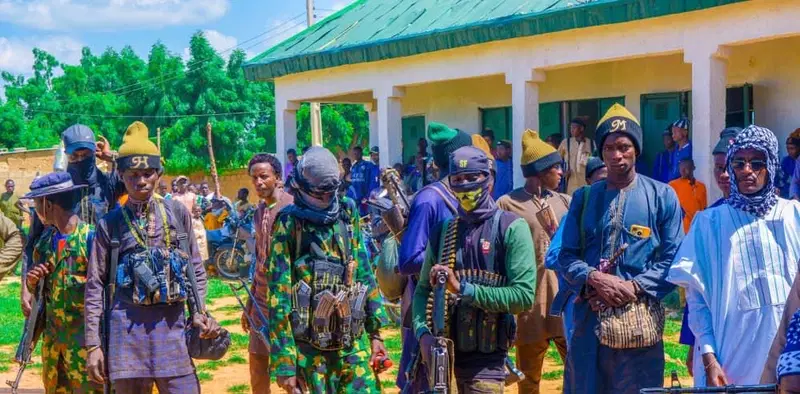
Nigeria, a nation endowed with vast economic resources and immense agricultural potential, has long been recognised as the giant of Africa. For decades, the country commanded respect on the continent due to its population strength, natural wealth and strategic influence. However, in recent years, two interconnected dangers—insecurity and rising unemployment—have emerged as grave threats, endangering not only lives but also the future of the nation itself.
Across the country, insecurity has assumed alarming proportions. From terrorism in the North-East to banditry and kidnapping in the North-West and parts of the North-Central, as well as armed robbery and communal clashes in other regions, no part of Nigeria appears completely safe. These security challenges have disrupted daily life, forced communities to abandon their homes and made it increasingly difficult for citizens to live and work in peace. Beyond the human cost, insecurity has also weakened the economy by discouraging investment, disrupting farming activities and slowing commercial operations.
The scale of the crisis is evident in its economic toll. A recent report by SBM Intelligence revealed that kidnappers collected at least ₦2.57 billion in ransom between July 2024 and June 2025. This disturbing figure highlights how insecurity has evolved into a lucrative criminal enterprise, draining household savings, crippling businesses and spreading fear across communities. For many families, the cost of securing a loved one’s freedom has meant selling property, shutting down livelihoods or sinking into long-term poverty.
Equally troubling is the challenge of unemployment, particularly among the youth. Millions of able-bodied Nigerians remain without meaningful jobs, despite possessing education or skills. Over the years, data from the National Bureau of Statistics has consistently highlighted the severity of unemployment and underemployment in the country. Joblessness has deepened poverty, widened inequality and increased frustration among young people who feel excluded from the promise of national progress.
What makes these two problems especially dangerous is the way they reinforce each other. Unemployment creates a pool of idle and frustrated youths who are easily drawn into criminal activities, insurgency and other forms of violence. In turn, insecurity destroys existing jobs and discourages the creation of new ones, as businesses shut down or relocate to safer environments. Farming communities, for instance, are unable to cultivate their land due to fear of attacks, worsening food insecurity and pushing more people into poverty. Treating insecurity and unemployment as separate issues, therefore, ignores their deep and destructive connection.
The consequences of this twin crisis are felt most by ordinary Nigerians—farmers, traders, students, artisans and small business owners—whose livelihoods depend on safety and economic opportunity. When schools are closed due to attacks, children lose access to education. When roads become unsafe, traders cannot move goods. When farms are abandoned, hunger spreads. These realities underscore how insecurity and unemployment threaten national stability and social cohesion.
Addressing these challenges requires more than rhetoric. Strengthening security forces through improved training, adequate equipment and better welfare is essential. Equally important is enhanced intelligence gathering and stronger cooperation among security agencies and local communities. Security efforts must be proactive rather than reactive.
On the economic front, job creation should be treated as a national security priority. Government investment in agriculture, infrastructure and vocational skills development can generate employment while addressing long-term economic needs. Supporting small and medium-scale enterprises, which employ a large portion of the population, will also help absorb unemployed youths and reduce poverty. Education and training programmes must be aligned with labour market demands to ensure graduates are equipped with practical and employable skills.
Insecurity and unemployment remain among the most serious obstacles to Nigeria’s progress. Yet, they are not insurmountable. With political will, coherent policies and sustained investment, the country can reverse this dangerous trend. Nigeria’s future depends on its ability to secure its people and provide them with meaningful economic opportunities. Anything less risks undermining the very foundations of the nation.



Jesus: Born In Judea, Fled To Egypt; Thank God Not To Maga America -By Vitus Ozoke, PhD
So today – Christmas – watch carefully. Watch as MAGA Republicans who champion mass deportations attend church. Watch as they...


Lavrov Assesses Media Contributions Toward Developing Russia-Africa Relations During Cairo Ministerial Conference -By Kestér Kenn Klomegâh
During the previous two summits: in Sochi (2019) and in St Petersburg (2023), the theme on media was reviewed and...


It Is Christmas! -By Gabriel Agbo
You see, they did not celebrate Christ's birth at all. To them it was insignificant. They were far more concerned...


Why 2026 Must Be About Obeying God’s Word, Not Recycling Resolutions -By Isaac Asabor
Now, it is expedient to urge fellow Nigerians to stop pretending. The hard truth is this: many people enjoy making...


Russia Promoting Dialogue with Africa on Implementing 2023-2026 Strategic Action Plan -By Kestér Kenn Klomegâh
On December 19-20, the Second Ministerial Conference of the Russia-Africa Partnership Forum was held in Cairo, Egypt. It was held...