
Breaking News
70,000 Irregular Migrants Repatriated to Nigeria Since 2001 – IOM
According to a statement by Magnus Eze, Special Assistant on Communication and New Media to the Minister, Daniels noted that approximately 27,000 of the returnees have been reintegrated into Nigerian society through IOM’s Assisted Voluntary Return and Reintegration (AVRR) Programme.

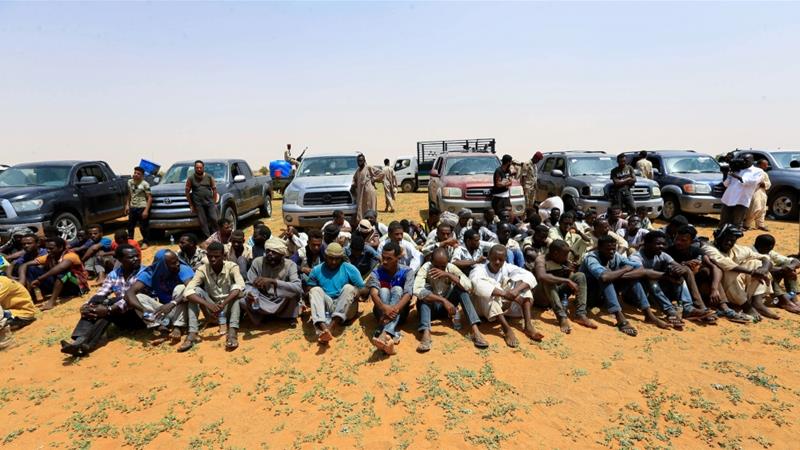
The International Organization for Migration (IOM) has disclosed that over 70,000 irregular Nigerian migrants have been returned to the country since the organization began operations in Nigeria in 2001, placing Nigeria among the countries with the highest rates of irregular migration.
This was revealed by IOM’s Deputy Director General of Operations, Ugochi Florence Daniels, during a courtesy visit to the Minister of State for Foreign Affairs, Ambassador Bianca Odumegwu-Ojukwu, at her office in Abuja.
According to a statement by Magnus Eze, Special Assistant on Communication and New Media to the Minister, Daniels noted that approximately 27,000 of the returnees have been reintegrated into Nigerian society through IOM’s Assisted Voluntary Return and Reintegration (AVRR) Programme.
“We have a very comprehensive intervention in Nigeria. We count on your continued support for the work of IOM in Nigeria,” Daniels said, reaffirming the organization’s commitment to promoting humane and orderly migration in line with the Sustainable Development Goals (SDGs) and the African Union’s Agenda 2063.
Responding, Ambassador Odumegwu-Ojukwu reiterated the Federal Government’s readiness to strengthen its collaboration with the IOM, particularly in addressing irregular migration. She blamed the surge in irregular migration—especially among young Nigerians—on the persistent “myth of greener pastures” abroad, noting that the government is actively working to counter this perception through sustained awareness campaigns.
She also emphasized that Diaspora affairs remain a central pillar of President Bola Ahmed Tinubu’s foreign policy strategy, known as the “4-Ds” — Democracy, Demography, Diaspora, and Development. “Diaspora plays a vital role in our national development and economic growth,” she said.
The minister commended IOM for its role in responding to humanitarian crises in Nigeria, including the recent displacement caused by flooding in Niger State. She acknowledged IOM’s rapid deployment of teams for damage assessments and the provision of emergency shelter kits and non-food items to over 1,000 vulnerable families.
Odumegwu-Ojukwu called on IOM to align its programmes more closely with Nigeria’s national priorities and to develop initiatives that address the core needs of vulnerable populations, especially in light of the organisation’s current financial challenges.
She also encouraged IOM to explore alternative funding partnerships with non-traditional donors and to coordinate more closely with Nigerian Ministries, Departments, Agencies, and other international bodies.
In closing, the Minister announced Nigeria’s willingness to host international organisations relocating from Geneva or New York under the UN80 Reform Initiative.
IOM Nigeria is currently implementing the EU-funded “Promoting Better Management of Migration in Nigeria” (PBMM) programme, which supports the government in strengthening migration governance through improved border management, migration data, policy development, labour migration, and diaspora engagement.


Accelerating Intra-Africa Trade and Sustainable Development -By Kestér Kenn Klomegâh
The AU Private Sector Forum has held several forums, with key recommendations. These recommendations provide valuable insights into the challenges...


Human Rights Day 2025: Advancing The Right To Food And The Rights of Africa’s Farmers -By Prof. Uche Ofodile
One of the most essential human rights is the right to adequate, safe, nutritious, and culturally appropriate food. This right...


Africa’s Democracy Time Bomb -By Patrick Iwelunmor
Africa is not lacking in potential; it is lacking in leadership. By virtue of its population, its resources and its...

Russia’s Lukoil Losses Strategic Influence Across Africa -By Kestér Kenn Klomegâh
United States sanctions has hit Lukoil, one of the Russia's biggest oil companies, like many other Russian companies, that has...


Inadvisability Of Worrying About The Osun Drama As Every First Lady Must Leave A Footprint -By Isaac Asabor
But here is the truth: there is absolutely no reason to worry. Nigerians are acting as though mild tension or...