
Forgotten Dairies
A Critical Appraisal of the Ultra Vires Doctrine in Nigerian Company Law: A Comparative Perspective with South Africa -By Ishie-Johnson Emmanuel Esq.
This study applies theories of corporate legal capacity and stakeholder protection, recognizing the ultra vires doctrine as embodying limits on corporate power to protect investors and creditors. It draws on contractarian theory emphasizing enforceable limits grounded in corporate constitutions (Easterbrook & Fischel, 1991).


Abstract
This article critically examines the ultra vires doctrine within Nigerian company law, analyzing its historical development, current application, and limitations. Employing a comparative perspective, it juxtaposes Nigeria’s legal framework under the Companies and Allied Matters Act (CAMA) with South Africa’s more liberal approach under the Companies Act 2008. The study utilizes doctrinal legal research to evaluate statutory provisions, judicial interpretations, and scholarly critiques surrounding the doctrine. Findings reveal that while Nigeria retains a restrictive application aimed at safeguarding shareholders, this has engendered legal uncertainty and constrained corporate flexibility. Conversely, South Africa’s plenary powers model offers greater predictability and protection for third parties, facilitating smoother commercial transactions. The article recommends that Nigeria consider reforming its ultra vires doctrine to balance shareholder protections with enhanced business flexibility and investor confidence. Such reforms would better align Nigerian company law with international best practices, promoting economic growth and corporate competitiveness.
Introduction
The ultra vires doctrine, meaning “beyond the powers,” is a fundamental principle in Nigerian company law that limits companies to carrying out only those activities authorized by their constitutional documents. Originally intended to protect shareholders and creditors by ensuring corporate funds are used for legitimate purposes, the doctrine has, over time, become a source of legal uncertainty and operational inflexibility. Preserved under the Companies and Allied Matters Act (CAMA), Nigeria’s application of this doctrine contrasts with South Africa’s more liberal approach, which grants companies broader powers and legal certainty. This article critically examines the doctrine’s evolution, current application, and challenges in Nigeria, offering a comparative perspective with South Africa to highlight potential reforms aimed at balancing shareholder protection with business flexibility.
Research Questions
- What has been the historical development of the ultra vires doctrine in Nigerian company law?
- How has the ultra vires doctrine impacted corporate transactions, shareholder protections, and third-party dealings in Nigeria?
- To what extent has legislative reform, notably under the Companies and Allied Matters Act (CAMA), modified the application and effectiveness of the ultra vires doctrine?
- How does Nigeria’s approach to the ultra vires doctrine compare with South Africa’s more liberal framework under the Companies Act 2008?
- What reforms are necessary to optimize the balance between corporate flexibility and stakeholder protection in Nigerian company law?
Scope of Study
This study focuses on the doctrine of ultra vires as it applies to Nigerian company law, examining statutory provisions, judicial interpretations, and scholarly critiques from its colonial origins to present reforms under the Companies and Allied Matters Act (CAMA) 2020. It also includes a comparative analysis with South Africa’s more liberal approach to corporate capacity under the Companies Act 2008. The research investigates the doctrine’s impact on corporate transactions, investor and creditor protections, and the regulatory environment, concluding with recommendations for legislative and judicial reforms to enhance legal certainty and economic growth in Nigeria.
Literature Review
The doctrine of ultra vires, originating from English common law and inherited into Nigerian law via colonial ordinances, restricts companies to activities authorized by their constitutional documents. Scholars agree that its primary purpose is to protect shareholders and creditors by ensuring that a company’s funds are used for legitimate business objects as defined in the memorandum of association (Chimezule, 2024; Abangwu et al., 2025). However, over time, the strict application of the doctrine has been criticized for causing hardship to innocent third parties and limiting corporate operational flexibility (Okoli, 2018; Adekoya, 2020).
The Companies and Allied Matters Act (CAMA) 2020 introduced reforms to moderate the doctrine, such as allowing companies to alter their objects clause by special resolution and providing protections to third parties acting in good faith (Abangwu et al., 2025). Despite these reforms, some scholars contend that Nigeria’s ultra vires doctrine remains overly rigid compared to more liberal modern approaches found in jurisdictions like South Africa, where the Companies Act 2008 grants companies plenary powers and makes ultra vires acts binding and enforceable (South African Companies Act 2008; World Bank, 2020).
The literature reflects an ongoing debate on whether the doctrine should be fully abolished or reformed to balance shareholder protection with business flexibility and predictability (Farrar, 2018; Davies, 2020). This study builds on existing scholarship by providing a comparative analysis and offering recommendations suited to the Nigerian business environment.
Theoretical Perspective
This study applies theories of corporate legal capacity and stakeholder protection, recognizing the ultra vires doctrine as embodying limits on corporate power to protect investors and creditors. It draws on contractarian theory emphasizing enforceable limits grounded in corporate constitutions (Easterbrook & Fischel, 1991).
Additionally, economic efficiency and legal realism perspectives highlight the need for legal adaptability to market realities, promoting predictability and reducing transaction costs without sacrificing stakeholder safeguards. These frameworks guide the comparative evaluation of Nigerian and South African approaches to the doctrine.
Criticisms and Limitations of the Ultra Vires Doctrine
- Restrictive Nature: The ultra vires doctrine has been criticized for its inherent restrictiveness, as it can impede a company’s ability to adapt flexibly to evolving business environments and pursue innovative opportunities. This limitation has been highlighted by Farrar (2018), who emphasizes that rigid adherence to the doctrine may stifle corporate growth and responsiveness.
- Uncertainty for Third Parties: Another significant critique is the uncertainty the doctrine generates for third parties engaging in transactions with companies. Adekoya (2020) notes that external stakeholders often face ambiguity regarding whether a given corporate act falls within the company’s legal capacity, potentially undermining commercial confidence and increasing transactional risk.
Comparative Perspectives on the Ultra Vires Doctrine
- South African Approach: The South African Companies Act 2008 adopts a more liberal stance towards the ultra vires doctrine by granting companies plenary powers. Under this framework, acts that would traditionally be deemed ultra vires are considered binding and enforceable between the parties involved, thereby enhancing legal certainty and commercial flexibility (South African Companies Act, 2008).
- International Best Practices: International bodies, including the World Bank, stress the critical importance of clarity and predictability in company law frameworks. This emphasis extends to the ultra vires doctrine, where transparency in corporate capacity is deemed essential for fostering investor confidence and facilitating business operations (World Bank, 2020).
Historical Overview of the Ultra Vires Doctrine
The ultra vires doctrine possesses a long and evolving history within company law, shaped by judicial rulings, legislative reforms, and shifting commercial practices.
- Early Development (17th–19th Centuries): The doctrine originated in the 17th century as a mechanism to restrict corporate powers. During this era, companies were granted specific powers through their charters or constitutions, and any act done beyond these granted powers was deemed ultra vires—beyond the company’s capacity—and consequently void.
- Judicial Expansion (19th–Early 20th Centuries): The doctrine’s application broadened through judicial interpretation in the 19th and early 20th centuries. Courts adopted a strict approach to company constitutions, particularly the objects clause, ruling that any transaction outside the defined objects was ultra vires and therefore unenforceable. This judicial expansion reinforced the doctrine’s role as a safeguard against unauthorized corporate actions.
- Legislative Interventions (Mid-20th Century): In response to widespread criticism of the ultra vires doctrine’s rigidity, legislatures began enacting statutory reforms to alleviate its stringent effects. Notably, the UK Companies Act 1948 introduced provisions that allowed companies to amend their objects clauses and offered protection to third parties acting in good faith when dealing with companies. These measures sought to reduce transactional uncertainty and foster commercial fluidity.
- Modern Reforms (Late 20th–Early 21st Centuries): More recently, numerous jurisdictions have undertaken comprehensive reforms of their company laws to diminish the practical impact of the ultra vires doctrine. These reforms emphasize enhancing corporate flexibility and legal certainty in business dealings, while simultaneously safeguarding shareholder rights and interests.
- Current Position: Today, the relevance and application of the ultra vires doctrine vary across legal systems. Jurisdictions such as South Africa have adopted a liberal approach by conferring plenary powers on companies, thereby making ultra vires acts binding and enforceable between the parties involved. This evolution demonstrates an ongoing effort to balance shareholder protection with commercial certainty and operational flexibility.
- The Nigerian Context: In Nigeria, the ultra vires doctrine remains a recognized principle of company law that delineates the extent of a company’s powers and capacities. Section 39(1) of the Companies and Allied Matters Act (CAMA) preserves the doctrine, albeit with a significant limitation to its practical effects, reflecting efforts to modernize company law while maintaining core protective functions.
Key Aspects of the Ultra Vires Doctrine in Nigeria
- Alteration of Objects Clause: Under Sections 45 and 46 of the Companies and Allied Matters Act (CAMA), a company may alter its objects clause by special resolution. This provision enables companies to adjust their constitutional powers in response to changing business environments, thereby facilitating pursuit of new opportunities.
- Limited Application: The ultra vires doctrine in Nigeria may only be invoked by members or debenture holders of the company. Neither the company itself nor third parties dealing with the company are entitled to raise the doctrine as a defense or claim.
- Protection of Executed Acts: All executed acts of a company are deemed valid and are protected from being challenged on the basis of being ultra vires. This means that once a transaction is completed, it cannot be invalidated on grounds that it exceeded the company’s capacity.
- Restraint of Ultra Vires Acts: While a member or debenture holder may initiate proceedings to restrain a company from engaging in ultra vires acts, such action is only viable if the alleged act is yet to be concluded.
- Abolition of the Constructive Notice Rule: The repeal of the constructive notice rule has significantly curtailed the effectiveness of the ultra vires doctrine. This reform facilitates corporate transactions by preventing third parties from being bound by implied knowledge of the company’s constitution, thereby enhancing commercial reliability
Effectiveness and Relevance of the Ultra Vires Doctrine
The ultra vires doctrine has faced criticism for being antiquated and restrictive, impeding companies’ operational effectiveness. Some scholars contend that the doctrine has outlived its utility and advocate for its complete abolition in Nigeria to afford companies unrestricted capacity to engage in business activities.
Comparison with Other Jurisdictions
The status of the ultra vires doctrine in Nigeria parallels that of the United Kingdom, where statutory reforms have significantly curtailed its practical application. In contrast, jurisdictions such as South Africa have embraced a more liberal model, granting companies plenary powers that render ultra vires acts valid and enforceable between parties.
Despite its diminished force due to statutory modifications, the ultra vires doctrine remains a significant element of Nigerian company law. While opinions diverge on whether it should be entirely abolished, many maintain that it continues to play a vital role in protecting the interests of shareholders. The doctrine’s function is expected to evolve alongside Nigeria’s dynamic business environment and regulatory framework.
Comparison of the Ultra Vires Doctrine in Nigeria and South Africa
The ultra vires doctrine in Nigeria and South Africa shares foundational similarities but diverges significantly in its practical application and legal consequences.
Similarities:
- Statutory Framework: Both Nigeria and South Africa operate company law regimes under comprehensive statutory frameworks the Companies and Allied Matters Act (CAMA) in Nigeria and the Companies Act 2008 in South Africa.
- Purpose of the Doctrine: In both jurisdictions, the ultra vires doctrine aims primarily to safeguard shareholders’ interests and ensure that companies act strictly within their authorized powers.
Differences:
- Approach to Corporate Powers: South Africa has adopted a notably liberal approach. The Companies Act 2008 confers plenary powers on companies, such that ultra vires acts are generally regarded as valid and binding between parties, thus promoting legal certainty and commercial flexibility.
- Restriction and Enforcement: In contrast, Nigeria maintains a more restrictive application. While CAMA has diluted the doctrine’s harshness, ultra vires acts can still be challenged internally by shareholders or debenture holders, reflecting a residual protective stance aimed at curbing unauthorized corporate conduct.
- Judicial and Regulatory Oversight: South African law provides clearer provisions rendering ultra vires acts enforceable, whereas Nigerian courts and regulatory bodies continue to navigate a balance between enforcing the doctrine and enabling corporate agility. This has resulted in legal debates about the adequacy of current statutory provisions in Nigeria, with calls for reform to strike a more equitable balance.
Comparative Analysis and Implications of the Ultra Vires Doctrine in Nigeria and South Africa
Key Differences:
- Approach to Ultra Vires: Nigeria’s Companies and Allied Matters Act (CAMA) preserves the ultra vires doctrine but permits companies to alter their objects clause by special resolution. In contrast, South Africa’s Companies Act 2008 adopts a more liberal approach, granting companies plenary powers and rendering ultra vires acts binding and enforceable between parties.
- Effect of Ultra Vires Acts: In Nigeria, ultra vires acts are generally considered void and unenforceable, while in South Africa, such acts are valid and binding among the parties involved.
- Protection of Third Parties: South Africa’s regime offers stronger protection for third parties, who are not required to investigate the company’s capacity or directors’ authority. Nigeria has limited protections in this regard, although the abolition of the constructive notice rule has provided some relief to third parties.
Implications
- The South African approach delivers greater legal certainty and predictability for companies and external parties by validating ultra vires acts, which encourages business transactions and investment.
- Nigeria’s approach, while allowing flexibility through alterations to the objects clause, suffers from residual uncertainty regarding ultra vires acts. This can inhibit business agility and complicate commercial dealings.The doctrine continues to protect shareholders’ interests by ensuring companies operate within authorized powers but may restrict corporate adaptability and growth.
Recommendations for Nigeria
- Reform the Doctrine: Nigeria should consider adopting a more liberal model akin to South Africa’s, granting companies plenary powers and validating ultra vires acts to enhance commercial certainty.
- Clarify Legal Framework: Introduce clearer statutory guidelines defining the ultra vires doctrine’s scope and procedures for challenging acts to reduce ambiguity for all stakeholders.
- Strengthen Shareholder Protections: Develop alternative mechanisms such as enhanced disclosure, corporate governance reforms, and stronger shareholder rights to safeguard investors without overly restricting corporate flexibility.
- Enhance Third-Party Protections: Extend greater legal protections to third parties dealing with companies to foster confidence and reduce transactional risks.
- Promote a Business-Friendly Environment: Foster legal reforms that balance operational flexibility with accountability to create an attractive climate for investment and commerce.
- Regular Legal Review: Continuously update company law to reflect evolving business realities and international best practices.
Benefits of Recommendations
- Increased Certainty and Predictability: Adopting a more liberal approach to the ultra vires doctrine and providing clearer guidelines would enhance certainty and predictability for both companies and third parties.
- Improved Business Flexibility: Reforming the doctrine would enable companies to operate more efficiently, pursue new opportunities, and adapt to evolving circumstances.
- Enhanced Shareholder Protection: Implementing alternative mechanisms to safeguard shareholders’ interests would balance protection with enabling growth.
Conclusion
The ultra vires doctrine remains a complex and evolving area of Nigerian company law with notable implications for companies, shareholders, and third parties. While the doctrine plays a protective role by ensuring corporate actions stay within authorized powers, its application can generate uncertainty and constrain business flexibility.
The analysis underscores the case for reform and greater clarity. A more liberal model, inspired by South Africa’s approach, could promote business growth, enhance certainty and predictability, and improve the competitiveness of Nigerian companies.
Ultimately, effective company law should balance shareholder protection with operational flexibility and growth. Achieving this balance would create a more business-friendly environment, attract investment, support entrepreneurship, and contribute to broader economic development.
References
Adekoya O, ‘The Companies and Allied Matters Act 2020: An Overview’ (2020) 1 Nigerian Law Journal 1
Davies P, Introduction to Company Law (Oxford University Press 2020)
Easterbrook FH and Fischel DR, The Economic Structure of Corporate Law (Harvard University Press 1991)
Farrar J, Company Law (Routledge 2018)
South African Companies Act 2008
World Bank, Doing Business 2020 (World Bank Group 2020)
Companies Act 1968 (Nigeria)
Companies and Allied Matters Act 2020 (Nigeria) s 39



Accelerating Intra-Africa Trade and Sustainable Development -By Kestér Kenn Klomegâh
The AU Private Sector Forum has held several forums, with key recommendations. These recommendations provide valuable insights into the challenges...


Human Rights Day 2025: Advancing The Right To Food And The Rights of Africa’s Farmers -By Prof. Uche Ofodile
One of the most essential human rights is the right to adequate, safe, nutritious, and culturally appropriate food. This right...


Africa’s Democracy Time Bomb -By Patrick Iwelunmor
Africa is not lacking in potential; it is lacking in leadership. By virtue of its population, its resources and its...
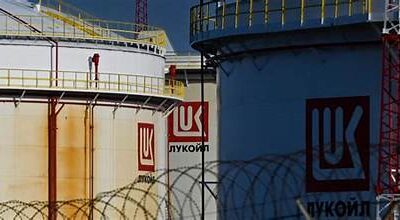

Russia’s Lukoil Losses Strategic Influence Across Africa -By Kestér Kenn Klomegâh
United States sanctions has hit Lukoil, one of the Russia's biggest oil companies, like many other Russian companies, that has...


Inadvisability Of Worrying About The Osun Drama As Every First Lady Must Leave A Footprint -By Isaac Asabor
But here is the truth: there is absolutely no reason to worry. Nigerians are acting as though mild tension or...