
Breaking News
Africa’s Migrant Workers Still Face Exploitation Despite Protections – ITUC-Africa
ITUC-Africa warns that migrant workers across Africa continue to face exploitation, abuse and insecurity despite existing regional and global protection frameworks, citing weak enforcement and policy gaps.

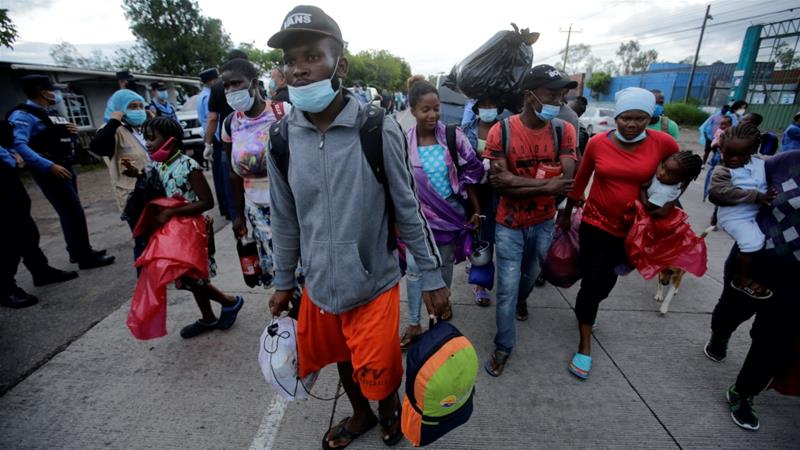
Africa’s migrant workers continue to endure widespread exploitation, abuse and insecurity despite existing regional and global protection frameworks, the African Regional Organisation of the International Trade Union Confederation (ITUC-Africa) has warned.
In a statement issued on December 18 and signed by ITUC-Africa General Secretary, Akhator Odigie, the organisation said Africa remains a region of origin, transit and destination for migrants, with most movements occurring within the continent, largely driven by economic hardship and insecurity.
According to the statement, “Africa’s workers migrate in search of decent work, safety and opportunity. They are pushed by unemployment, inequality, conflict, climate stress and weak labour markets. Migrants and migrant workers are first and foremost human beings and workers, and they deserve protection, dignity and respect.”
ITUC-Africa, which represents more than 18 million workers across the continent, said the lived experiences of many migrants sharply contradict these ideals.
“Sadly, many migrants, migrant workers and members of their families continue to face exploitation, abusive recruitment, wage theft, forced labour, trafficking and discrimination. Women migrant workers and young people are especially vulnerable to violence, harassment and dangerous irregular migration pathways,” the organisation stated.
The union body stressed that the continued abuse of migrant workers is not due to a lack of policy frameworks, noting that multiple international and continental instruments are already in place.
“There is no shortage of frameworks to protect migrant workers. ILO Conventions, the Fair Recruitment Principles, the Global Compact for Safe, Orderly and Regular Migration, as well as African Union and Regional Economic Communities’ migration and labour instruments provide clear guidance,” it said.
However, ITUC-Africa argued that poor implementation and enforcement remain the core challenges.
“Implementation gaps remain wide. Weak regulation of recruitment agencies, lack of political will, limited labour inspection, deep structural inequalities and poor access to justice continue to fuel exploitation and irregular migration,” the statement warned.
The organisation also criticised the increasing reliance on security-driven migration policies, describing them as ineffective and harmful.
“Security-only approaches and the externalisation of borders have failed. They push migrants into more dangerous routes while enriching traffickers and smugglers who profit from human desperation,” it said.
Calling for urgent reforms, ITUC-Africa urged African governments to prioritise workers’ rights and social protection in migration governance.
“We call on African governments to strengthen protection for migrant workers by investing in decent work, social protection, fair recruitment and effective labour migration governance,” it stated.
The group also appealed to African Union member states to ratify and implement the AU Free Movement Protocol adopted in 2018.
“We strongly urge AU member states to ratify the Free Movement Protocol to advance Agenda 2063, unlock the full potential of the African Continental Free Trade Area, AfCFTA, and restore dignity to migrants, migrant workers and their families,” ITUC-Africa said.
In addition, the organisation called on the African Union and Regional Economic Communities to ensure that continental integration efforts are firmly anchored in labour rights.
“Free movement and AfCFTA ambitions must be anchored in workers’ rights and social dialogue. This requires sincere, collaborative and inclusive engagement with all key stakeholders, particularly organised labour,” the statement said.
ITUC-Africa reaffirmed the commitment of trade unions to work with governments and other actors to protect migrants across the continent.
“Trade unions remain committed to building alliances with non-state actors and engaging constructively with governments and other stakeholders. Our goal is to ensure the safety, rights and dignity of all migrants across Africa,” it added.
Opinion Nigeria News



Nigeria’s Middle Class Is Slipping Into Poverty — And We Are All at Risk -By Abdulhamid Rabiu
What is urgently needed is a shift from abstract economic targets to people-centered policies. Inflation control must be prioritized. Wages...


Second Ministerial Conference: Shaping Russian-African Strategic Partnerships -By Kestér Kenn Klomegâh
As indicated from above, the most important issues of multifaceted development are included on the Russian-African agenda, with a focus...


When Matrimony Is Dead On Arrival, The Wedding Was Only A Ceremony -By Isaac Asabor
Marriage is not for everyone, and that truth needs to be said plainly. It requires emotional intelligence, self-control, humility, and...


Awards Without Impact: Rethinking ‘Good Governance’ In Bauchi State -By Yasir Shehu Adam
True good governance is not proven in Abuja halls or award plaques. It is proven in functional classrooms, well-equipped hospitals,...


When “Happily Ever After” Starts Expiring: A Deep Dive into the Alarming Rise of Failed Marriages -By Peace Adams Bitrus
Weddings have become theatrical performances. Months of planning, millions spent, lights, cameras, choreographed dances… but very little attention is given...