
Breaking News
America donates 10,000 doses of vaccine to Nigeria for Mpox
Vaccination is the best way to avoid mpox. It has been discovered that those who are 18 years of age and older are at a high risk of contracting the mpox virus, and vaccination is strongly advised.

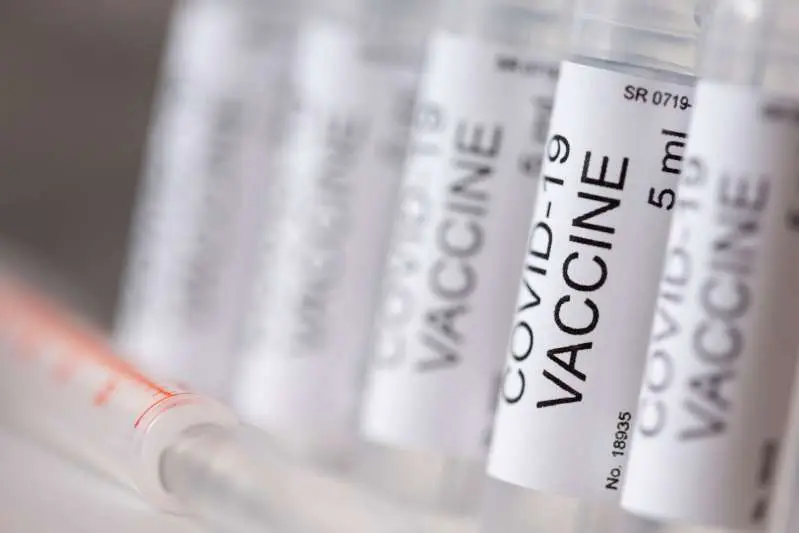
In order to assist the Government of Nigeria in combating the current mpox outbreak, the United States Government, via the U.S. Agency for International Development, USAID, sent 10,000 doses of the mpox (formerly known as “Monkeypox”) vaccine to that country on Tuesday.
A contagious viral illness that affects both humans and animals is mumps. It can spread through intimate relationships, including sexual ones.
Vaccination is the best way to avoid mpox. It has been discovered that those who are 18 years of age and older are at a high risk of contracting the mpox virus, and vaccination is strongly advised.
The vaccination consists of a single booster shot for those who have already received a smallpox vaccination and a two-dose primary series for those who have never gotten one.
Ambassador Richard Mills, speaking at the event to hand over the vaccines to the National Primary Healthcare Development Agency, NPHCDA,explained that the United States Government’s action was aimed at providing timely vaccine to the affected areas across the country and those who are most vulnerable to mpox infection.
“We are pleased to know that this is a timely donation that will reach the affected areas across the country and those who are most vulnerable to mpox infection.”
“We encourage the Government of Nigeria to continue to mobilize domestic resources to secure more vaccines to combat mpox, “he said.
The Government of Nigeria has prioritized five states (Bayelsa, Edo, Cross-River, Lagos, and Rivers) with the highest burden of mpox cases.
The vaccines will be given to those most at risk of mpox including close contacts of mpox cases and frontline healthcare workers with a provision for reactive vaccination in other states as the need arises.
Asked on the safety of the vaccine, Ambassador Mills said: “Yes, the vaccine is safe. Safety tests have been conducted during clinical trials, and the National Agency for Food and Drug Administration and Control reviewed the results of these trials before granting approval for the use of the vaccines in Nigeria.”
According to him,USAID will continue to provide technical support and collaborate with the government of Nigeria to improve prevention, preparedness, detection, response, and resilience to infectious disease outbreaks.
“USAID is also supporting the government of Nigeria with strengthening primary health care and routine immunization systems as well as supporting overall systems strengthening including health, education, nutrition, governance systems, and the rule of law.
The presentation was done the headquarters of the National Primary Health Care Development Agency.
Speaking at the event, the Coordinating Minister of Health and Social Welfare, Prof. Ali Pate, who was represented by the Permanent Secretary, Mrs Kachollom Daju, thanked the United States Government’s gesture, assuring that the vaccine will be immediately deployed for use.
He reiterated the federal government’s commitment to improving the well-being of Nigerians.
“This is a spirit of cooperation and collaboration through the years, and this vaccine will be of great help to us. The Federal Ministry of Health understands the importance of having a healthy nation, so all the policies that we implement and the collaborations are focused on ensuring our citizens’ health.
“Thank you for the 10,000 doses, and we look forward to receiving more. I also want to thank our development partners, USAID, PEPFAR, WHO, UNICEF, and all the UN organisations. Your collaboration is greatly appreciated, and this will significantly aid those in need.
“We all recognise the size of our population, and we must ensure that we address every disease, especially those that pose public health concerns. On this note, I would like to extend our gratitude”, he added.
Mpox is a rare viral zoonotic infectious disease (i.e. an infection transmitted from animals to humans) that occurs sporadically, primarily in remote villages of Central and West Africa, near tropical rainforests. It is caused by the mpox virus, which belongs to the Orthopoxvirus genus in the family Poxviridae.
The Orthopoxvirus genus also includes the variola virus (the cause of smallpox), the vaccinia virus (used in the smallpox eradication vaccine), and the cowpox virus (used in earlier smallpox vaccines). Following the eradication of smallpox, the mpox virus has emerged as the most significant Orthopoxvirus.



Accelerating Intra-Africa Trade and Sustainable Development -By Kestér Kenn Klomegâh
The AU Private Sector Forum has held several forums, with key recommendations. These recommendations provide valuable insights into the challenges...


Human Rights Day 2025: Advancing The Right To Food And The Rights of Africa’s Farmers -By Prof. Uche Ofodile
One of the most essential human rights is the right to adequate, safe, nutritious, and culturally appropriate food. This right...


Africa’s Democracy Time Bomb -By Patrick Iwelunmor
Africa is not lacking in potential; it is lacking in leadership. By virtue of its population, its resources and its...


Russia’s Lukoil Losses Strategic Influence Across Africa -By Kestér Kenn Klomegâh
United States sanctions has hit Lukoil, one of the Russia's biggest oil companies, like many other Russian companies, that has...


Inadvisability Of Worrying About The Osun Drama As Every First Lady Must Leave A Footprint -By Isaac Asabor
But here is the truth: there is absolutely no reason to worry. Nigerians are acting as though mild tension or...