
Breaking News
Economist Urges FG to Tax Religious Institutions, Says Exemptions Breed Inequality and Distrust
Economist Daramola Omoyele calls on the Federal Government to tax religious institutions, arguing that excluding wealthy churches and mosques undermines fairness and public trust. He also urges government to fight corruption and improve tax transparency.

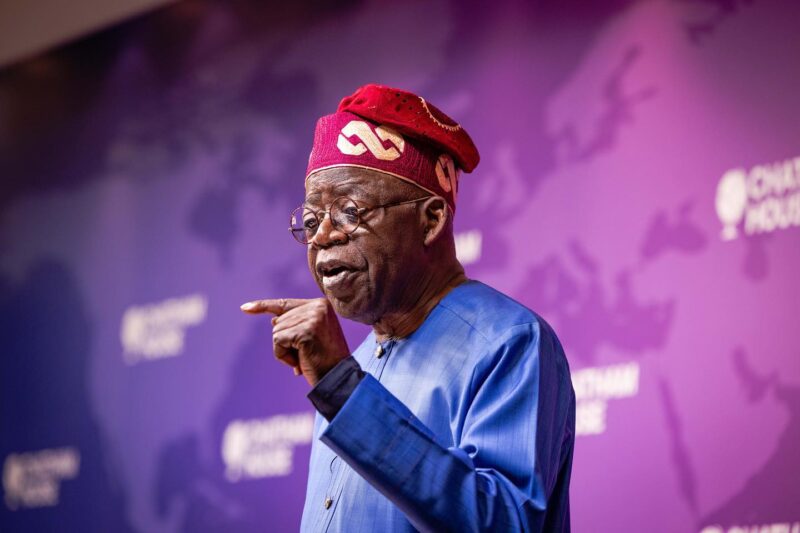
An economist, Daramola Omoyele, has called on the Federal Government to include religious institutions in Nigeria’s tax net, stressing that true reform must balance fairness with transparency and accountability.
Speaking in an interview with the News Agency of Nigeria (NAN) on Wednesday, Omoyele said that while the Nigeria Tax Administration Act (2025) introduced commendable reforms, including a unified tax identification system, stricter compliance, and new levies to widen the tax base, it risks failure if it continues to shield the most powerful.
“The new tax reform, though well-intentioned, will fail if it exempts the most powerful while burdening the powerless,” Omoyele warned.
He noted that the law raised the personal income tax exemption threshold to ₦800,000 annually to protect low-income earners but said many Nigerians would still face multiple local levies, consumption taxes, and indirect charges that worsen living costs.
Calls for Inclusion of Religious Bodies
Omoyele argued that one of the most overlooked weaknesses in Nigeria’s tax framework is the continued exclusion of religious institutions from taxation.
“In today’s Nigeria, it is almost impossible to separate many pastors or imams from their ministries. Many religious leaders are wealthier than the institutions they lead, owning fleets of luxury cars, private jets, and mansions while their congregations struggle to survive,” he said.
According to him, some religious figures manipulate faith to enrich themselves without accountability, while many Nigerians willingly pay tithes, offerings, or seed sowing but avoid taxes.
“Through these religious payments, some leaders have built vast personal empires while ordinary citizens bear the cost of public services. This is not simply a spiritual issue—it is an economic one,” Omoyele said.
He argued that exempting religious leaders from tax obligations undermines public trust and weakens government revenue, as billions circulate untaxed through institutions that operate as “financial powerhouses.”
“Many religious organisations collect millions of naira daily in offerings and donations that go unrecorded and untaxed, even though they often exceed the turnover of many small businesses,” he said.
“Preaching justice and fairness must go hand in hand with civic responsibility. Paying tax is not a sin; it is an act of service to society.”
Omoyele stressed that a fair tax policy covering all income sources would reduce exploitation of followers and ensure greater accountability.
Addressing Corruption in Tax Administration
The economist also warned that taxation reforms would remain ineffective without tackling corruption within tax institutions.
“Until corruption is tackled and all income, including religious wealth, is fairly taxed, Nigerians will continue to view taxation as oppression, not obligation,” he said.
He noted that the biggest obstacle to effective taxation in Nigeria is not poverty but the mismanagement of public funds, which has eroded citizens’ confidence.
“When tax revenue is mismanaged, stolen, or spent without transparency, people lose faith in the system. It becomes difficult to convince market women and civil servants to pay taxes when they see public officials living extravagantly, roads collapsing, hospitals in ruins, and basic services failing,” he lamented.
According to Omoyele, restoring public trust requires integrity, transparency, and fairness.
“Religious institutions should not be treated as sacred exceptions to civic duty. If big corporations like Dangote Cement or Seplat must pay taxes, then churches, mosques, and temples that accumulate massive wealth should not be exempt,” he said.
“However, fairness also demands that the poor be protected. Over-taxing low-income citizens without addressing corruption or closing elite loopholes will only worsen inequality.”
He concluded that the success of Nigeria’s new tax regime would depend on coupling enforcement with transparency and ensuring Nigerians can see how their taxes are spent.
“Otherwise, the reform will remain another beautiful policy on paper while poverty deepens on the streets,” Omoyele said.
Opinion Nigeria News


Accelerating Intra-Africa Trade and Sustainable Development -By Kestér Kenn Klomegâh
The AU Private Sector Forum has held several forums, with key recommendations. These recommendations provide valuable insights into the challenges...


Human Rights Day 2025: Advancing The Right To Food And The Rights of Africa’s Farmers -By Prof. Uche Ofodile
One of the most essential human rights is the right to adequate, safe, nutritious, and culturally appropriate food. This right...


Africa’s Democracy Time Bomb -By Patrick Iwelunmor
Africa is not lacking in potential; it is lacking in leadership. By virtue of its population, its resources and its...

Russia’s Lukoil Losses Strategic Influence Across Africa -By Kestér Kenn Klomegâh
United States sanctions has hit Lukoil, one of the Russia's biggest oil companies, like many other Russian companies, that has...

Inadvisability Of Worrying About The Osun Drama As Every First Lady Must Leave A Footprint -By Isaac Asabor
But here is the truth: there is absolutely no reason to worry. Nigerians are acting as though mild tension or...