
Political Issues
Elections And The Bad Name It Gives To Democracy In Nigeria? -By Magnus Onyibe

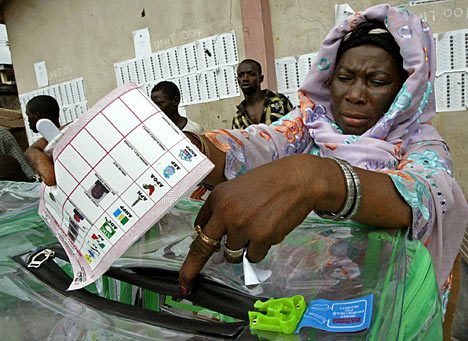

For starters, l would like to attribute the title of this article, in part to Kofi Annan, former United Nations, UN Secretary General whose recent speech to the Commonwealth was titled ‘Are Elections Giving Democracy Bad Name?’
Given the unprecedented spate of violence in the 2015 general elections that ushered change of rulership to opposition political party in Nigeria and the brigandage that eclipsed recent elections in Kogi and Bayelsa states leading to inconclusive governorship elections, all arms of government in Nigeria, need to rethink the role of violence viz-a-viz integrity of elections in our fragile democracy.
According to Annan, one of the most striking developments of the last quarter of a century is the spread of elections. In his view, the ‘‘Commonwealth was both a witness and an agent of this remarkable phenomenon. When it adopted the Harare Declaration in 1991, nine of its members were under military or one party rule. By 1999, all had become multiparty democracies”
Annan’s analogy reflects exactly the situation in Nigeria , because in 1991, our country was under the yoke of military jackboot but by 1999, multi party democracy had returned and it has consistently remained back-to-back for unbroken 16 years.
Going further, the former UN scribe, lamented thus: “Unfortunately, after the initial period of genuine change, rulers learned that elections did not necessarily have to mean democracy: elections could be gamed to remain in power, sometimes indefinitely”.
Sadly, the scenario described above by Annan, generally reflects the state of affairs in Nigerian political space which is now characterised by deadly battles to supplant popular votes with imposition of candidates using the force of violence by elements in and out of government that are undemocratic.
Most striking is Kofi Annan’s conclusion that when elections are rigged , it does three things to democracy; firstly it confuses legality with illegitimacy, secondly it confuses repression with stability and thirdly , it confuses an electoral mandate with a blank cheque.
I totally agree with him and it breaks my heart that all the three vices outlined are the hallmark of Nigerian politics of today which may partly be responsible for the current rash of election annulments and mutual suspicion between the ruling and opposition parties which are accusing each other of sleight of hands in their illicit dealings with the judiciary to undo each other.
As a democracy enthusiast, I am persuaded by the illustrious diplomat and Africa’s foremost democracy evangelist’s sentiments in that regard, hence l decided to graft some of his thoughts into this article.
That also explains why ,the original title of this article ‘The Absurdities Of Nigerian Electoral Process And Judicial Interventions’ which l had crafted a couple of weeks ago was dumped for not being fitting enough as soon as l read and digested Annan’s inspiring piece.
l was excited by the presentation simply due to the fact that it is focused on similar issues of violence and other shady activities that characterise elections in Nigeria. I’m particularly peeved by untoward election violation activities that lead to the shifting of the struggle for political power from the electorates to the arena of law courts and in the process denying Nigerians the opportunity to choose their leaders, all of which make government loose legitimacy.
Talking about loss of legitimacy of government most sociopolitical analysts, so far , are yet to observe that our warped election processes, which have worsened in the past 16 years of return to democracy, may be partly accountable for the rise of organised insurgency by Boko haram in the North East, fighting for an Islamic state, which started under the watch of ex president Olusegun Obasanjo, spanning the reign of late President Umaru Yar’Adua and peaked under immediate past President Goodluck Jonathan. With power shifting to the North,a South East nationalist group, MASSOB is now agitating for the state of Biafra in the South East, under President Muhammadu Buhari’s watch due to their perception, wrongly or otherwise, that amongst other reasons,the mandate of President Muhammadu Buhari might have been improperly obtained via flawed elections (loophole stemming from a combination of electronic and manual voting) hence the revolt.
Mr President did not help issues when he allegedly insisted in an interview in the USA, that he would not treat the South East people,who contributed far less votes to his victory as well as he would treat people from the Northern region who voted for him massively.Although President Buhari has argued that his comment is being quoted out of context, the initial wrong impression seem to be indelible.
Other ethnic militia groups like the Movement for Emancipation of Niger Delta (MEND) in the South-South and Odua Peoples Congress, OPC in the South West also have potent insurgency capacity but for now only Boko Haram and the Biafran movement are exhibiting violence or aggression and they are fall outs or symptoms of dissatisfaction by the electorate whose votes don’t count when elections are gamed and annulled consequently as Kofi Annan observed in his seminal thesis.
The justification for adopting the title needs no further elucidation as the latest Appeal Court annulment of the governorship election in Akwa Ibom State, eloquently testifies to the hollowness of elections in Nigeria.
Barely two weeks earlier, the Appeal Court had upheld the judgement sacking Governor Nyesom Wike, a decision earlier handed down by the Rivers State election tribunal.
In some states, (especially Rivers and Akwa Ibom) apart from the governors, majority of the members of the legislature were also sacked in one fell swoop by court judgements, thereby throwing such states into a sort of anarchy as the business of governance is suspended while political animals go back to the trenches to jockey for the vacancies opened up for fresh elections.
Perhaps as a measure of their faith in the judiciary, the embattled Rivers and Akwa Ibom states governors, Nyesom Wike and Udom Emmanuel resolved to escalate the matter all the way to the Supreme Court with the hope that a ‘Daniel Will Come To Judgement’.
If per adventure, the Supreme Court rules against Wike, then the wise crack ‘lightening does not strike same place twice’ would be a lie because the imminent scenario had happened barely eight years ago in the same Rivers state.
It may be recalled that Amaechi, now Transport minister became Rivers State governor through the Supreme Court ruling on the ground that although his name was not on the ballot, and whereas he was deemed to have won the party primaries,the party erred by fielding Celestine Omehia in the general elections instead of Ameachi and since it is the party that wins election, Omehia is deemed not to be the governor but Amaechi who was illegally substituted by the party.
Till date, the jurisprudence behind the Rivers State governorship election verdict in favour of Amaechi remains opaque and a subject of judicial curiosity.
Besides, the mysticism pervading the political atmosphere in Rivers State, there are other equally perplexing, if not absurd election decisions reverberating across the political spectrum but not resonating with the electorate, based on the agitated cacophony of voices in the mainstream and social media .
–Onyibe is a public affairs analyst


Accelerating Intra-Africa Trade and Sustainable Development -By Kestér Kenn Klomegâh
The AU Private Sector Forum has held several forums, with key recommendations. These recommendations provide valuable insights into the challenges...


Human Rights Day 2025: Advancing The Right To Food And The Rights of Africa’s Farmers -By Prof. Uche Ofodile
One of the most essential human rights is the right to adequate, safe, nutritious, and culturally appropriate food. This right...


Africa’s Democracy Time Bomb -By Patrick Iwelunmor
Africa is not lacking in potential; it is lacking in leadership. By virtue of its population, its resources and its...

Russia’s Lukoil Losses Strategic Influence Across Africa -By Kestér Kenn Klomegâh
United States sanctions has hit Lukoil, one of the Russia's biggest oil companies, like many other Russian companies, that has...

Inadvisability Of Worrying About The Osun Drama As Every First Lady Must Leave A Footprint -By Isaac Asabor
But here is the truth: there is absolutely no reason to worry. Nigerians are acting as though mild tension or...