
Breaking News
Experts Split Over Tinubu’s 15% Import Duty on Petrol, Diesel — Fears of Rising Fuel Prices and Inflation
Energy experts warn that the Federal Government’s new 15% import duty on petrol and diesel may increase fuel prices and inflation, even as PETROAN backs the move to boost local refining and energy security.

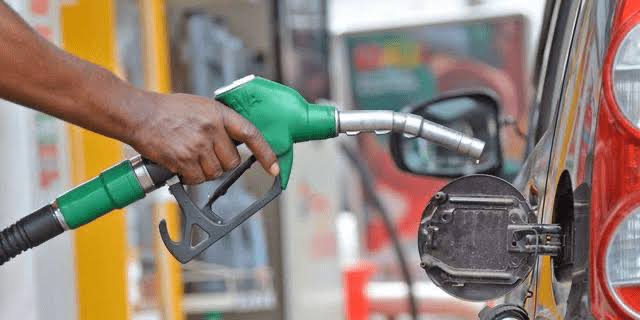
The Federal Government’s decision to impose a 15% import duty on petrol and diesel has drawn mixed reactions from energy experts and downstream operators, with concerns that the policy could push fuel prices higher and worsen inflation.
The measure, approved by President Bola Tinubu on October 29, is aimed at encouraging local refining and reducing Nigeria’s dependence on imported petroleum products. However, analysts warn it could raise the landing cost of imported fuel and trigger pump price increases of up to ₦150 per litre or more.
In an interview with the News Agency of Nigeria (NAN), Dr. Ayodele Oni, Partner and Head of Energy Practice at Bloomfield Law Practice, said the duty, while intended to boost domestic refining, may have unintended economic consequences.
“The imposition of a 15% duty will increase the landing cost of imported fuel, and this additional cost will be passed on to consumers,” Oni explained.
“In a deregulated economy like Nigeria’s, where prices are determined by market forces, there’s a strong possibility of price volatility.”
Oni acknowledged that the government’s goal is to promote energy security and market competitiveness by making imported fuel less attractive.
“By making imported fuel more expensive, local refineries become more competitive. This should, in theory, encourage domestic production,” he said.
However, he cautioned that the policy could backfire if refinery capacity remains inadequate.
“If local refining capacity stays weak, this duty could disrupt supply, as over 60% of Nigeria’s fuel is still imported,” Oni warned.
“The government must support this policy with refinery rehabilitation, infrastructure investment, and efficient logistics.”
He further noted that the tariff could strain smaller marketers:
“It may push out independent marketers who can’t bear the higher cost, leaving the market dominated by larger players.”
As an alternative, Oni suggested that the government incentivise local refining through tax breaks and duty waivers on equipment rather than imposing heavy import tariffs.
On the other hand, the Petroleum Products Retail Outlets Owners Association of Nigeria (PETROAN) welcomed the decision. Its national president, Dr. Billy Harry, described the 15% import duty as a strategic move toward energy security.
“This policy will increase local refining capacity, boost the economy, create jobs, and strengthen the naira,” Harry said.
“While there may be short-term pain such as price hikes, the long-term gains outweigh the disadvantages.”
Harry urged regulators like the Nigerian Midstream and Downstream Petroleum Regulatory Authority (NMDPRA) to prevent monopoly in the refining sector and called on NNPC Ltd to ensure adequate crude oil supply to domestic refineries.
However, a downstream operator, who spoke anonymously, questioned the timing and transparency of the policy, noting that locally refined products currently cost more than imported ones despite government incentives.
“Before imposing such tariffs, there should be full transparency about production levels, cost structures, and refinery efficiency,” he said.
“If imports become more expensive and local refineries can’t meet demand, prices and scarcity will worsen.”
He added that while the 15% import duty could potentially stimulate local refining, its success would depend on transparent oversight, strong infrastructure, and effective regulation.
Opinion Nigeria News



Why 2026 Must Be About Obeying God’s Word, Not Recycling Resolutions -By Isaac Asabor
Now, it is expedient to urge fellow Nigerians to stop pretending. The hard truth is this: many people enjoy making...

Russia Promoting Dialogue with Africa on Implementing 2023-2026 Strategic Action Plan -By Kestér Kenn Klomegâh
On December 19-20, the Second Ministerial Conference of the Russia-Africa Partnership Forum was held in Cairo, Egypt. It was held...


At 72, A Father’s Embrace: Akume, Alia, And The Future Of Benue -By Leonard Karshima Shilgba
As our leader turns 72 in December 2025—a significant and symbolic age—I humbly call on the Benue State Government and stakeholders to initiate...

United States and Russia Resolving Trade Issues and Pursuing New Opportunities -By Kestér Kenn Klomegâh
The American Chamber of Commerce (AmCham) will be working in the system of the Chamber of Commerce and Industry (CCI)...


Nigeria’s Middle Class Is Slipping Into Poverty — And We Are All at Risk -By Abdulhamid Rabiu
What is urgently needed is a shift from abstract economic targets to people-centered policies. Inflation control must be prioritized. Wages...