
Breaking News
FG Imposes 7-Year Ban on New Tertiary Institutions, Cites Waste and Declining Standards
He explained that the moratorium would give the government time to focus on expanding existing institutions, upgrade infrastructure, hire qualified staff, and raise academic standards.

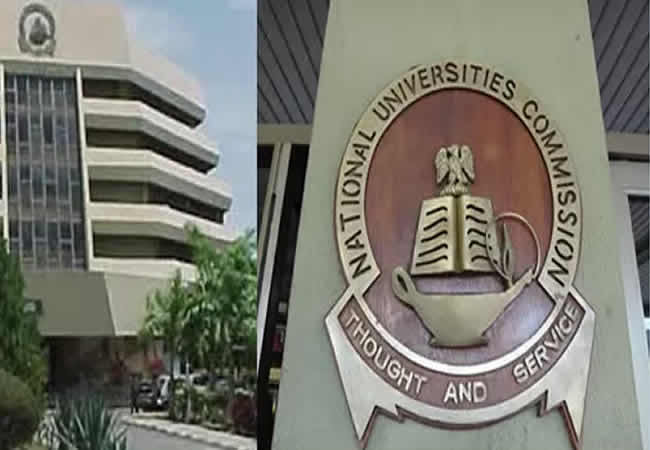
The Federal Government has imposed a seven-year moratorium on the establishment of new federal universities, polytechnics, and colleges of education, citing the proliferation of under-utilised institutions, overstretched resources, and a decline in academic quality.
The decision was approved on Wednesday during the Federal Executive Council (FEC) meeting, chaired by President Bola Tinubu at the Presidential Villa, Abuja, following a presentation by the Minister of Education, Dr. Yusuf Tunji Alausa.
Despite the freeze, FEC approved the establishment of nine new private universities whose applications had been pending for years.
Under-Enrolment, Wasted Resources
Addressing State House correspondents after the meeting, Alausa highlighted critical inefficiencies within Nigeria’s tertiary education system, including poor enrolment figures, infrastructure decay, and redundant institutions.
“Several federal universities operate far below capacity, with some having fewer than 2,000 students,” he said. “In one northern university, there are 1,200 staff serving fewer than 800 students. This is a waste of government resources.”
Alausa revealed that last year, 199 universities received fewer than 100 applications through the Joint Admissions and Matriculation Board (JAMB), with 34 universities recording zero applications. The situation was similarly bleak among polytechnics and colleges of education:
-
295 polytechnics nationwide — many had fewer than 99 applicants
-
219 colleges of education posted poor enrolment — 64 with no applications at all
Moratorium Meant to Improve Quality
The minister warned that unchecked growth of poorly subscribed institutions could result in a flood of ill-prepared graduates, further devalue Nigerian degrees internationally, and worsen youth unemployment.
“If we want to improve quality and not be a laughing stock globally, the pragmatic step is to pause the establishment of new federal institutions,” he said.
He explained that the moratorium would give the government time to focus on expanding existing institutions, upgrade infrastructure, hire qualified staff, and raise academic standards.
Private Institutions Approved After Thorough Vetting
While confirming the freeze, Alausa clarified that FEC had approved nine new private universities — not federal — at the same meeting.
“When we assumed office, there were 551 applications for private universities. Many had been stuck due to inefficiencies at the NUC. We deactivated over 350 dormant applications and set new, stricter guidelines. Of the 79 active cases, nine met the criteria and were approved,” he explained.
He added that billions of naira had already been invested in infrastructure for these institutions, which had undergone thorough evaluation by the National Universities Commission (NUC).
Ban Covers All New Institutions Nationwide
The moratorium, Alausa stressed, also applies to new private polytechnics and colleges of education, to prevent further under-enrolment and duplication.
Nigeria currently has:
-
72 federal universities
-
42 federal polytechnics
-
28 federal colleges of education
-
Alongside hundreds of state-owned, private, and specialised tertiary institutions
A Reset for Tertiary Education
Dr. Alausa praised President Tinubu for supporting the reform, describing it as a critical reset button for Nigeria’s tertiary education system.
“Mr. President believes fervently in education and has given us the mandate to ensure every Nigerian has access to the highest quality of education comparable to anywhere in the world,” he said.



Accelerating Intra-Africa Trade and Sustainable Development -By Kestér Kenn Klomegâh
The AU Private Sector Forum has held several forums, with key recommendations. These recommendations provide valuable insights into the challenges...


Human Rights Day 2025: Advancing The Right To Food And The Rights of Africa’s Farmers -By Prof. Uche Ofodile
One of the most essential human rights is the right to adequate, safe, nutritious, and culturally appropriate food. This right...


Africa’s Democracy Time Bomb -By Patrick Iwelunmor
Africa is not lacking in potential; it is lacking in leadership. By virtue of its population, its resources and its...


Russia’s Lukoil Losses Strategic Influence Across Africa -By Kestér Kenn Klomegâh
United States sanctions has hit Lukoil, one of the Russia's biggest oil companies, like many other Russian companies, that has...


Inadvisability Of Worrying About The Osun Drama As Every First Lady Must Leave A Footprint -By Isaac Asabor
But here is the truth: there is absolutely no reason to worry. Nigerians are acting as though mild tension or...