
National Issues
From Itu-Akwukwo to Yahoo-Yahoo in Nigeria -By Chibuike Obi
The information minister and his assistant are Nigerians so I wonder how they think that any foreigner would think of coming to Nigeria for tourism when the very volatile northern parts of the country erupt periodically into orgies of ethnic and sectarian violence. Armed robbery and political violence are prevalent in the South-East and the South-West. At the same time, hostage-taking and guerilla warfare against both the country’s military and multi-national oil corporations operating in the Niger Delta part of the country has become a way of life for the average youth in the Niger Delta. Or does the minister intend to permanently station armoured tanks and troops at tourist sites?

I wrote this article in 2003 or 2004 as a fourth-year student of mechanical engineering at the University of Nigeria, Nsukka campus, about Internet fraud, mostly perpetrated by young men, which was then replacing the older forms of advance fee fraud. Nigerians called and still call advance fee fraud “419” after the section of the Nigerian Criminal Code concerned with fraud. In the early 2000s, desktop computers were starting to become more common in everyday Nigerian life but they were expensive. Internet connectivity was also expensive so most people could only browse the internet in cyber cafes which provided both computer and internet services at a relatively cheap rate. People who needed extended browsing sessions for varied reasons booked all-night browsing sessions and they were mostly but not all the time young men engaged in advance fee fraud online. The young men called it “itu-akwukwo” in the Igbo language (roughly translated as throwing paper because the scammers sent fraudulent emails to foreigners). I’m not sure what other ethnic groups called it then, but it is now generally called “Yahoo” or “Yahoo Plus” for those scammers who infuse African traditional religious elements in their scams
I sent the article for publication to the Nigerian daily newspaper, The Vanguard, but either they did not receive it, or they did but, for whatever reason decided not to publish it. It is now dated and there are lots of published material on Yahoo which is much more widespread than in 2003/2004 due to the ubiquity of relatively cheaper personal computers and smartphones.
I am republishing it now, mostly because I would like what I think of as my juvenilia (though I was in my early twenties when I wrote it) to be published and I think it may have some historical interest. I just made some slight stylistic and grammatical alterations but I tried to leave the work as much as it was when I first sent it for publication. However, I know that there are still major flaws with the style, grammar and construction of the article. Internet fraud has dramatically worsened since then because the socio-economic factors that led to its emergence have also dramatically worsened.
Stephen Ellis’s book “The Present Darkness: A History Of Nigerian Organised Crime” tells the fascinating history of advance fee fraud in Nigeria. It contains many surprises about the provenance of advance fee fraud in Nigeria; from inception, the belief that African traditional religions or a syncretized mix of African traditional, Christian and Islamic religions would aid fraudsters with their scams; the relative concentration of fraud cases in Southern Nigeria compared to Northern Nigeria; and it alleges that a first-class traditional ruler from Southeast Nigeria may have been involved in advance fee fraud. This is interesting since a first-class traditional ruler from Southwest Nigeria was credibly accused of pulling off a sophisticated form of real-estate scam in July this year and shows that advance fee fraud cuts across class and social hierarchies in Nigeria. Ellis’s book is well worth a look to understand the background and reason for the persistence of advance fee fraud in Nigeria.
Itu-Akwukwo In Nigeria
It was with disgust and anger that I read the article written by Mr Chukwudi Nwabuko, personal adviser to the information minister Chief Chukwudi Chikelu in the July 25th edition of the Thisday newspaper. The PA to the minister paid glowing tribute to a project entitled “Image And National Economics ” which was conceived by his boss. The project according to Chief Chikelu is meant to highlight the best of values inherent in Nigerian society through media campaigns and also expose our rich culture, tourism, and all sectors that Nigerians have excelled in and continue to excel in all over the world.
On the face of it, this appears to be a noble objective as no one can deny that most of the world views Nigeria and Nigerians with distrust and suspicion given Nigeria’s unenviable reputation as a country of gangsters, tricksters and incompetents.
The information minister should realize that it is an exercise in futility endeavouring to convince outsiders that the very conditions and environment that sustain our negative features have disappeared. The societal ills of corruption, mass illiteracy, unemployment, nepotism, the crisis of leadership etc that still plague us have given birth to a perverted and warped value system so pervasive in society that it would take a mental, social, and cultural revolution of monumental proportions to destroy it.
One would not have bothered much if this project were a purely private venture funded by individuals in their private capacity. But we have it from Mr Nwabuko that a sum of 600 million Naira was allocated to this project from the national budget. This only gives us another reason to accuse the government of profligacy. While the absurdity of the entire project should be clear to the majority of Nigerians, I will make a point-by-point refutation of the claims made by Chief Chikelu.
He says that it is only an infinitesimal number of Nigerians involved in advance fee fraud. What a laugh! I reside in Enugu and a considerable number of Enugu State University Of Science And Technology (ESUT), Institute Of Management And Technology (IMT) and the University Of Nigeria Ecugu campus undergraduates and other unemployed youths are involved in advanced fee fraud (419) or itu-akwukwo in the local slang. I will advise Chief Chikelu or perhaps his PA to visit any of the numerous cyber cafes in Enugu city at night and they will not fail to observe young men who register for all-night browsing at the cyber cafes and spend the whole night sending spam or 419 emails to individuals, organisation abroad seeking to dupe them by offering them prospects of making huge amounts of easy money in phoney business deals. Sometimes these boys are lucky, often times they are not and it is the ostentatious lifestyles of the lucky ones that drive and encourage the others. Any average young man resident in Enugu would probably have split his sides laughing on learning that their information minister thinks that it is only an infinitesimal number of Nigerians that are involved in advance fee fraud. The point being made here is that most young men see 419 as a legitimate way of making quick and easy money in a country that does not offer them any chance or hope of a normal living. They are unemployed and unemployable due to the scarcity of jobs and the poor quality of training they receive in Nigeria’s institutions of higher learning. Even though it must be admitted that greed motivates some of them. But then isn’t greed part of the national psyche? In fact, 419 is popular amongst them because it is considered less risky than armed robbery and drug pushing which I assure the minister are options considered by youths faced with a bleak and gloomy future after graduation.
Chief Chikelu also asserted that successful Nigerians in the Diaspora should be showcased as proof that Nigeria is a country capable of producing great people. The operative word here is Diaspora. None of the successful people mentioned by Mr Nwabuko in his article ranging from Professor Omojadi, a top-flight mathematics scholar to Austin Okocha are based in Nigeria. If Prof.Omojadi, mathematician and possible recipient of the Nobel prize were to be a lecturer in any of the Nigerian universities, the chances of his being in a position to win the Nobel prize would have been very remote indeed. Universities where lecturers teach an incredible number of students in poorly ventilated classrooms; laboratory facilities are practically non-existent; obsolete books and journals grace library shelves; lecturers are not paid salaries as and when due; students are poorly motivated and apart from taking less than a cursory interest in their studies delight in massacring their fellow students in inter-fraternity squabbles thereby creating an almost permanent state of fear and tension in most university campuses, can hardly serve as a breeding ground for international prize winners. Chief Chikelu will serve us better if he can persuade his boss to revitalize the nation’s universities and research institutions.
The information minister and his assistant are Nigerians so I wonder how they think that any foreigner would think of coming to Nigeria for tourism when the very volatile northern parts of the country erupt periodically into orgies of ethnic and sectarian violence. Armed robbery and political violence are prevalent in the South-East and the South-West. At the same time, hostage-taking and guerilla warfare against both the country’s military and multi-national oil corporations operating in the Niger Delta part of the country has become a way of life for the average youth in the Niger Delta. Or does the minister intend to permanently station armoured tanks and troops at tourist sites?
Please, anybody who knows Chief Chikelu should advise him to channel his energies and the nation’s resources into aggressively tackling the aforementioned issues of high levels of insecurity, unemployment, illiteracy, despair, and frustration that are troubling the land. If these issues are pruned down to a reasonable level, embarking on media campaigns to erase the world’s negative perception of us would become completely unnecessary.
Chibuike Obi, a freelance journalist based in Niger State, can be reached at ojionu@hotmail.com or on Twitter @chibuikeobi19 or on Facebook as Chibuike Obi

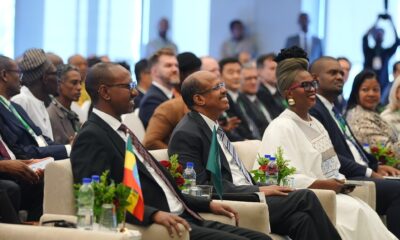

Accelerating Intra-Africa Trade and Sustainable Development -By Kestér Kenn Klomegâh
The AU Private Sector Forum has held several forums, with key recommendations. These recommendations provide valuable insights into the challenges...


Human Rights Day 2025: Advancing The Right To Food And The Rights of Africa’s Farmers -By Prof. Uche Ofodile
One of the most essential human rights is the right to adequate, safe, nutritious, and culturally appropriate food. This right...


Africa’s Democracy Time Bomb -By Patrick Iwelunmor
Africa is not lacking in potential; it is lacking in leadership. By virtue of its population, its resources and its...


Russia’s Lukoil Losses Strategic Influence Across Africa -By Kestér Kenn Klomegâh
United States sanctions has hit Lukoil, one of the Russia's biggest oil companies, like many other Russian companies, that has...


Inadvisability Of Worrying About The Osun Drama As Every First Lady Must Leave A Footprint -By Isaac Asabor
But here is the truth: there is absolutely no reason to worry. Nigerians are acting as though mild tension or...