
National Issues
Insecurity and Terrorism: The Expanding Crisis of Kidnapping and Armed Banditry in Nigeria -By Yusuf Yawale
While the government has launched various military operations and peace initiatives, deeper reforms are necessary. These include equipping security forces with modern technology, strengthening border control, enforcing stricter penalties, improving intelligence gathering and addressing entrenched corruption. Education
,especially at the primary level, must remain a priority, while communities need stronger partnerships with security operatives.

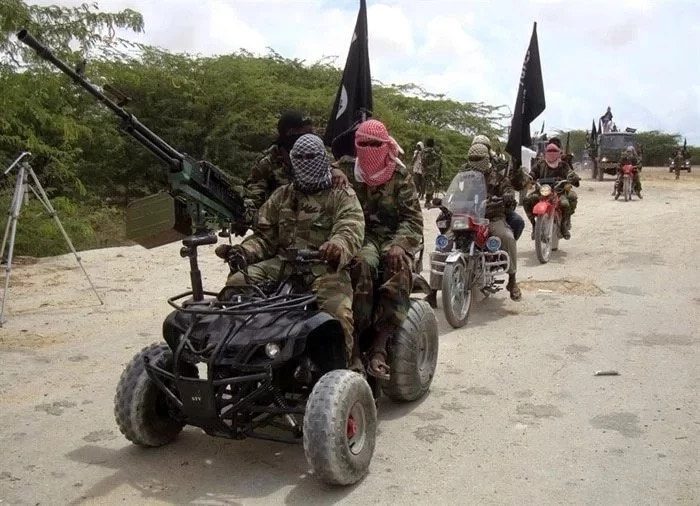
Insecurity has become one of Nigeria’s most persistent national nightmares, with kidnapping and armed banditry now touching nearly every part of the country. What was once an occasional threat has grown into a relentless crisis affecting homes, schools, places of worship, highways and entire communities. For many Nigerians, sleeping with “one eye open” has become a painful metaphor for survival.
Recent incidents show how deeply this menace has taken root. In November, gunmen stormed the Christ Apostolic Church in Kwara State, killing two worshippers and abducting 38 others. A day earlier, 25 Muslim students were taken from the Government Girls’ Secondary School in Kebbi State. In Niger State, St. Mary’s Catholic School saw about 100 students abducted in another attack that shook the nation.
The violence has not spared other regions. In Kogi, a newly established church was raided and at least 20 people — including a pastor and his wife — were captured. In Sokoto, a bride and her bridesmaids were taken in a chilling reminder of how indiscriminate kidnappings have become.
This wave of attacks reflects what writer Adaobi Tricia Nwaubani warned as far back as 2021: the Nigerian government appears increasingly unable to guarantee the safety of its citizens. Her warning has only grown more urgent. Between 2011 and 2020, kidnappers collected at least $18.5 million in ransom. The figure stood at $1.12 million in 2022 and $387,179 in 2023.
A new 2024 report by the National Bureau of Statistics paints an even grimmer picture. Between May 2023 and April 2024, Nigeria recorded an estimated 2.2 million kidnapping incidents. Of households affected, 65% paid ransom, averaging ₦2.7 million per incident. In the 12 month period, a staggering ₦2.2 trillion was paid to kidnappers. The North-West alone accounted for ₦1.2 trillion — the highest in the country.
But Nigeria’s kidnapping and banditry crisis did not emerge overnight. Its roots stretch back over a century. In 1901, bandits operating between Western Hausaland and the Niger border attacked a camel train carrying grain, killing 21 merchants. By the 1930s, banditry was largely confined to rural paths, where traders were ambushed and villagers terrorised.
The trend shifted in the 1970s as bandits moved into urban centers. One early shock was the robbery of a Kano bank, where criminals escaped with £27,750. By the 1980s, figures like Lawrence Anini terrorised the old Bendel State, aided by corrupt police officers who supplied weapons. The 1990s saw the rise of Shina Rambo in the South-West and the horrific Otokoto saga in Owerri, where ritual killings and organ trafficking were uncovered.
By the 2000s, politicians began weaponising bandits for assassinations and intimidation. Groups like the Bakassi Boys emerged to counter crime but ended up unleashing violence of their own. From 2011 onward, the crisis escalated sharply: herdsmen–farmer clashes, jihadist infiltration, mass kidnappings, and the rise of bandit “empires” across the North-West.
The numbers are chilling.
– 2018: Over 1,100 killed across six states.
– 2019: More than 2,200 lives lost.
– 2020: Amnesty International reported 1,126 villagers killed in six months.
– 2021: Bandits killed 5,800 people and kidnapped nearly 3,000 between January and June alone.
– 2022: The Abuja–Kaduna train attack left 14 dead and 63 kidnapped, with billions reportedly paid as ransom.
Behind these statistics lie communities emptied into IDP camps, schools shut down, farmlands abandoned and entire local economies crippled. Families suffer deep psychological trauma, while national development is repeatedly set back.
Why Kidnapping and Banditry Thrive
Several forces fuel this crisis:
• Widespread poverty, pushing people into crime for survival.
• High unemployment, leaving young men vulnerable to recruitment.
• Lack of education, which limits opportunities and heightens susceptibility to criminal networks.
• Corruption within security agencies, weakening public trust and enabling criminal operations.
• Porous borders and proliferation of arms, making weapons easily accessible.
The Way Forward
While the government has launched various military operations and peace initiatives, deeper reforms are necessary. These include equipping security forces with modern technology, strengthening border control, enforcing stricter penalties, improving intelligence gathering and addressing entrenched corruption. Education
,especially at the primary level, must remain a priority, while communities need stronger partnerships with security operatives.
Nigeria’s battle against kidnapping and banditry is complex, but with coordinated effort and political will, the tide can still turn.
Yusuf Yawale



Justice, Peace And Integrity Of Creation Prerequisite To Good Living -By Melissa Thomas
There are many ways to promote peace in our world of today but perhaps the best way is to promote...


Africa Squeezed Between Import Substitution and Dependency Syndrome -By Kestér Kenn Klomegâh
The key buyers of Russian grain on the continent are Egypt, Algeria, Kenya, Libya, Tunisia, Nigeria, Morocco, South Africa, Tanzania...


Accelerating Intra-Africa Trade and Sustainable Development -By Kestér Kenn Klomegâh
The AU Private Sector Forum has held several forums, with key recommendations. These recommendations provide valuable insights into the challenges...


Human Rights Day 2025: Advancing The Right To Food And The Rights of Africa’s Farmers -By Prof. Uche Ofodile
One of the most essential human rights is the right to adequate, safe, nutritious, and culturally appropriate food. This right...


Africa’s Democracy Time Bomb -By Patrick Iwelunmor
Africa is not lacking in potential; it is lacking in leadership. By virtue of its population, its resources and its...