
Breaking News
Kukah Faces Backlash Over Alleged U-Turn on Claims of Religious Persecution in Nigeria
Activist Dr. Thompson Udenwa has accused Bishop Matthew Kukah of inconsistency after the cleric advised against sanctions on Nigeria—years after urging the U.S. to label the country a “Country of Particular Concern” over Christian persecution.

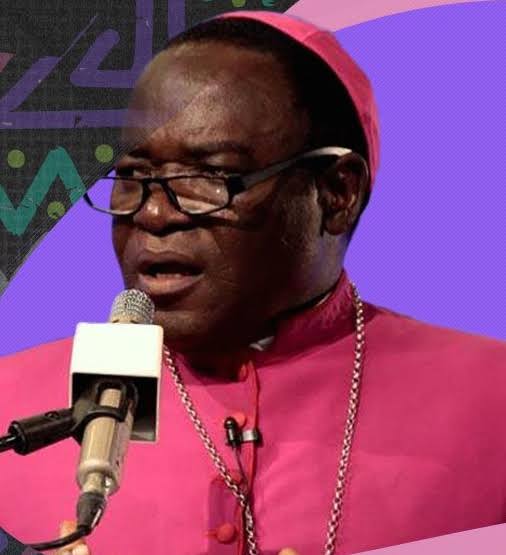
The Catholic Bishop of Sokoto Diocese, Most Rev. Matthew Kukah, is facing criticism following what some activists describe as a reversal of his earlier stance on the alleged persecution of Christians in Nigeria.
Human rights advocate Dr. Thompson Udenwa faulted Bishop Kukah’s recent comments, saying they appeared inconsistent with his previous calls for stronger international measures against Nigeria over religious intolerance and violent attacks on Christian communities.
In a statement released in Abuja on Thursday, Udenwa recalled that Bishop Kukah had previously urged the United States Government to classify Nigeria as a Country of Particular Concern (CPC)—a designation reserved for nations accused of severe violations of religious freedom—following reports of church burnings, targeted killings, and attacks on Christians in parts of the North and Middle Belt.
“It is confusing that the same bishop who, in 2021, addressed the American Congress and lamented the Buhari administration’s indifference to Christian persecution is now advocating against the very measure he once described as moral justice,” Udenwa said.
“Such a reversal weakens the credibility of religious advocacy and gives the impression that Bishop Kukah’s views are influenced more by political considerations than by principle.”
Udenwa’s remarks were in response to Bishop Kukah’s comments at the launch of the 2025 World Report on Religious Freedom by Aid to the Church in Need (ACN), held on October 21, 2025, at the Augustinianum Hall, Vatican City.
During the event, Bishop Kukah acknowledged Nigeria’s ongoing security and governance challenges but cautioned the international community against imposing sanctions or isolating Nigeria diplomatically, arguing that constructive dialogue and engagement were more productive paths toward reform.
While welcoming the bishop’s commitment to peaceful dialogue, Udenwa expressed concern that such a position might embolden authorities to evade accountability for recurring religiously motivated violence.
“Religious leaders must remain consistent and selfless in their advocacy,” he stressed.
“Truth should be upheld regardless of who is in power. When the message shifts with political winds, it erodes public trust and weakens the fight for justice.”
Opinion Nigeria News


Accelerating Intra-Africa Trade and Sustainable Development -By Kestér Kenn Klomegâh
The AU Private Sector Forum has held several forums, with key recommendations. These recommendations provide valuable insights into the challenges...

Human Rights Day 2025: Advancing The Right To Food And The Rights of Africa’s Farmers -By Prof. Uche Ofodile
One of the most essential human rights is the right to adequate, safe, nutritious, and culturally appropriate food. This right...


Africa’s Democracy Time Bomb -By Patrick Iwelunmor
Africa is not lacking in potential; it is lacking in leadership. By virtue of its population, its resources and its...

Russia’s Lukoil Losses Strategic Influence Across Africa -By Kestér Kenn Klomegâh
United States sanctions has hit Lukoil, one of the Russia's biggest oil companies, like many other Russian companies, that has...

Inadvisability Of Worrying About The Osun Drama As Every First Lady Must Leave A Footprint -By Isaac Asabor
But here is the truth: there is absolutely no reason to worry. Nigerians are acting as though mild tension or...