
National Issues
Malaria: A Public Health Emergency In Nigeria -By Tijani Hassan Abdulkarim
Let me call the attention of the federal, state, local government and other development partners and stakeholders to the fact that malaria is a public health emergency in Nigeria that deserves better resources and funding to tackle the menace. If we can declare a state of emergency on Covid-19 and pass through series of lockdown and restrictions, then let us take the fight against malaria more serious with determination.

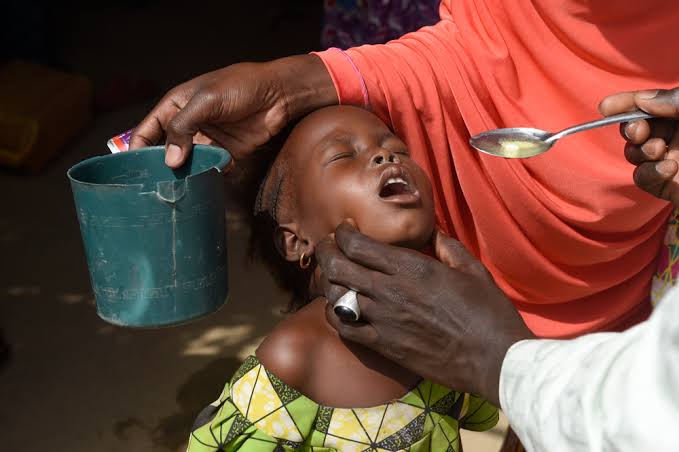
Malaria is one of the most severe global public health problems worldwide, particularly in Africa and to be precise, Nigeria, which has the greatest number of malaria cases. This indicates that Nigeria suffers the world’s greatest malaria burden, with approximately 51 millions cases and 207,000 death annually. That is, 30% of the total malaria burden in Africa. This is according to data obtained from the World Health Organisation’s (WHO) world malaria report 2014. The report further shows that; 97% of the total Nigerian population which is approximated as 173 millions is at the risk of infection. This is due to various environmental and economic factors.
Malaria is transmitted to humans through mosquito bites. It is a Plasmodium infection caused by Plasmodium Falciparum as the predominant parasite species accounting for about 98% of malaria cases in Nigeria. Plasmodium Malariae also usually occurs as a mixed infection with Plasmodium Falciparum. However, the female Anopheles mosquito, referred to as Anopheles gambiae is the main vector and carrier of malaria in Nigeria.
Research has shown that malaria transmission is higher in the wet season than in the dry season. This is due to the environmental conditions and hazard associated with the rainy season. This is visible in the littering of the environment with stagnant water and growing of wild grasses which happens to be a breeding ground for mosquitoes.
Malaria has remained one of the most challenging public health phenomenon which has sturbornly refused to be eliminated over the years despite several interventions by the national government and international organisations.
Several factors are to blame for the increasing rate of malaria infections in Nigeria. Among such factors are; self medication which results to drug resistance and treatment failure; inadequate provision and use of long lasting insecticide treated net (LLITN) among others.
Similarly, the most prevalent factors that have sustained the spread of malaria is Global warming and climate change. This single factor suggest an increase in temperature over the past decades. Changes in temperature and precipitation (that is, rainfall) contributes to the breeding of malaria vectors in several homes and communities across Nigeria.
Furthermore, people’s attitude and behaviour have equally contributed to the spread of malaria among the Nigerian populace. Despite having the knowledge of malaria being an endemic disease which most Nigerian battles with from childbirth till death, Nigerians are still very reluctant when it comes to taking simple precautionary measures against its spread.
Proper sanitation and hygiene which are very important in the control of the Anopheles parasite is very poor in most Nigerian households. This is a major contributory factor to the ravaging scourge of malaria in Nigeria.
One of the other factors that militates against the control and prevention of malaria is the lack of political will, leadership and funding from the government. It is obvious that the government lacks the will power and readiness to roll back malaria from our country. Imagine the propensity of attention, support, legislation and funding which was put in place by the federal government in the fight against Corona Virus (Covid-19).
Whereas, malaria has been a public health emergency in Nigeria prior to the intrusion of Covid-19 into the borders of Nigeria; but , the needed attention has not been given towards malaria control and prevention. This can best be described as a misplacement of priority.
Research has shown that malaria account for 60% of the outpatient visit to Hospital and other health facilities. It has led to approximately 11% maternal mortality and 30% child mortality, especially among children less than 5 years.
If same amount of time, energy and fund spent on the supply of vaccines and treatment of Covid-19 can be utilised in the development of genetic mosquitoes that are self repellant to Plasmodium Falciparum and also in the research and development of vaccine against malaria, Nigeria would have gone a long way in its fight against malaria.
Let me call the attention of the federal, state, local government and other development partners and stakeholders to the fact that malaria is a public health emergency in Nigeria that deserves better resources and funding to tackle the menace. If we can declare a state of emergency on Covid-19 and pass through series of lockdown and restrictions, then let us take the fight against malaria more serious with determination.
Malaria is not just a disease of the common Nigerian but of all Nigerians.
According to Celina Onyawoibi Aju-Ameh of the Department of Zoology, University of Jos, ” Mosquitoes cannot get rid of malaria, humans can get rid of malaria”. We must reset our priorities as a nation, pursue and eliminate malaria from Nigeria. Zero malaria begins with each and every Nigerian citizens.
Thank you.
Tijani Hassan Abdulkarim (tijanihassan2020@gmail.com)


Accelerating Intra-Africa Trade and Sustainable Development -By Kestér Kenn Klomegâh
The AU Private Sector Forum has held several forums, with key recommendations. These recommendations provide valuable insights into the challenges...


Human Rights Day 2025: Advancing The Right To Food And The Rights of Africa’s Farmers -By Prof. Uche Ofodile
One of the most essential human rights is the right to adequate, safe, nutritious, and culturally appropriate food. This right...


Africa’s Democracy Time Bomb -By Patrick Iwelunmor
Africa is not lacking in potential; it is lacking in leadership. By virtue of its population, its resources and its...

Russia’s Lukoil Losses Strategic Influence Across Africa -By Kestér Kenn Klomegâh
United States sanctions has hit Lukoil, one of the Russia's biggest oil companies, like many other Russian companies, that has...


Inadvisability Of Worrying About The Osun Drama As Every First Lady Must Leave A Footprint -By Isaac Asabor
But here is the truth: there is absolutely no reason to worry. Nigerians are acting as though mild tension or...