
Breaking News
Nigeria to Boost Maritime and Blue Economy with $1bn Port Project — Oyetola
Minister Adegboyega Oyetola reaffirms Nigeria’s commitment to modernising ports, improving logistics, and expanding the Blue Economy. He announces a $1bn Lagos port upgrade and a 10-year national strategy for sustainable maritime growth.

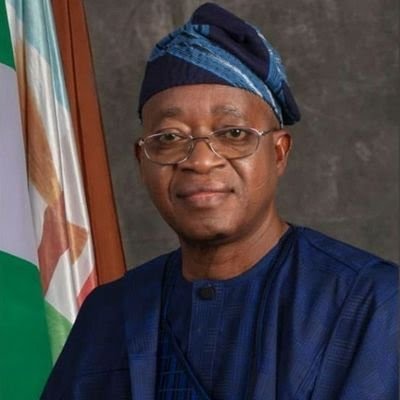
The Minister of Marine and Blue Economy, Dr. Adegboyega Oyetola, has reiterated the Federal Government’s unwavering commitment to advancing Nigeria’s maritime, logistics, and transport sectors through strategic reforms, innovation, and sustainable development.
Oyetola made this known while declaring open the 2025 Annual Conference of the Chartered Institute of Logistics and Transport (CILT) in Lagos, themed “Enhancing Logistics and Transport for Sustainable Blue Economy in Nigeria.”
Represented by the Managing Director of the Nigerian Ports Authority (NPA), Dr. Abubakar Dantsoho, Oyetola said the government was determined to transform maritime and logistics into major engines of inclusive economic growth and national development.
He described the CILT Nigeria Conference as a “flagship platform for policy dialogue, professional exchange, and forward-thinking engagement” in the nation’s transport and logistics ecosystem.
“The theme is timely and reflects the growing global recognition of the Blue Economy as a transformative frontier for development and job creation,” Oyetola said.
Explaining the concept, the Minister stated that the Blue Economy represents the sustainable use of ocean and inland water resources for economic growth, improved livelihoods, and employment opportunities.
According to him, Nigeria’s 853-kilometre coastline and vast network of inland waterways present enormous potential for prosperity — but only if efficiently harnessed through modern logistics and transport systems.
“The ability to move goods, people, and services seamlessly by sea, land, and air is the lifeblood of commerce and industrial growth,” he noted.
Oyetola stressed that President Bola Tinubu’s administration views the Blue Economy as the next frontier for economic diversification beyond oil, adding that the creation of the Ministry of Marine and Blue Economy underscores that resolve.
He highlighted several initiatives since the ministry’s creation, including port modernisation, enhanced maritime safety, and the development of inland waterways, all aimed at improving Nigeria’s competitiveness in global maritime trade.
“Among these reforms is the approval of a $1 billion port modernisation project in Lagos to expand cargo capacity and align operations with global standards,” he said. “Similar projects are being planned for other ports outside Lagos to ensure balanced national development.”
On maritime security, Oyetola commended the success of the Deep Blue Project, which has resulted in zero piracy incidents in Nigerian waters for over three years, restoring investor confidence and lowering the cost of doing business.
He also announced the launch of a 10-year National Blue Economy Strategy, designed to harmonise policies across maritime, fisheries, logistics, and coastal development sectors while balancing economic growth with environmental protection.
“Our goal is sustainable and inclusive growth that empowers coastal communities, creates jobs, and preserves the environment for future generations,” Oyetola said.
In her welcome address, CILT Nigeria President, Mrs. Mfon Ekong Usoro, expressed pride in the institute’s transformation into one of Africa’s most vibrant professional bodies.
She said the CILT Conference had become a major platform influencing national policy in logistics, transport, and the Blue Economy.
Tracing the organisation’s roots, Usoro noted that CILT Nigeria, established in 1958, now operates in 13 states, fully aligned with CILT International standards.
She highlighted the institute’s 240% revenue growth between 2022 and 2025, achieved through prudent management and digital transformation, as well as its strategic partnerships with key institutions such as the Maritime Academy, Nigerian Army College of Logistics, and African Centre for Supply Chain.
“Our members now play active roles on international committees and represent Nigeria at major global sessions,” she said.
Delegates at the conference lauded both Oyetola and Usoro for their visionary leadership, particularly their focus on sustainability, digitalisation, and logistics reform.
The 2025 CILT Conference is expected to set new standards for advancing Nigeria’s transport and Blue Economy sectors toward a globally competitive future.
Opinion Nigeria News



Accelerating Intra-Africa Trade and Sustainable Development -By Kestér Kenn Klomegâh
The AU Private Sector Forum has held several forums, with key recommendations. These recommendations provide valuable insights into the challenges...


Human Rights Day 2025: Advancing The Right To Food And The Rights of Africa’s Farmers -By Prof. Uche Ofodile
One of the most essential human rights is the right to adequate, safe, nutritious, and culturally appropriate food. This right...


Africa’s Democracy Time Bomb -By Patrick Iwelunmor
Africa is not lacking in potential; it is lacking in leadership. By virtue of its population, its resources and its...
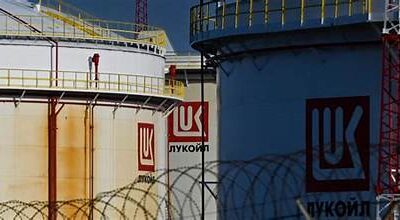

Russia’s Lukoil Losses Strategic Influence Across Africa -By Kestér Kenn Klomegâh
United States sanctions has hit Lukoil, one of the Russia's biggest oil companies, like many other Russian companies, that has...


Inadvisability Of Worrying About The Osun Drama As Every First Lady Must Leave A Footprint -By Isaac Asabor
But here is the truth: there is absolutely no reason to worry. Nigerians are acting as though mild tension or...