
Breaking News
Nigeria’s Economy Growing Consistently Due to Tinubu’s Reforms—Finance Minister Edun
He added that the government remains disciplined in saving and investing wisely, focusing on education, health, and infrastructure to drive long-term productivity and inclusive growth.

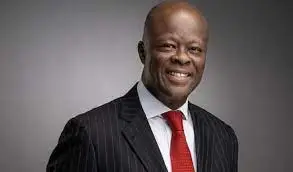
Abuja, Nigeria – The Minister of Finance and Coordinating Minister of the Economy, Mr. Wale Edun, has stated that the Nigerian economy is experiencing consistent growth amid global developments and ongoing domestic reforms under President Bola Tinubu’s administration.
Edun made the remarks during a press briefing in Abuja on Thursday, where he provided an update on the nation’s economic performance. He revealed that Nigeria’s gross revenues surged by 37.4% in the first half of 2025, attributing the improvement to government reforms.
According to him, the medium-term goal is to achieve 7% annual GDP growth, driven by critical investments, private sector participation, job creation, and higher incomes.
Key Economic Highlights
Fiscal Improvements
-
The combined fiscal balance of states grew from 1.8% of GDP in H1 2023 to 3.1% in 2025, translating to a surplus of N7.1 trillion (up from N2.8 trillion).
-
States have increased capital expenditure, boosting economic growth.
Oil & Gas Sector
-
Average crude production in H1 2025 stood at 1.67 million barrels per day, below the budgeted 2.06 million barrels.
-
Average crude price was $67 per barrel, lower than the budgeted $75.
-
Nigeria remains compliant with OPEC quotas despite revenue shortfalls.
Power Sector Progress
-
No national grid collapse recorded in 2025.
-
Approval secured to liquidate N4 trillion in legacy electricity sector debts under the Electricity Act.
-
Nigeria is benefiting from the World Bank and AfDB’s “Mission 300” initiative, aimed at expanding electricity access to 300 million Africans, boosting manufacturing and agro-processing.
Monetary & Fiscal Stability
-
The government is committed to reducing inflation through coordinated fiscal and monetary policies.
-
Nigeria now has a competitive exchange rate, supporting export diversification under the AfCFTA.
-
Interest rates remain elevated globally as part of inflation control measures.
Commitment to Transparency & Private Investment
Edun emphasized the administration’s dedication to transparency and data-driven policymaking, fostering public trust.
“We are open for business,” he declared. “Nigeria has stable macroeconomic conditions that enable planning and investment. We will continue to prioritize private investment in agriculture, manufacturing, technology, infrastructure, and services.”
He added that the government remains disciplined in saving and investing wisely, focusing on education, health, and infrastructure to drive long-term productivity and inclusive growth.
“Our commitment is to build an economy that works for everyone, with transparency and resilience,” Edun affirmed.


Accelerating Intra-Africa Trade and Sustainable Development -By Kestér Kenn Klomegâh
The AU Private Sector Forum has held several forums, with key recommendations. These recommendations provide valuable insights into the challenges...


Human Rights Day 2025: Advancing The Right To Food And The Rights of Africa’s Farmers -By Prof. Uche Ofodile
One of the most essential human rights is the right to adequate, safe, nutritious, and culturally appropriate food. This right...


Africa’s Democracy Time Bomb -By Patrick Iwelunmor
Africa is not lacking in potential; it is lacking in leadership. By virtue of its population, its resources and its...

Russia’s Lukoil Losses Strategic Influence Across Africa -By Kestér Kenn Klomegâh
United States sanctions has hit Lukoil, one of the Russia's biggest oil companies, like many other Russian companies, that has...

Inadvisability Of Worrying About The Osun Drama As Every First Lady Must Leave A Footprint -By Isaac Asabor
But here is the truth: there is absolutely no reason to worry. Nigerians are acting as though mild tension or...