
National Issues
Patriotism, Altruism and the Nigerian State -By Adekunle Theophilius Tinuoye
Carefully approaching our challenges altruistically and patriotically means Nigerians should seek as advanced by Jacques Maritain “the sociological integration of all the civic conscience, political virtues and sense of right and liberty, of unconsciously operative hereditary wisdom, of moral rectitude, justice, friendship, happiness, virtue and heroism in their individual lives.

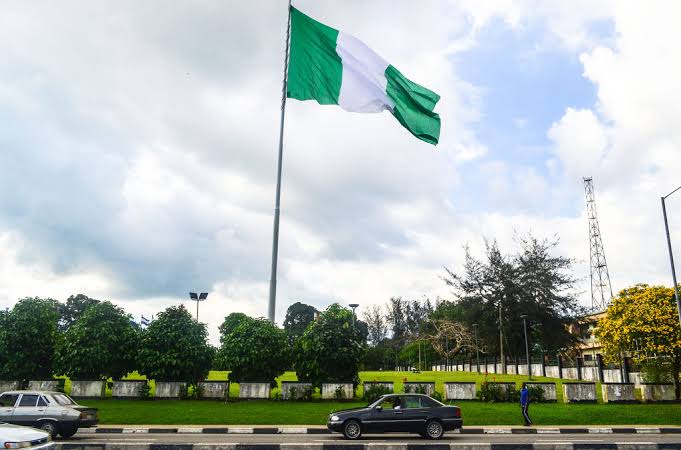
Today, it is indubitable that Nigeria faces enormous challenges that have severely diluted its capacity to discharge its responsibilities, exercise its authority, command loyalty from Nigerians and earn the respect of the comity of nations. With an array of unprecedented quagmires assailing it from all corners and as the confidence of citizens in its ability to guarantee their security, welfare and prosperity witnesses a steep decline, the overwhelming feeling is that there may be no respite at all in the nearest future. The problems that have brought Nigeria to this moment of seeming atrophy are legion and the most virulent are the unenviable quartet of corruption, religiosity, ethnicism and nepotism. The monstrousness of corruption combined with the institutionalization of sectionalism, the withering of merit and a sprinkling of religiosity have wrecked incalculable havoc on our polity and psyche. There is also the extinction of established norms and values and the weakening of societal customs, traditions and institutional authorities which have devastated Nigeria in terms of the near evisceration of the family as the building block for nurturing decent citizenship and the total collapse of social order as the vital instrument for development and organization.
Invariably, both the state and society are now at serious crossroads with the axiomatic loss of credibility in Nigeria by Nigerians. For years, Nigerians have described the Nigerian state as uncaring, lackadaisical, wicked and pernicious. Thus, the diversion of enormous resources to training and integrating terrorists, while abandoning their victims who are now internally displaced refugees in camps and treating bandits, herdsmen, corrupt public servants, failed contractors and politically exposed persons with kid gloves, while hauling sledgehammers at small time offenders, little criminals, petty thieves etc has widened the credibility gap between the Nigerian state and Nigerians.. Multiple incidents of impropriety purportedly involving key public officials, their associates and families and ostentatious display of wealth beyond their means makes the state’s sermons about good citizenship, good governance, transparency and accountability rather insubstantial and hypocritical. Such inconsistencies hardly inspire confidence and breed insincerity. The Nigerian state needs to urgently change this narrative by demonstrating fairness and consistency in how it relates, interfaces, applies principles, delivers services and discharges its responsibilities and becoming a concerned and compassionate institution that not only says it cares for its own, but actually extends that care to Nigerians irrespective of ethnicity, religion ¸culture, gender, social origin, educational background and political beliefs.
Unfortunately, lamentation, nonchalance, apathy, subversion and criticism have been the most organized response to government inaction and insensitivity. Nigerians conveniently forget that the nuances and policies of the Nigerian state are simply a reflection of and basically an agglomeration of the collective attitudes of Nigerians .Yet if all we do is to castigate Nigeria, then we have missed the opportunity to join hands and work towards creating a truly responsive and receptive nation. What we fail to realize is that Nigerians cannot divorce themselves from the situation of Nigeria. Both are like Siamese twins. If the Nigerian state is ailing, it is definitely because of the actions and inactions of Nigerians since the state is a continuous part of the wider Nigerian culture. Again, the credibility of Nigeria is also linked with the credibility of Nigerians. The manner Nigerians openly slander, ridicule, disparage and embarrass Nigeria beggars belief. Such actions seriously hurt and weaken all of us in the long run.
The despoilers of the Nigerian state should also know that the nation has a rich and well documented history of care and concern for its citizens and neighbors. In the days of old, the main object of government was promoting citizenry welfare, peace, prosperity and security. Back then, the state was an open sanctuary and refuge whose treatment of society was consistent and fair because the state, society and citizens had shared goals.
This is not the situation today, the epoch of shared goals and moral rectitude has vanished and has been replaced by a repulsive public square characterized by individual and collective greed, vanity and desperation. Politics and governance has become highly ethnicized, mercantilized and personalized and failure to affirm particular identities is perceived as incompatibility and enmity. The exposition of personal convictions, non conformist views and traditional values is tantamount to attracting the enmity of Nigerians and the odium of society. The pervasiveness of corrupt practices is now the norm and not the exception.
Misappropriation has been given a stamp of societal legitimacy. Nigerians have almost lost all sense of empathy and humaneness resulting in the acquisition of a pathologically bizarre and lascivious craving for power, wealth and position at all costs and the predictable outcome is that the Nigeria is increasingly becoming inclement to honesty, decency and industry.
The Nigerian state must devote attention to regaining credibility with its constituency. The first step is to start taking its responsibilities to Nigerians with renewed vigor. What might this look like? placing emphasis on service, welfare, security, peaceful coexistence, shared goals, participation, protection of justice, enjoyment of rights, equitable distribution of public burdens, citizens’ concerns, fear and needs, progressive development of work and business and other areas that can make the lives of Nigerians better and happier. Regardless of our differences, when good laws, responsive governance, moral righteousness and conscientious neighborhood exists then collective peace, prosperity and contentment of the community is guaranteed.
As Nigerians sincerely take the state seriously and genuinely participate in moving Nigeria forward, Nigeria would slowly witness decline in the current level of national toxicity and increase in positive transformation, which would grow incrementally and exponentially in many ways. Obviously, because of diverse entrenched interests, change will experience massive resistance and engagement with government would face formidable obstacles from what Ann Hallock described as the pernicious attitudes of those exploiting others, whose injustices are tolerated and whose suspicious gains are regarded as the emblem of success. Nigerians can still thrive by fusing our individual freedom with our corporate belonging without much difficulty to enable us fulfill our duties towards Nigeria and simultaneously ensuring that Nigeria lives up to its responsibilities to Nigerians. This is where a real constitutional conference can truly structure Nigeria in a way that guarantees common good and communal progress for all Nigerians.
Patriotism is a key ingredient for national sustainability and progress. For the state to be responsive and live up to its responsibilities, Nigerians too must as a matter of fact discharge their own duties as law abiding citizens. Not a few Nigerians are ready to sell Nigeria short without an iota of compunction. If Nigerians are shirking their duties towards Nigeria, invariably Nigeria cannot be in a position to adequately care for Nigerians. The problems of Nigeria are manmade and are caused by the same Nigerians that are quick to vandalize, disown and destroy it. Reclaiming Nigeria in the face of the present moral abyss would require the reinvigorating of the ethos of the past when Nigeria was to a great extent functional. We really have to understand that there is no conflict in the strict sense between the goals of Nigerians and the progress of Nigeria because Nigeria’s progress is eventually for greater good of Nigerians.
Carefully approaching our challenges altruistically and patriotically means Nigerians should seek as advanced by Jacques Maritain “the sociological integration of all the civic conscience, political virtues and sense of right and liberty, of unconsciously operative hereditary wisdom, of moral rectitude, justice, friendship, happiness, virtue and heroism in their individual lives. The natural consequences of the above are the emergence of the mutual passion for collaboration to ensure that the overall national progress takes precedence over private interests, sacrificing of personal gains for common welfare, showing allegiance towards, protecting and serving society diligently and recognizing that Nigerians are all one family and what affects one affects others.
Adekunle Tinuoye is a Labour educator and employee relations specialist at the Michael Imoudu National Institute for Labour Studies, Ilorin, Nigeria. Since 2018, he has served as an external faculty associate, Global Labour Research Centre, York University, Toronto Canada.


Accelerating Intra-Africa Trade and Sustainable Development -By Kestér Kenn Klomegâh
The AU Private Sector Forum has held several forums, with key recommendations. These recommendations provide valuable insights into the challenges...


Human Rights Day 2025: Advancing The Right To Food And The Rights of Africa’s Farmers -By Prof. Uche Ofodile
One of the most essential human rights is the right to adequate, safe, nutritious, and culturally appropriate food. This right...


Africa’s Democracy Time Bomb -By Patrick Iwelunmor
Africa is not lacking in potential; it is lacking in leadership. By virtue of its population, its resources and its...

Russia’s Lukoil Losses Strategic Influence Across Africa -By Kestér Kenn Klomegâh
United States sanctions has hit Lukoil, one of the Russia's biggest oil companies, like many other Russian companies, that has...

Inadvisability Of Worrying About The Osun Drama As Every First Lady Must Leave A Footprint -By Isaac Asabor
But here is the truth: there is absolutely no reason to worry. Nigerians are acting as though mild tension or...