
Breaking News
Private Hospitals in Lagos Say 40% of Healthcare Costs Spent on Power, Demand Government Support
Private hospitals in Lagos say electricity and fuel expenses now consume 40% of healthcare costs, crippling operations. The AGPMPN urges government support, subsidies, and reforms to save Nigeria’s overstretched health sector.

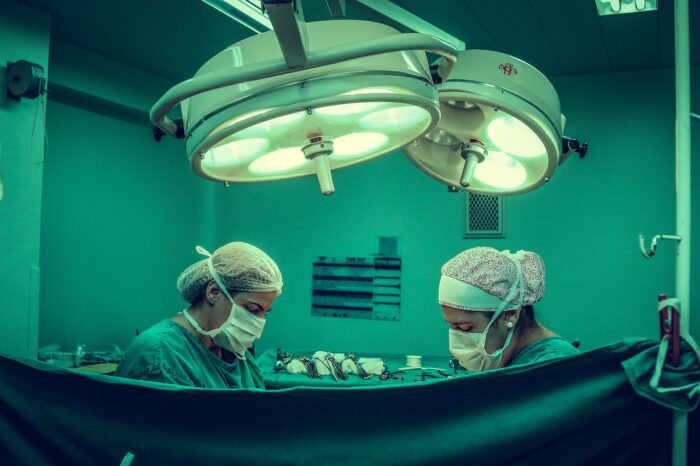
Private healthcare providers in Lagos have decried the soaring cost of electricity and fuel, warning that energy expenses now account for nearly 40 percent of their operational costs.
The Association of General and Private Medical Practitioners of Nigeria (AGPMPN) raised the alarm in a statement on Monday ahead of its Annual General and Scientific Conference.
Dr. Jonathan Esegine, Chairman of the Lagos Chapter, said the heavy burden of power bills is crippling hospitals and threatening patient care.
“Our energy cost alone takes about 40 percent of our health costs, not salaries, not taxes,” he explained. “I still had to run my generator all through the night to save a pregnant woman who was collapsing from placenta complications. By morning, I had spent heavily on diesel at ₦1,200 per litre, yet the patient could not even pay a kobo.”
Esegine added that private hospitals remain open during emergencies even when government-owned facilities are shut by strikes.
“We are close to the grassroots. Patients knock on our doors at midnight, sometimes with nothing in their pockets. We still attend to them, risking our safety and finances. Yet government keeps burdening us with multiple taxes and regulations,” he lamented.
He stressed that without government intervention through electricity subsidies and stronger security for healthcare workers, the private system—which caters to over 70 percent of patients in Lagos—would remain overstretched.
“Without a healthy population, you cannot have a robust economy. We have been playing this role for more than 100 years, but we need the government to recognise and support us,” he said.
Dr. Tunji Akintade, Chairman of the Conference’s Local Organising Committee, echoed these concerns, warning that electricity costs are putting hospitals under immense pressure.
“When my chairman spoke about electricity, I was going to say this is part of the major challenges we face. If Lagos is not strengthened, the health of citizens of this country is threatened. It affects productivity and the future of Nigeria. We provide care to nearly 70 percent of the population, yet we are left to fend for ourselves,” Akintade said.
He added that private investments in hospitals are dwindling.
“The ones coming up are funded by those in government. Meanwhile, we are trying to catch up with technology without subsidies. During COVID, telemedicine helped. Why can’t the government build and subsidise digital platforms, the way they did in telecoms? I bought my SIM at ₦32,000 in 1999. Today, SIMs are free. Why can’t we have such interventions in healthcare?” he asked.
On health insurance, Akintade accused the government of playing conflicting roles.
“Government is acting as regulator and sometimes fund administrator. That is not how health insurance should work. We’ve raised our voices, but maybe the press has not amplified them enough. We are not speaking for ourselves but for the ordinary Nigerian,” he said.
AGPMPN First Vice Chairman, Dr. Emma Onyenuche, criticised politicians for relying on foreign healthcare while neglecting local hospitals.
“Politicians travel abroad for even minor illnesses with taxpayers’ money, yet private hospitals at home are denied access to free commodities like insecticide-treated nets, HIV kits and reproductive health supplies. The government later calls us into meetings, pretending we were part of policy decisions. It’s just playing to the gallery,” Onyenuche said.
He further described the current insurance scheme as unsustainable.
“You can’t give someone ₦500 as capitation and expect them to visit hospitals three times in a month. It is actually the private sector that is subsidising healthcare in Nigeria. Government must be serious,” he added.
The AGPMPN Lagos Scientific Conference, themed “Building Resilient Private Health Systems in Lagos State: A Driver of Public-Private Collaboration, Economic Stability, and Good Governance”, will take place on September 10–11 at the Welcome Event Centre, Lagos.
The conference will feature free glaucoma screenings for delegates, alongside deliberations on brain drain, health insurance reform, and survival strategies for private hospitals under Nigeria’s challenging economic climate.


Accelerating Intra-Africa Trade and Sustainable Development -By Kestér Kenn Klomegâh
The AU Private Sector Forum has held several forums, with key recommendations. These recommendations provide valuable insights into the challenges...


Human Rights Day 2025: Advancing The Right To Food And The Rights of Africa’s Farmers -By Prof. Uche Ofodile
One of the most essential human rights is the right to adequate, safe, nutritious, and culturally appropriate food. This right...


Africa’s Democracy Time Bomb -By Patrick Iwelunmor
Africa is not lacking in potential; it is lacking in leadership. By virtue of its population, its resources and its...

Russia’s Lukoil Losses Strategic Influence Across Africa -By Kestér Kenn Klomegâh
United States sanctions has hit Lukoil, one of the Russia's biggest oil companies, like many other Russian companies, that has...


Inadvisability Of Worrying About The Osun Drama As Every First Lady Must Leave A Footprint -By Isaac Asabor
But here is the truth: there is absolutely no reason to worry. Nigerians are acting as though mild tension or...