
National Issues
Renewable Energy Prospects in Nigeria -By Okechukwu Ikpo Kalu
The energy supply in any society is closely linked with the level of industrialization and development. When there is little or no access to reliable power, industries and businesses are affected negatively. Power deficiencies lead to loss of revenue and reduced productivity of businesses. Most times, they are forced to downsize to stay afloat. The World Bank estimates that businesses in Nigeria lose about $29 billion due to unreliable electricity.

INTRODUCTION
Over the years, natural resources have been harnessed for human benefit. This can be observed in powering granaries using windmills and water wheels. Also, the sun has created fire for heat and light. Renewable energy holds solutions for the future of our power needs. While oil and gas prices continue to inflate, the cost of solar and wind power systems continues to decline drastically, making it increasingly easy to transition to renewable energy systems.
Quality and uninterrupted power supply are necessary for that society’s wellbeing and socio-economic development. Unfortunately, our country Nigeria is plagued with cases of epileptic power supply, which has crippled the country’s growth and development rate.
However, initiating and developing renewable energy in our country will resolve the problem of local energy and even water supply. Other benefits will include increasing the local population’s living and employment standards, ensuring remote regions’ long-term development, and maintaining environmental protection.
DEFINITION
Renewable energy is simply energy from naturally replenished and inexhaustible resources such as sunlight, wind, and water. It is regarded as a clean source of energy. These energy sources are eco-friendly; they reduce environmental impact, produce minimal secondary waste, and are sustainable regarding current and future economic, social, and societal needs.
The traditional use of fossil fuel-based energy sources is increasing pressure on various environmental fronts. Sustainable energy services can be provided by renewable energy sources such as biomass, wind, solar, hydropower, and geothermal.
THE UGLY CURRENT SITUATION
Nigeria, the giant of Africa, is currently ranked as the world’s worst country in terms of people without electricity (90 million people). The next two countries are the Democratic Republic of Congo (70 million people) and Ethiopia (58 million people). About 45% of the Nigerian population does not have access to electricity supply which further increases to about 65% in rural areas.
The energy supply in any society is closely linked with the level of industrialization and development. When there is little or no access to reliable power, industries and businesses are affected negatively. Power deficiencies lead to loss of revenue and reduced productivity of businesses. Most times, they are forced to downsize to stay afloat. The World Bank estimates that businesses in Nigeria lose about $29 billion due to unreliable electricity.
The healthcare industry is not left behind in the barrage of problems caused by inconsistent electricity supply. Hospitals, clinics, and medical laboratories use special electrical equipment and machinery for their daily operation. Equipment like x-ray scanners, defibrillators, ventilators, and heart rate monitors are powered by electricity. In a case where there is a limited supply of electricity, this equipment cannot be fully utilized, resulting in unnecessary loss of lives.
The agricultural sector, responsible for feeding the nation, greatly relies on the quality power supply for its smooth operation. Without a quality power supply, the farmers are forced to use subsistence farming methods and implements. This, in turn, results in a reduction in the quality and quantity of farm produce. When this happens, there is bound to be a scarcity of foods which leads to inflation.
Households that do not have access to clean and reliable energy supply use firewood for cooking and kerosene lanterns for illumination. This causes air pollution and can result in significant health hazards. There is also a release of greenhouse gasses during the combustion of fossil fuels, leading to global warming. Burning fossil fuels can also have long-term negative effects on our environment, including ocean acidification.
THE WAY FORWARD
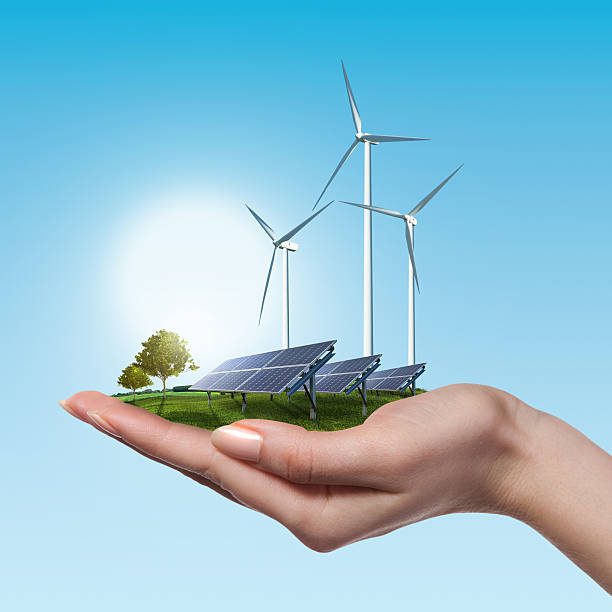
The 7th Sustainable Development Goal by the United Nations seeks to ensure universal access to affordable, reliable, and modern energy services by 2030. This could be achieved by substantially increasing the share of renewable energy in the global energy mix.
Fortunately, Nigeria is endowed with many renewable energy resources, including sunlight, wind, water, and biomass, which have the potential for enormous power generation. The World Bank estimates that if 5% of lands in Northern and Southern Nigeria are used for solar energy generation, the country has the potential to generate over 40000 megawatts of power. This could effectively power the whole country and ensure every household can access a reliable power supply.
Currently, renewable energy makes up about 15% of the total energy supply in Nigeria. The rest are generated from Fossil fuels and their derivates. This calls for a greater focus and investment in renewable energy generation to tackle the rampant energy deficiencies in our country.
If proper attention is given to renewable energy generation, all the current power challenges would be a thing of the past. Our educational, agricultural, industrial, and health sectors would be revolutionized, and the nation will experience unprecedented growth with an adequate power supply.
In conclusion, it has become a matter of absolute urgency that Nigeria deemphasizes fossil fuel generation and focuses more on Renewable Energy Generation. The development and implementation of renewable energy would result in exponential national growth and development at all levels while meeting the rural and small-scale energy needs in a reliable, affordable, and environmentally sustainable way.


Accelerating Intra-Africa Trade and Sustainable Development -By Kestér Kenn Klomegâh
The AU Private Sector Forum has held several forums, with key recommendations. These recommendations provide valuable insights into the challenges...


Human Rights Day 2025: Advancing The Right To Food And The Rights of Africa’s Farmers -By Prof. Uche Ofodile
One of the most essential human rights is the right to adequate, safe, nutritious, and culturally appropriate food. This right...


Africa’s Democracy Time Bomb -By Patrick Iwelunmor
Africa is not lacking in potential; it is lacking in leadership. By virtue of its population, its resources and its...

Russia’s Lukoil Losses Strategic Influence Across Africa -By Kestér Kenn Klomegâh
United States sanctions has hit Lukoil, one of the Russia's biggest oil companies, like many other Russian companies, that has...


Inadvisability Of Worrying About The Osun Drama As Every First Lady Must Leave A Footprint -By Isaac Asabor
But here is the truth: there is absolutely no reason to worry. Nigerians are acting as though mild tension or...