
National Issues
Sowore Was Not Arrested On Fresh Charges; Nigerian Media Must Do Better -By Danjuma Lamido
Our media must resist the temptation to sensationalise and employ clickbait narratives that distort facts and mislead the public. The credibility of the profession depends on our ability to uphold truth and fairness, not on how quickly we can publish unverified information.

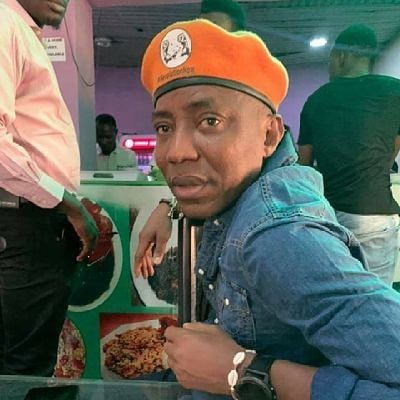
The recent wave of sensational headlines claiming that Omoyele Sowore was “arrested on a fresh charge” and “whisked away to Kuje Prison” ahead of a supposed Monday arraignment is not only misleading but also a clear example of how misinformation can easily spread when journalists abandon basic professional ethics.
Let it be clearly stated: Omoyele Sowore was not arrested on any new charge. He was taken to the correctional centre strictly in compliance with the remand warrant issued by the Magistrate Court, pending when he meets his bail conditions.
This is a standard legal procedure, not a political witch-hunt or a new arrest drama, as some news outlets have tried to portray.
It is disappointing that many in the media rushed to publish unverified stories without cross-checking with either the court or the correctional authorities. Journalism thrives on accuracy and responsibility, not haste.
As practitioners, we must understand that being first to break a story does not make it true. In fact, it is better to break authentic news late than to break fake news early.
Every journalist worth their byline should know that no correctional centre in Nigeria will admit a suspect without a valid remand warrant issued by a competent court.
Therefore, the claim that Sowore was taken to Kuje Prison on “fresh charges” is not only false but also betrays a lack of basic legal and journalistic understanding.
Our media must resist the temptation to sensationalise and employ clickbait narratives that distort facts and mislead the public. The credibility of the profession depends on our ability to uphold truth and fairness, not on how quickly we can publish unverified information.
In the end, it is far more honourable and professional for a journalist to leave a story out when unsure than to publish an embarrassing falsehood that damages both their reputation and the integrity of the media.
The lesson is simple: verify before you amplify.
Danjuma Lamido, Yola, Adamawa State, email: danjumalamido2011@gmail.com



Accelerating Intra-Africa Trade and Sustainable Development -By Kestér Kenn Klomegâh
The AU Private Sector Forum has held several forums, with key recommendations. These recommendations provide valuable insights into the challenges...


Human Rights Day 2025: Advancing The Right To Food And The Rights of Africa’s Farmers -By Prof. Uche Ofodile
One of the most essential human rights is the right to adequate, safe, nutritious, and culturally appropriate food. This right...


Africa’s Democracy Time Bomb -By Patrick Iwelunmor
Africa is not lacking in potential; it is lacking in leadership. By virtue of its population, its resources and its...


Russia’s Lukoil Losses Strategic Influence Across Africa -By Kestér Kenn Klomegâh
United States sanctions has hit Lukoil, one of the Russia's biggest oil companies, like many other Russian companies, that has...


Inadvisability Of Worrying About The Osun Drama As Every First Lady Must Leave A Footprint -By Isaac Asabor
But here is the truth: there is absolutely no reason to worry. Nigerians are acting as though mild tension or...