
National Issues
Transforming Policing Through Health: A New Era Under IGP Kayode Egbetokun -By Adewole Kehinde
Today, police hospitals are fully digitalised. Nobody needs a hospital card anymore; your name alone brings up your details from a 24-hour solar-powered digital platform. This is a system designed for efficiency, reliability, and modern healthcare delivery, something many Nigerian public institutions have yet to achieve.

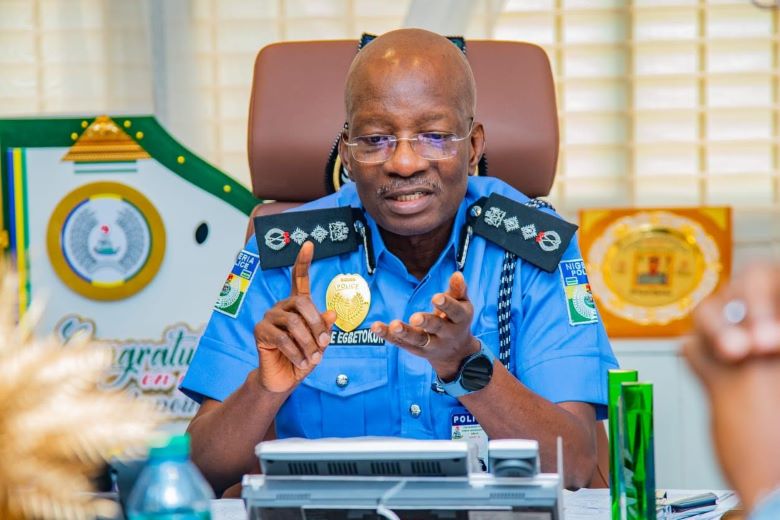
The convening of the Conference of Heads of Police Healthcare Facilities Nationwide on Wednesday, December 10, 2025, by the Inspector General of Police, Kayode Adeolu Egbetokun, represents more than an internal professional gathering.
It is a statement of intent, a declaration that policing in Nigeria is evolving, not only in security strategies but also in welfare architecture.
With the theme, “Transforming Policing in Nigeria: The Evolving Role of the Directorate of Force Medical Services”, the IGP has once again demonstrated leadership that goes beyond badge and uniform. He made it clear to participants that the conference was not merely an administrative exercise but a solemn commitment, a commitment to building a system where those who protect others are themselves protected, supported, and medically empowered to serve at their highest capacity.
For far too long, police medical systems operated behind the curtain of national conversations. Yet health is central to operational readiness. Egbetokun has brought that reality to the forefront with conviction and unprecedented action.
Upgrading and Digitalising Police Medical Facilities
One of the most commendable milestones of his administration remains the upgrading and digitalisation of the 64 police healthcare facilities nationwide, all of which now deliver medical services not only to police officers but also to their families and persons in lawful custody.
This achievement reinforces a fundamental truth that the Nigeria Police Force is not merely an instrument of law enforcement; it is a custodian of welfare, safety, and humanity.
The Transformation into a Full Directorate
The elevation of the Force Medical Services into a full Directorate in August 2025 was not ceremonial; it was strategic. It acknowledged what enlightened policing must embrace: good healthcare is central to morale, operational fitness, and personnel retention.
The new status comes with wider responsibilities, innovation, consistency, accountability, and strategic leadership, responsibilities that the IGP has already begun addressing with passion and foresight.
From Supportive Care to Preventive Policing Health
The Inspector General is absolutely right that the Nigeria Police Medical Directorate must transition from supportive to preventive care, from fragmented operations to coordinated systems, and from isolated facilities to a fully networked medical ecosystem delivering standardised, humane, professional and timely care nationwide.
This thinking is modern. It is global. It is futuristic policing by every standard.
Specialised Police Hospitals Taking the Lead
One of the exciting developments revealed by Egbetokun is the advanced medical role now being played by Police Hospital Falomo in Lagos and Police Hospital Akure in Ondo State.
Not only are they offering specialised services, but they have also become centres of training, professionalism, and knowledge transfer, hosting intern nurses and house officers and contributing directly to Nigeria’s healthcare workforce. That is nation-building at its highest dimension.
Digital Healthcare at Police Hospitals
Today, police hospitals are fully digitalised. Nobody needs a hospital card anymore; your name alone brings up your details from a 24-hour solar-powered digital platform. This is a system designed for efficiency, reliability, and modern healthcare delivery, something many Nigerian public institutions have yet to achieve.
This is policing meeting global standards. A Future Built on Strong Healthcare Pillars
If sustained, IGP Egbetokun’s initiatives will establish long-term pillars, including digital health integration, trauma and post-incident support, mental health frameworks, emergency response coordination, professional accreditation, and sustainable medical staffing and training pipelines
These are the foundations of a resilient policing healthcare model, one capable of surviving changing security realities while protecting those who defend us every day.
Conclusion
IGP Kayode Egbetokun has effectively repositioned health as the heart of policing. His commitment to welfare and medical modernisation is redefining what it truly means to serve and protect.
We must not only applaud this transformation, but we must also support it, institutionalise it, and allow it to become one of the most enduring legacies of policing reform in Nigeria.
Adewole Kehinde is a public affairs analyst based in Abuja. 08166240846, email: kennyadewole@yahoo.com X:, @kennyadewole


Accelerating Intra-Africa Trade and Sustainable Development -By Kestér Kenn Klomegâh
The AU Private Sector Forum has held several forums, with key recommendations. These recommendations provide valuable insights into the challenges...


Human Rights Day 2025: Advancing The Right To Food And The Rights of Africa’s Farmers -By Prof. Uche Ofodile
One of the most essential human rights is the right to adequate, safe, nutritious, and culturally appropriate food. This right...


Africa’s Democracy Time Bomb -By Patrick Iwelunmor
Africa is not lacking in potential; it is lacking in leadership. By virtue of its population, its resources and its...

Russia’s Lukoil Losses Strategic Influence Across Africa -By Kestér Kenn Klomegâh
United States sanctions has hit Lukoil, one of the Russia's biggest oil companies, like many other Russian companies, that has...


Inadvisability Of Worrying About The Osun Drama As Every First Lady Must Leave A Footprint -By Isaac Asabor
But here is the truth: there is absolutely no reason to worry. Nigerians are acting as though mild tension or...