
Breaking News
Xi Jinping Invites Canada’s Prime Minister Mark Carney to China in First Meeting Since 2017
President Xi Jinping invited Canadian PM Mark Carney to visit China during their first meeting in seven years, signaling a thaw in strained relations as both nations face U.S. trade pressure and shifting global dynamics.

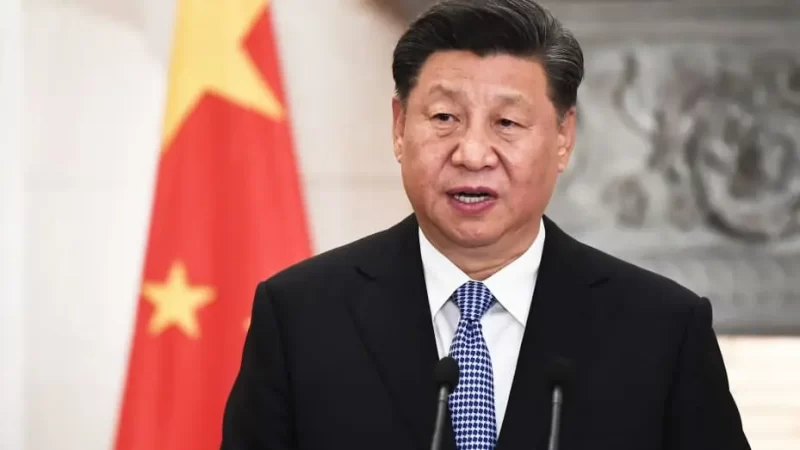
President Xi Jinping has invited Canadian Prime Minister Mark Carney to visit China, marking the first official meeting between leaders of both countries since 2017. The talks took place on Friday at the APEC summit in South Korea, where Xi also held his first discussions with Japan’s newly appointed premier.
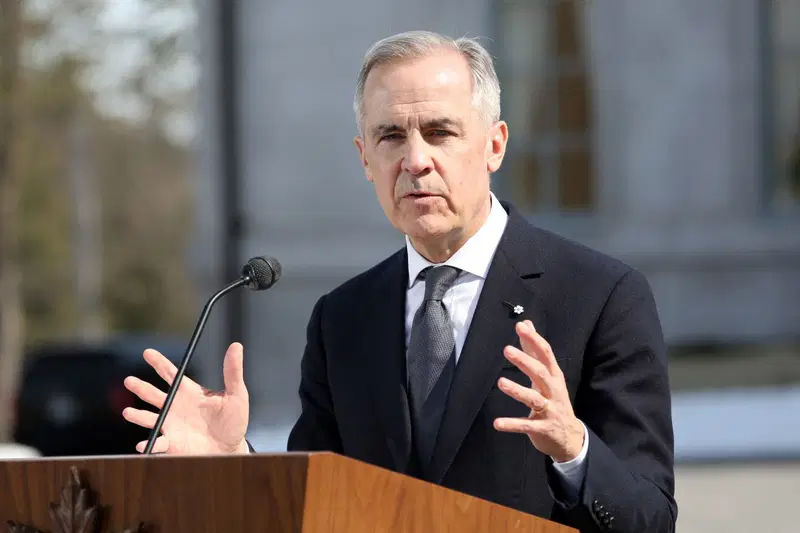
China–Canada relations have been strained for years, but both nations now find themselves among the countries most affected by U.S. President Donald Trump’s escalating trade tariffs, even as Washington and Beijing moved this week to ease tensions.
“Recently, with the joint efforts of both sides, China-Canada relations have shown a recovery toward a trend of positive development,” Xi told Carney, extending an invitation for him to visit China.
“China is willing to work with Canada to bring China-Canada relations back to the right track,” Xi added.
Carney accepted the invitation, noting that both nations had not been as engaged in recent years but emphasizing that renewed dialogue could help address their differences.
“Constructive and pragmatic dialogue is the best way to deal with our current issues,” he said, adding that engagement could also “help build a more sustainable, inclusive international system.”
Relations Recovering After Years of Tension
Bilateral ties deteriorated sharply in 2018 after the arrest of a senior Chinese telecom executive in Vancouver on a U.S. extradition request, which led to China’s retaliatory detention of two Canadians on espionage charges.
Tensions deepened this year after Canada imposed a 25% tariff on all steel imports containing Chinese-origin materials. Beijing responded by slapping a temporary 75.8% customs duty on Canadian canola imports, a key export crop used in cooking oil, animal feed, and biodiesel production.
Both countries have also been hit hard by President Trump’s global trade offensive, which has seen sharp tariff hikes on allies and rivals alike. On Thursday, Trump announced a deal with Xi to halve fentanyl-related tariffs on China to 10%, while Beijing pledged to continue exporting rare earths and increase U.S. soybean purchases.
Despite this, the U.S. president confirmed that the average tariff on Chinese goods remains at 47%, and by Saturday, he raised tariffs on Canadian products by an additional 10% while cutting off all trade talks, accusing Canada of running a “fake anti-tariff campaign.”
At the APEC meeting, Carney lamented the end of the long-standing global trade order.
“The old world of steady expansion of rules-based liberalized trade and investment — a world on which much of our nations’ prosperity, very much Canada’s included, is based — that world is gone,” he said.
Carney also positioned Canada as an emerging “energy superpower” and a major potential supplier of liquefied natural gas (LNG) to Asian markets.
Xi Meets Japan’s New Prime Minister Sanae Takaichi
Later the same day, Xi met with Japan’s first female Prime Minister, Sanae Takaichi, marking their first encounter since her appointment earlier this month.
Chinese state media quoted Xi as saying that China was ready to work with Japan to foster “constructive and stable bilateral relations that meet the requirements of a new era.”
Takaichi, often described as a China hawk for her visits to the Yasukuni Shrine and strong backing of Taiwan, has recently moderated her tone. In her first policy address last week, however, she called the military activities of China, North Korea, and Russia “a grave concern.”
She announced that Japan would raise its defence spending to 2% of GDP this fiscal year — two years ahead of schedule — a move that has drawn criticism from Beijing.
Japanese media reported that Takaichi was expected to press Xi on China’s actions around the disputed Senkaku (Diaoyu) Islands, the detention of Japanese nationals, and the safety of expatriates in China.
At the start of their meeting, she focused on the need to reduce tensions and improve mutual understanding.
Analysts say the meeting, though cautious, underscores both nations’ desire to maintain regional stability amid mounting trade and security challenges.
“It could be a frosty get-to-know-you meeting as Xi has not sent a congratulatory message to Takaichi, wary of her reputation as a China hawk,” said Yee Kuang Heng, professor at the University of Tokyo’s Graduate School of Public Policy.
“Overall, though, stability is a shared priority,” he added.
Opinion Nigeria News


United States and Russia Resolving Trade Issues and Pursuing New Opportunities -By Kestér Kenn Klomegâh
The American Chamber of Commerce (AmCham) will be working in the system of the Chamber of Commerce and Industry (CCI)...


Nigeria’s Middle Class Is Slipping Into Poverty — And We Are All at Risk -By Abdulhamid Rabiu
What is urgently needed is a shift from abstract economic targets to people-centered policies. Inflation control must be prioritized. Wages...


Second Ministerial Conference: Shaping Russian-African Strategic Partnerships -By Kestér Kenn Klomegâh
As indicated from above, the most important issues of multifaceted development are included on the Russian-African agenda, with a focus...


When Matrimony Is Dead On Arrival, The Wedding Was Only A Ceremony -By Isaac Asabor
Marriage is not for everyone, and that truth needs to be said plainly. It requires emotional intelligence, self-control, humility, and...


Awards Without Impact: Rethinking ‘Good Governance’ In Bauchi State -By Yasir Shehu Adam
True good governance is not proven in Abuja halls or award plaques. It is proven in functional classrooms, well-equipped hospitals,...