
Political Issues
Fact-Checking Bayo Onanuga: A Rebuttal on Peter Obi’s Record and 2023 Impact -By Jeff Okoroafor
A detailed rebuttal to Bayo Onanuga’s op-ed on Peter Obi. I examine the facts behind Peter Obi’s Anambra governance, the significance of his 2023 campaign, and why a defence built on caricature fails. A read for every engaged Nigerian voter.


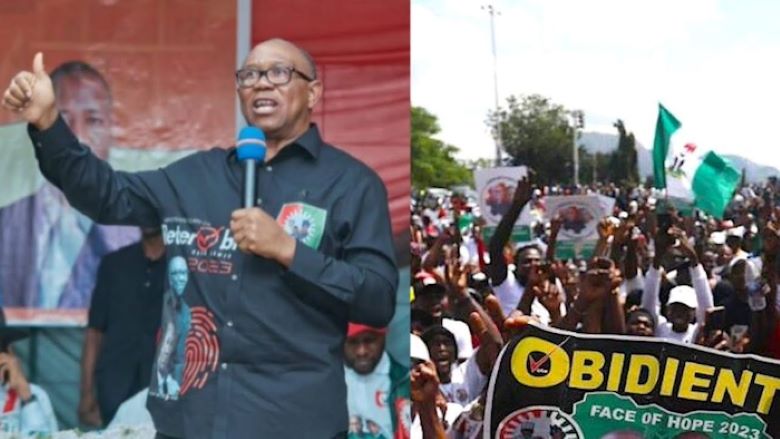
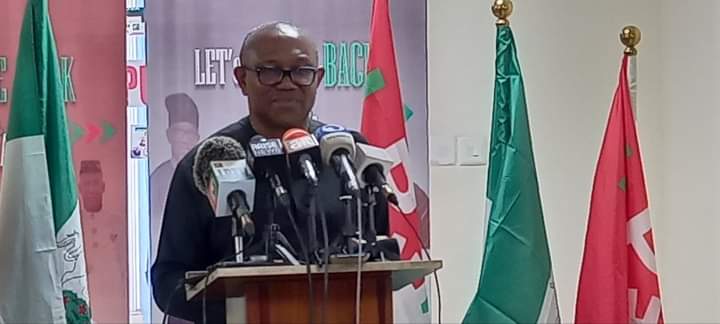
The recent narrative by Bayo Onanuga, an aide to President Bola Tinubu, regarding Peter Obi’s political moves and record, is a masterclass in political evasion. It replaces substantive debate with a cocktail of personal insults, selective amnesia, and premature self-congratulation. This approach does not defend the current administration; it exposes a profound anxiety about placing its achievements beside the record and resonance of its most significant critic. When an argument must rely on labelling an opponent “bitter,” a “wandering politician,” or suggesting he consults a “madman,” it has already collapsed under the weight of its own bias.

Bayo Onanuga
Let us move beyond insults and examine facts.
Peter Obi’s Political Journey: Resistance, Not Wandering
Characterising Peter Obi’s movement across parties as “wandering” is a deliberate misreading of Nigeria’s complex political landscape. His journey—from APGA to PDP, to Labour Party, and now ADC—is less a story of instability and more one of a politician repeatedly colliding with, and escaping from, the entrenched, clientelist systems that dominate Nigeria’s major political platforms. For many supporters, this movement signifies a persistent, if fraught, search for a vehicle for a different kind of politics, one prioritising frugality and economic focus over patronage. To dismiss this as mere opportunism ignores the powerful, structural barriers that non-establishment figures face, barriers the 2023 election laid bare.

The 2023 Election: A Resonant Message, Despite the Odds
Bayo Onanuga’s dismissal of Peter Obi’s third-place finish as “fortunate” betrays a startling contempt for the millions of Nigerians, particularly youths across ethnic and religious lines, who voted for him. The election was conducted under immense structural disadvantages: an uneven electoral playing field, intimidation, and the last-minute redesign of the naira—a policy whose disruptive impact on poorer voters is well-documented. Despite these hurdles, Peter Obi secured over six million votes, won in 12 states, including Lagos, and fundamentally altered the nation’s political geography. To reduce this unprecedented achievement to “anomalous polling figures” in the South-East is to ignore the seismic, data-backed shift in voter behaviour he catalysed nationwide. His continued focus on electoral integrity speaks to a demand for systemic reform, not mere “bitterness.”
Anambra’s Ledger: Verifiable Prudence Versus Vague Insults
The most facile attack is on Peter Obi’s tenure in Anambra. Bayo Onanuga offers the sweeping verdict of “abysmal failure” but provides no counter-data. This is because the empirical record, acknowledged by institutions like the World Bank and even skeptical media audits, tells a different story:

– Fiscal Governance: Peter Obi left about N75 billion in savings and drastically reduced the state’s debt profile. He famously handed over a detailed cheque of state balances to his successor, a transparency act without precedent.
– Social Investments: Under his watch, Anambra moved from 26th to 1st in national NECO performance. He returned mission schools to churches with state support, improving infrastructure and standards.
– Infrastructure and Business: He attracted major private sector investments like SABMiller, revamped the state’s financial management, and built strategic road networks.
This is not to claim a flawless tenure; no governance is. However, to dismiss it as a failure is to disregard verifiable metrics of savings, debt management, and educational outcomes—precisely the metrics we clamour for at the national level.
The Tinubu Administration: Claimed Triumphs and Unanswered Questions
Bayo Onanuga presents a rosy checklist of the administration’s achievements: subsidy removal, exchange rate stabilisation, rising reserves, and mega-highways. These claims demand rigorous, non-partisan scrutiny:
– Subsidy Removal: While arguably necessary, its execution triggered a catastrophic cost-of-living crisis, with inflation soaring to near 30-year highs (33.2% as of March 2024), decimating purchasing power. The promised palliatives and mitigation measures have been widely assessed as inadequate and poorly implemented.
– Exchange Rate & Reserves: The much-touted “stabilisation” of the naira follows a precipitous devaluation, and recent gains are fragile, heavily reliant on external borrowing and central bank interventions. The rise in external reserves is offset by massive increases in public debt, now over N121 trillion, raising sustainability concerns.
– Infrastructure: Announcements of superhighways are welcome, but their funding models, environmental impact assessments, and timelines remain opaque. Nigerians recall many “ambitious projects” announced in the past that never materialised.
The fundamental flaw in Bayo Onanuga’s defence is its detachment from the lived experience of Nigerians. When you tell a citizen battling to afford food that “inflation is decelerating” from a 28-year peak, or that “foreign reserves have risen” while their child’s school fees have tripled, you speak a technical language that rings hollow. True leadership is measured not just by macroeconomic indicators but by human dignity and shared prosperity, metrics where the administration’s report card remains deeply contested.
The Poverty of “Copycat” Arguments
The claim that Peter Obi is a mere “copycat” importing foreign models is a weak strawman. Obi’s references to other nations are not blueprints for “copy and paste” but are illustrative of universal principles of good governance: strategic investment in human capital, production-centred economics, and obsessive fiscal discipline. These are not “Indonesian secrets”; they are the ABC of national development. Conversely, the Tinubu administration’s policies—from the sudden adoption of a “fully floating” exchange rate to the style of subsidy removal—are themselves deeply inspired by IMF/Washington Consensus orthodoxy. The debate should be about which policies, homegrown or adapted, actually deliver tangible results for Nigerians, not about who reads more books.
Conclusion: A Fear of Comparison, Not Confidence in Leadership
Bayo Onanuga’s piece reveals more about the mindset of the current administration than it does about Peter Obi. When you must caricature an opponent instead of engaging his ideas, when you must insult his record instead of defending your own with superior data, and when you dismiss a broad-based political movement as an anomaly, you betray a fear of honest comparison.

Nigerians deserve a debate centred on verifiable outcomes: Who left their treasury better than they met it? Whose policies have increased hunger, and whose have bolstered productivity? Who has fostered unity, and who has exploited division? Peter Obi’s political evolution and 2023 campaign challenged a decaying political order. Dismissing that challenge with insults and premature victory laps is not a sign of strength. It is an admission that, when it comes to a contest of records and ideas, some would rather change the subject. The Nigerian people, enduring real hardship, are watching and deserve better.
Jeff Okoroafor is a social accountability advocate and a political commentator focused on governance, accountability, and social justice in West Africa.



Game of Power: Throne Reclaim -By Abba Dukawa
Most Kwankwasiyya members are youths . Where were they when Kwankwaso parted ways with Hamisu Musa, Musa Gwadabe, and Dauda...
Silence Where It Matters: Bauchi’s Misplaced Priorities and Forgotten People -By Yasir Shehu Adam
A governor’s speech should reflect actual priorities. When basic human development sectors are absent from key policy messages, citizens have...


Thankfully, There’s None Like Prophet Ebo Noah in Nigeria; Is There? -By Ugochukwu Ugwuanyi
Mysteries in the Old Testament can only be decoded through the light of the New Testament. Mercifully, the Holy Spirit...


The Ripples From The Tinubu’s Tax Reform And The Future Of Nigerian Economy -By Hajia Hadiza Mohammed
The most worrisome issue in the whole tax reform debacle is the intention of the government and its fixation on...


Africa’s Crisis of Military Coups and Insecurity -By Safiya Zakari Muhammad
The erosion of democracy has also weakened regional and international security cooperation. In some cases, juntas have expelled traditional partners...