
Democracy & Governance
The Dream of a New Nigeria in a fragmented mirror – the disalliances and June 12th hold the sunset -By Jimi Bickersteth
Good governance in politics is contingent upon you operating according to its rules. It must go much deeper than what obtains across the length and breadth of the nation presently, the killings, poverty, unemployment, insecurity etc. Politics is a veritable means to pursue the nation’s well-being and make it a priority. It is the responsibility of all to catch the fallen star and restore our fading national glory with sheen and aplomb.

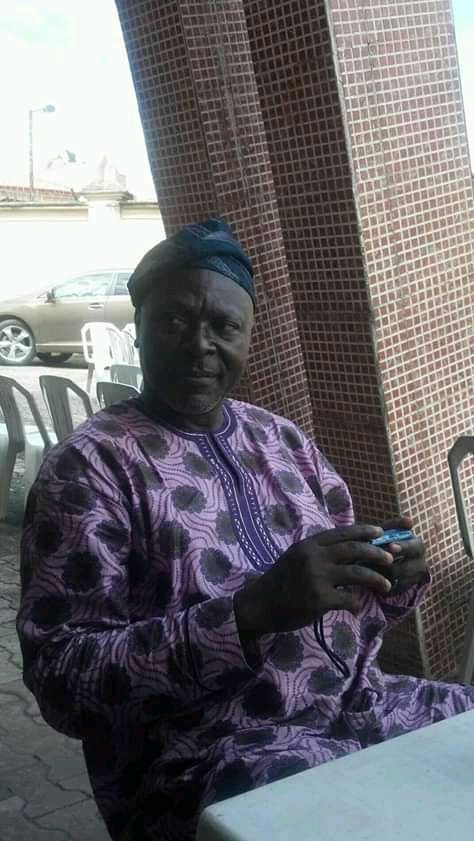
June 12th.This date again! What is in a date by the way, you’ll wont to say. Well! Without prejudice and or bias, this date on that day landmarked the birth of a new Nigeria, and showcased that the ballot box, nominally was the most reliable means of guaranteeing the choice of good leadership in modern times.
Events across the length and breadth of the nation on that day in 1993 showed that Nigerians could indeed speak in one voice devoid of ethnic sentiments and tribal jingoism. The fairest and freest election held across the length and breadth of the nation, and of course that outcome led to flaws that eventually aided and hasten the demystification of the date in the nation’s history and political evolution.
June 12 th 1993 was truly a watershed in the nation’s social milleu and political history. That was history, you are wont to say! Yes! And, I’ll probably add that events surrounding some history are best left unsaid, whilst, some events in history are quite unforgettable, because they have in a way, assumed a kind of recurring decimal values. And here, the event of that day kept acting like a perfume, whose fragrance would not go away, in spite, of the wishes wishing it away.

MKO Abiola, after winning the June 12 election.
The date confirmed a truism that even in the darkness of despair and a broken heart, history remembers kings not soldiers. The spontaneous diktat as a result of a sudden impulse left the infamous soldier-boy president that annuled the result, his so-called ruling council and the whole country in a cleft stick, but promoted the winner of that election to a martyr status. However, we’ll leave that to history to put him and the June 12th struggle in its proper place and perspective.
The significance of the June 12th date and the illogicallity in the supremacy battle and ohun a bá jùlọ mímì laa mi all became a real-life drama – the illusion created by a soldier-general; a contraption and threats not to handover to the presumed winner if a stooge found in Bafyau was not picked as the VP, can never take the place of reality. Tó bá ku abọru t’ó ku òòṣà, òoṣà a j’ẹ̀kọ. You can wish it away you can’t wash it away. The more you tried to wash it, the more it comes out in the wash. Believe it or not, traitors or patriots, there is no disease spit on than treachery.
What is so prolific about the June 12th date. Well! It was a day that went on to defined the nation’s core essence and the ‘watershed’ of the nation’s political evolution. The where the nation was, and what it stood for as a modern society; and which, with its lots of “if’s” and “if nots”, has become a powerful metaphor and a recurring decimal.

Abacha and MKO Abiola
The error of judgement in the annulment of the June 12th 1993 elections, and the detention and eventual demise of the ‘presumed’ winner of that ‘mandate’ and undeniably the nation’s symbol of democracy – the man died in the course of the struggle, an uncommon feat in this clime, were a one-off disservice that desecrated the nation’s political hallowed principles of democracy, the sanctity of the rule of law and the principles of a ‘One Nigeria’ ‘One nation’.
The democracy, MKO, the Ààrẹ ọ̀nà-kankaàfọ̀ of the ‘federation’, fought for and resolutely defended up till he breathed his last on July 7th 1998 have been riddled with clichés, but fitting – a small plus against a lot of minuses. The man MKO, a man who knows the difference between dying, hungry and hopelessness, whose battle for the nation’s liberation was especially challenging and devastating, would shudder in his grave at what his struggle, ( for democracy) have become in the hands and sights of those his schoolmates, who later reaped where ‘they’ did not sow; who thought and so opined that, he was not the ‘messiah’ the nation was waiting for.
Where are those dreams! Dreams of ‘hope for all’, of equal opportunity, of equity and giving back to the country, which were the primary impetus, to his willingness to empower majority of our compatriots and the source of the motivation for ‘Hope93’.

MKO Abiola
The experiences have had the people reclinically depressed, conversation and handshakes across the Niger have turned sour, enthusiasm is forced, everyone in a daze regarding the nation’s future because the nation is blind to its blessings.
The nation have come to depend upon what has been called the goodwill of civilization and without any appreciable input from the leadership have remained the way it is, in spite of the superabundance of natural resources ever known to Man.
The nation North and South had such a dreadful sameness and from the point of view of appearance was inelegant, from another standpoint it was supremely elegant of a curious nation that looked into the 200 million or so pair of eyes with a sort of reckless mockery hard to describe.
The crippled and crumpled society, the lack, poverty, hunger, the compromised leadership et al, all with hearts beating like a mill race as the responsibilities of adulthood kept adult ‘children’ unable to live on their own in the real world dependent upon their parents. Even now, I was still puzzling over these queer discrepancies.
A cataclysmic event such as the anarchy that engulfed the nation as the aftermath of the silly annulment of the June 12th mandate changed a lot of trend lines. Even, if the riots and protests ‘wars’ had been predicted, its social and economic consequences probably could not have been. The ruling council’s opinions that led to the annulment were notoriously error-prone, since the political expediencies of most of the decisions often substitutes for objectivity.
The annulment of the June 12th exercise was generally thought to be ‘incorrect’. But it was in the nature of surprise events to create ‘implausible’ outcomes. By eliminating and basing plans on scenarios rather than forecasts was one way to deal with the uncertainty of political, economic and social systems. Starting from the premise that politically and socially the nation faces an uncertain future. The government’s role was to promote conceptual understanding.
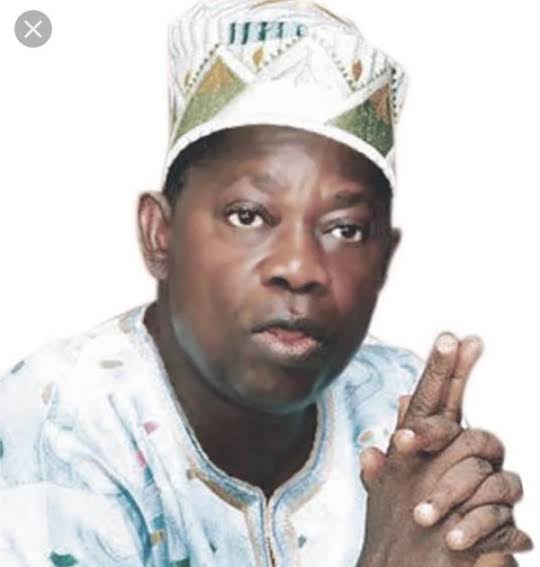
MKO Abiola
The scenario says “here are some of the key factors you have to take into account, and this is the way these factors could affect the nation’s future, unlike forecasts which attempts to quantify the future. Technical, social, political and economic factors that must be woven into an internally consistent pattern.
As could be seen in the current ‘force meet with counterforce ‘war” against incessant protests, insurgencies and ‘terrorism’ north and south of the Niger reliance upon scenarios, one is the difficulty on encapsulating a number of unknowns. Another is ensuring that the variables are internally consistent. Consistency based on past relationships may not apply to a future in which new developments break traditional patterns.
How does the nation account for changes in expectations resulting from events that failed to influence previous relationships. There are obvious problems of a phenomenon moving in one direction sets in motion forces that will modify its course. The nation needs pragmatic set of plans and policies to reach one or more national objectives of state policy, yet, it was not the choice of an optimal strategy but faithful adherence to a sound set of beliefs, such as equality, equity and respect for the individual, that was the most important factor, that bond produced by shared values is the secret weapon of great nations.
The power of purpose, values, and symbolism in securing national commitment is as old as the nations themselves. Confucius, a wellspring of inspiration of modern philosophy and politics, once pointed out that it was on ”observance of ritual” that administration depends. The principal responsibility of the executive and the legislative was the creation of moral codes for others, followed by the process of inculcating points of view, fundamental attitudes, loyalties to the state.

Ibrahim Badamasi Babangida
The most important cause of the failed state mode and copious leadership absence was inability to articulate the basic concepts, values, policies and beliefs that give directions to the state, its leadership and followership. That being the case, the nation drifted far away, and thus created a wide gap between the way real world leaders actually develop strategies and planning paradigms.
You’ll observed that strategies in the advanced nations, do not emerge as fully integrated realities but incrementally, as a series of partial, tentative, somewhat fragmented decisions and personal commitments. The nation’s current debacles and debates and agitations for self-independence, resources control and other battery and assaults on its collective corporate existence can be partially rationalised by recognising that there are in general not one but two fundamentally different processes simultaneously going on in the country.
One is classic: it induces the ruling elites to make decisions within the framework of the current planless drift, goals and politics. The second, a messier one, mediates autonomous pathfinding proposals that may significantly modify the current strategic direction.
All based on the facts that the nation was plagued by unsubstantiated generalisations, factual errors, incomplete footnoting, and a wide range in the quality of evidence used to support the principal arguments for its statehood. I don’t know of any other nation so tenor positive, so endowed, and yet so vulnerable to criticisms by nitpickers.
The people were beginning to question its colourless prose, pose and ability to compete in an economically restructured world, completely immobilised and could not be motivated by simple – even beautiful- values. The hearty call for restructuring therefore, was in a way, trying to encourage the political leaders and ruling elites to defy strategic concepts altogether and to shed the grand strategy addiction that pervades the government circle. The strategy fetish, a cultural peculiarity. The nation get off on strategy like the French get off on good food, good wine or romance.
The over-intellectualisation of strategy and reliance on “big brain” strategic coups have not worked for the nation. A careful scrutiny reveals that despite the exalted status of intellectualisation in the nation’s political, social, development and growth lexicons, few great successes stem from one bold-stroke strategic thrust. More often, they result from one half-good Idea that is improved upon incrementally ( though, not like the federal ministry of agriculture building a ₦30million mosques).
INEC
These improvements are invariably the result of a lot of ‘little people’ paying attention to the real need of real people. The nation saw growth and really evolves as iterative, incremental, experimental structural adjustments to the dynamic of opportunity. Its concepts and ideas and skills to effectively coordinate and integrate the talents of a myriad of its immensely endowed human resources was a pedagogical deceit.
A country that has so much on offer in terms of material and human resources. It appeared that the people’s ‘enemies’ and those who believed in the machievellian tactic of ‘keeping the people pauperized’, and whose wrong desires coincide and connived with opportunity saw through the veil of optimism and hope.
The power freely given to succeeding administration by ‘their INEC’ continues to increase the tempo with the trampling of the people’s wishes and aspirations and it went on endlessly, followed for the nation, increase in senseless, violent acts, mindless killings, protests, arson, premeditated suffering, that today, whatever remained of the nation’s hopes have finally vapourised.
The vanished hopes meant that something was seriously wrong with society, and its leadership, chronically tensed like a motor that stays revved up. It kept the followership in perpetual bondage. Now came a cameo by insurgencies north and south of the federation under different names, circumstances and disguise – personal liberty, safety and neighborhood morals had been compromised.
In fact, in truth and in deed, Nigerians that have left the cleft of the political class creation should be given certificates of survival, particularly, the drones and noise of war, as if war is a sport, it is not and it does not give you the choices to kill the right persons. A push toward disaster, then, followed for the nation, increase in senseless, violent acts and the ruling elites mindless fleeces. With the increasing personal wealth the political class saw themselves as above the people they were supposed to serve and serviced.
The 1999 constitution assigned primary role and responsibility to the legislative arm of government to make new laws and amend existing laws for the good of the people they represent. They’re to function in that office and capacity by proposing bills, holding interactive meetings.
Beyond the statutory functions associated with the legislative process which passed bills into laws, a legislator is also expected to collaborate and negotiate with other legislators to resolve differences and reach agreements, as well as negotiate as a compromise among different interest groups and review and respond to the concerns of the people they represent or the general public and their overriding public good and interest; and, also against the pernicious violence meted out to the society and the state.
Today, the polity was being heated up arguably, because of the docility and or utter dereliction of the NASS in its assigned constitutional duties. The system now appeared to condoned ethnic warlords as society was being engineered on the path of inter and intra tribal conflicts, hostilities and attacks against one another, bordering communities, internecine ‘wars’, menace of killer-herdsmen, kidnappings for ransom and other forms of insecurity, economic and political on the nation’s social milleu and with perpetrators of such evil daily taking provocative, precipitate actions.
Expectations were running high, and like pottery, the more you mould the bigger it gets. All was going to the extreme. These miseries had all sliding off the deep end. In times of crises such as this, answers were needed for complex questions pertaining to nation-building, as the nation clear away the piles of debris heaped upon even the simplest of issues by a constitution that surreptitiously guaranteed for losers absorbing subtle ass-kicking without a fight. As subtle as a rock through a glass window.

President Buhari
How did the nation get to this sordid and dire straits after the shivoo of May 29th, 1999? The answer is not farfetched. It was the absence of a truly national and strong leadership at the helm. One must admit that the bias at the beginning was to discount the role of leadership heavily, if for no other reason than that everybody’s answer to what’s wrong (or right) with whoever was its leader.
The strong belief was that the ‘great nations’ had gotten to be the way they are because of a unique set of cultural attributes that distinguish them from the ‘backward ones in the Third world’, and, if we understood those attributes well enough, this nation could do more than just mutter “leadership” in response to questions like why is America, Japan, China, Singapore, Saudi Arabia so good. They tended to have a distinctive focused culture in which all could readily identify. The consequence is that the leadership and followership all know what to expect of one another due to their common view of how their country should be run, as all are effectively part of the political system, politics and philosophies. The importance of leadership, closeness with the people and technology.
As Goethe once wrote, “All the clever thoughts have long since been thought. What matters is to think them anew”. Once there were no business schools, (the existence today that have produced over qualified graduands and unenthusiastic and seriously demotivated bands of exclusivism and elitism). Unlike the days when railroad men were railroad men, and it was generally accepted that it was great (ever heroic) men who gave life to great institutions. Now, the utopia of the nation guided to some partial success by bright strategist is dead and buried by its today’s Africa’s most prominent club of clueless and dithering leaders.
As Zaleznik points out, “History seems to show that no sooner do we feel secure in the Promised Land (or whatever we would like to call utopias), than the bureaucratic solution seems to come unstuck. A new crisis emerges and the nation wait expectations for the reappearance of the hero/messiah in its quest for economic, political, industrial and military liberation – the basis of the Pax Nigeriana. The ‘leader’ no longer exist as a person in the mature political enterprises mileu. The leadership has been relegated by dilemma of delegation and replaced by the cabals as the directing force of the nation’s political evolution.
The cabals have made the leadership despite the preponderance of obligations appeared unable to control the nation’s affairs, making them look more like mere puppets, and unable to initiate sustainable actions on matters of national development.
The leadership unable to exert control over the direction and face of the running of government, unable to exploit situations that appear as obligations; and turning the people also into puppets with little control over their own affairs. All leaders appear to be puppets. Some decide who will pull the string and how, and they then take advantage of each move that they are forced to make. Others, unable to exploit this high-tension environment, are swallowed up by this most demanding of jobs. All, old and young acting a part in the power game scripts and plots.
The Third Republic especially, had been punctuated by a series of crises which gradually eroded the nation’s influence and self-confidence – the insecurity, herdsmen, ethnic profiling, kidnappings and killings North and South of the Niger. These most recent crisis, spurred in large part by the rapid rise of political gladiators, who as vigorous competitors and ‘unequal’ partners in the tripartite alliance, have all couched their hunts for power-shift, power devolution under various complaints of marginalisation, have thus, intensified the need for a national integration and orientation. But, the crises was being micromanaged by the cabals and facing the dissents and protests in what the Yorubas would likened to “Ilẹ̀ ṣú b’ọ́mọdé l’óko ó l’òhun l’áyà, tó bá gburo kìnìún ṣé ó lé dúró!”
A response to these moral, social, political and cultural challenges is in part what the new nation thinking is about, as the most populous and largest black population in the world completes a painful change and transition from a warped economy and near political instability to a leadership role in a competitive world. The leadership face a formidable challenge to integrate the lessons of the past with complex new realities.
The shivoo, the songs and jubilations that welcomed democracy had long drowned and the people’s soaring spirits quickly had to settle under the weight of responsibilities, what in a nation with a backpack full of complications and a nation with a freak economy, collapsing financial system, ecological threats, peace and security challenges. These were daunting issues. The PMB administration had to stop ‘laing’ and creating facts with their guts and feelings, and expecting the poor people to follow suit on faith.

apc nigeria
The government have to hasten slowly (no pun intended), and deliberately turn things around, as all the ‘lying’, propaganda and creating facts with guts and feelings, aided by a media team, itself frustrated, apt at massaging and manipulating primma Donna’s ego must as of necessity stop, as their endless lies, limitless streams of rumours, gossips, conspiratorial sacred silence extended the saga and have today come with the downside. The APC that have however existed with a hollow at its centre, was entering its trimester and the signals were yet poor of any enduring legacies in its equations with its poor moral mathematics, extremely weak in organisation and cohesion and transfering same to the nation’s body politick.
How fragmentend everything had become in the nation. When all it required to wash the fear from the system and a culture of being alone in the wilderness, was to be combative with hearts and minds of unflinching granite that brooked no contradiction. PMB’s administration couldn’t muster the energy and political will. It faltered badly and is still faltering even as it embarked on military campaign against civil disobedience. It was clear that that PMB and company have not been able to pull in the reins when they have to, this has been largely unimpressive.
The ruling elites had caused frost and brought forth plagues of snails and caterpillars to destroy the nation’s seeds and fruits, and, to navigate out of the morass, stagnancies and general decline, it needed good value judgement of those who knew more about life; so that these seeming wild, frustrating bouts of confusion and darkness, be followed by leaping brightness and warmth. The ordeals of leaving the mass of our people to their struggles must be handled with impersonal and unassuming efficiency.
The government is to acknowledge that the deplorable conditions under which Nigerians live and die were enough impetus for an awareness of danger, that should make PMB and company interested in weapons and strategies and the nature of the enemy – poverty, second only to religion and power tussle, which between them had perpetrated some of the worst and terrible atrocities that have scandalised history.
As recent events eclipsing the nation’s political and general administration eclipsed and crippled the nation almost comatose, all manners of things have been let loose. To a PMB that had hitherto ‘felt’ less constrained, his visit to Maiduguri, the arrest and retrial of tribal warlords, the coming months would be such a very busy and interesting one for the nation’s number one white hope. With PMB’s laid-back approach to national issues, it’s one’s hope that he and his coterie of advisers know what they want. Who says life gets dull when you get what you want. Put your feet up and enjoy the soaps – soaps after all are supposedly a reflection of real life.
It’s important to focus on understanding the people in their moods. The political leaders must learn to be open and authentic so that the people can understand them, because it would make you vulnerable, many are unwilling to be transparent, but leaders feel that by keeping people in the dark they maintain a measure of control. But that is a leader’s folly and a nation’s failure. Secrecy and or sacred silence spawns isolation not success. Knowledge is power. Yes, but what leaders need is collective power, and that require collective knowledge. Anytime people’s sense information is being withheld from them, it creates distance. They feel like outsiders and insecurity reigns. So speak up, whatever the condition!
But in the ongoing, ensuing serial drama, including power devolution and power sharing, I doubt, if the APC could label anyone, those we invited to dine and take exceptions to our complaints about their table manners. One thing is clearer though, the marriage of convenience was beginning to look unnatural and all the ramifications for honour and decency and sacred trust that this entailed.
This new challenges to the nation has been brought into clear focus by observing and contrasting our philosophy (if any) and practices with those of leaders in Europe and other advanced economies and simply copying them at what they excel in – “the art of adapting, adjusting, fitting, sifting and excluding” as Kurt Singer has pointed out in Mirror, Sword and Jewel – is not enough, or perhaps not even appropriate.
The Nigerian society needs to intensively continue its process of self-renewal and search for a sustainable new frameworks of analysis. In the large, complex bureaucracy, the leaders time assumes an enormous opportunity cost and he faces the real danger of becoming a major obstruction in the flow of decisions.
This is a daunting task that must not only be seen to have been done but accomplished:
Try to,
a. rid every sector of the nation’s economy of wastages,
b. declare an emergency on the power/energy sector with a view to grow Nigeria’s energy capacity which would lead to a boom that, ipsofacto would generate employment and curb inflation.
c. a winner makes commitment a loser makes promises, convoke a committee of the joint National Assembly members to consider some of the reasons for the insurgencies and the cries of self-independence, resources control, state creation etc. thereafter forward the outcome of their deliberations and resolution thereof to the state’s house of assembly for relevant inputs and back to the NASS for final moderation and despatch to the executive council for final action.
d. the nation must leave no stone unturned in ensuring that it bacame a 21st century economy which actively support the growth of the local economy through ease of doing business, innovations, incentives and interventions as well as quality service delivery by a well-motivated public service guided by well-articulated ideology.
e. the economic landscape should be transformed and repositioned to meet the expectations of the business community and also achieve the goals of becoming a destination of choice for foreign direct investment.
In summary, what is needed now is a revitalised synthesis of 1) the potency of transforming leadership; 2) core concepts of of corporate governance and strategie; 3) bridging the wide gap and extending a warm handshake across the Niger, 4) the inspiring shared values, passion and patrotism; 5) down-to-earth concern for hand-on attention to Technology as a central link underpinning the economic, social, political and government business framework; and, 6) leaders are to concentrate on issues that are current and specific. It is on this premise that the burden lies for designing systems that are to solve society’s problems.
Good governance in politics is contingent upon you operating according to its rules. It must go much deeper than what obtains across the length and breadth of the nation presently, the killings, poverty, unemployment, insecurity etc. Politics is a veritable means to pursue the nation’s well-being and make it a priority. It is the responsibility of all to catch the fallen star and restore our fading national glory with sheen and aplomb.

Late MKO Abiola
MKO, the nation continue to mourn you as one of its heroes after 28 years of the momentous and historic occasion. All, regardless of where they belonged across the divide salute your resilience and courage, it earned you a national holiday.
You’re sorely missed.
Simply irreplaceable.
Sleep on. Aljanna Firdausi.
P.S.
Everything looked fuzzy, for now, the people should not be worried, because that was how dreams were sometimes, especially, when we are close to wakefulness. In dreams you run desperately like a mouse running on a treadmill and never getting anywhere, but dreams disappears in the morning leaving your thinking and reasoning intact.
#Jimi Bickersteth.
Jimi Bickersteth is a blogger and writer.
He can be reached on Twitter
@alabaemanuel
@bickerstethjimi
Emails:
jimi.bickersteth@gmail.com
jimi.bickersteth@yahoo.co.uk
jimibickersteth8@gmail.com


Game of Power: Throne Reclaim -By Abba Dukawa
Most Kwankwasiyya members are youths . Where were they when Kwankwaso parted ways with Hamisu Musa, Musa Gwadabe, and Dauda...
Silence Where It Matters: Bauchi’s Misplaced Priorities and Forgotten People -By Yasir Shehu Adam
A governor’s speech should reflect actual priorities. When basic human development sectors are absent from key policy messages, citizens have...

Thankfully, There’s None Like Prophet Ebo Noah in Nigeria; Is There? -By Ugochukwu Ugwuanyi
Mysteries in the Old Testament can only be decoded through the light of the New Testament. Mercifully, the Holy Spirit...


The Ripples From The Tinubu’s Tax Reform And The Future Of Nigerian Economy -By Hajia Hadiza Mohammed
The most worrisome issue in the whole tax reform debacle is the intention of the government and its fixation on...


Africa’s Crisis of Military Coups and Insecurity -By Safiya Zakari Muhammad
The erosion of democracy has also weakened regional and international security cooperation. In some cases, juntas have expelled traditional partners...